
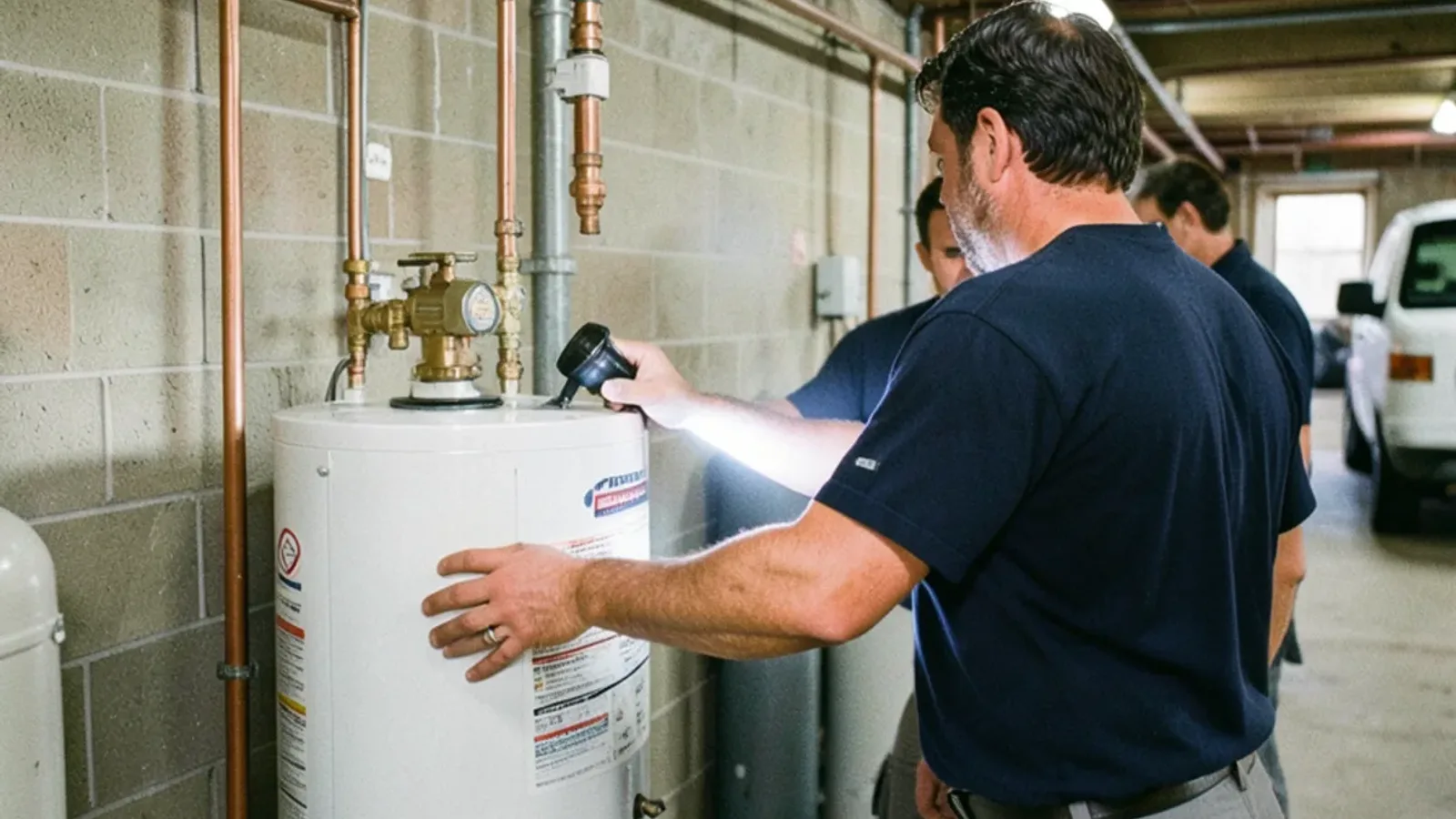
When a water heater quits in Auburn Hills, the fix depends entirely on what failed. No hot water, a pilot that will not stay lit, a dripping relief valve, rusty or smelly hot water, or a puddle under the tank each point to a different part, and only one of them, a leaking tank, usually means replacement rather than repair.
Many tanks here are original to 1980s and 1990s homes and well past their prime, so this page walks through what each symptom means and what can be fixed.
No hot water, and what it usually means
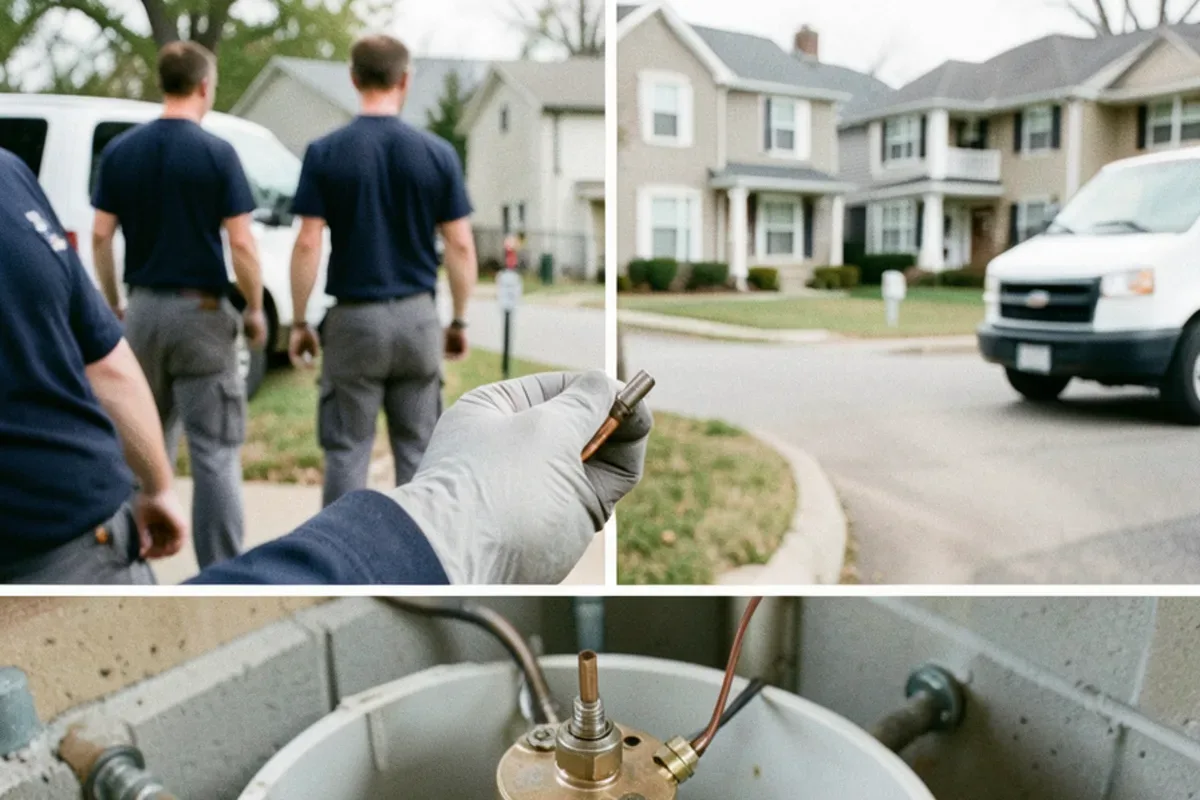
The most common call starts cold. On a gas heater, no hot water usually traces to a pilot or igniter that has gone out, a failed thermocouple that keeps shutting the gas off, or a gas control valve that has quit. On an electric heater it is almost always a tripped high-limit, a failed heating element or a bad thermostat. We test the parts in order rather than guessing, because a thermocouple is a small fix and a control valve is a larger one, and you deserve to know which before paying for either. If a gas pilot keeps dropping out, our guide on why a pilot will not stay lit covers the first checks.
A leaking tank is a different problem
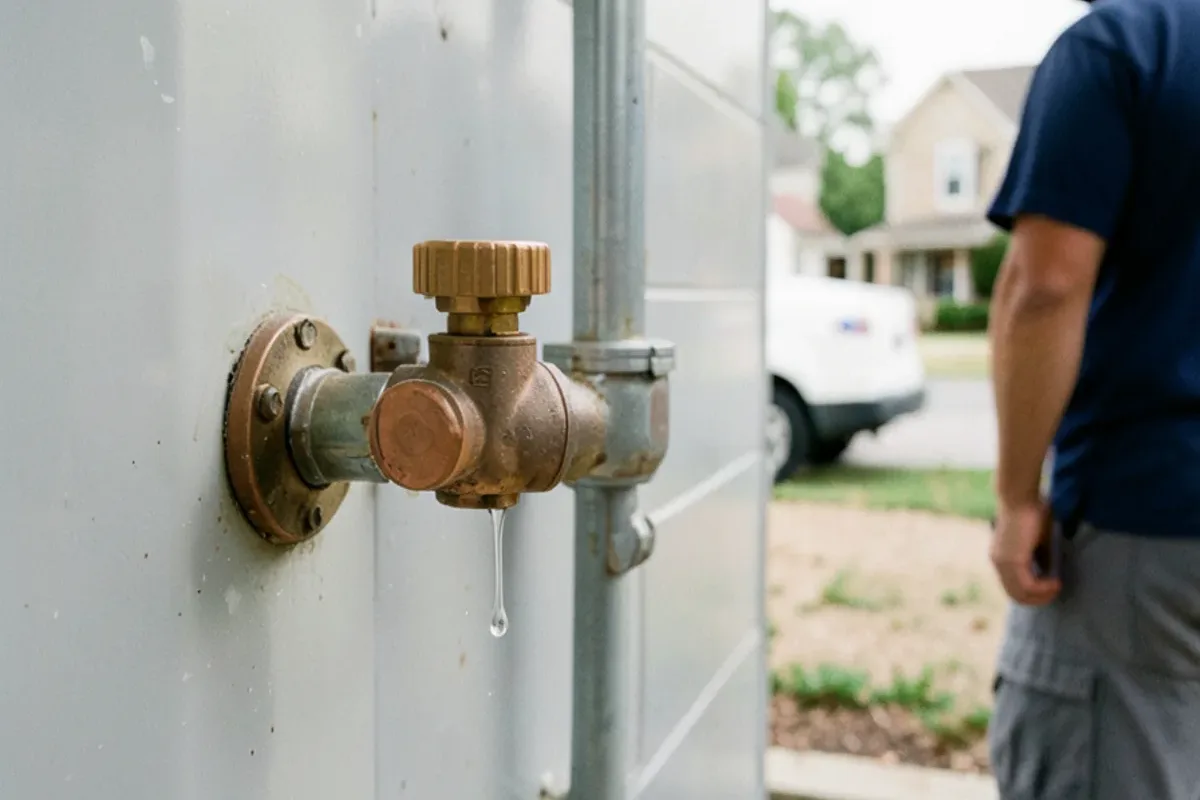
Water under the heater needs a careful look, because not every leak is the tank. A drip from the temperature-pressure relief valve, a loose supply connection, or condensation on a cold tank can all look alike and are repairs. But water weeping from the body of the tank itself means the inner shell has rusted through, and that cannot be fixed, only replaced. We find where the water is actually coming from first, so you are not sold a new heater for a five-dollar fitting, or a fitting for a tank that is finished.
Rusty water, rotten-egg smell and sediment
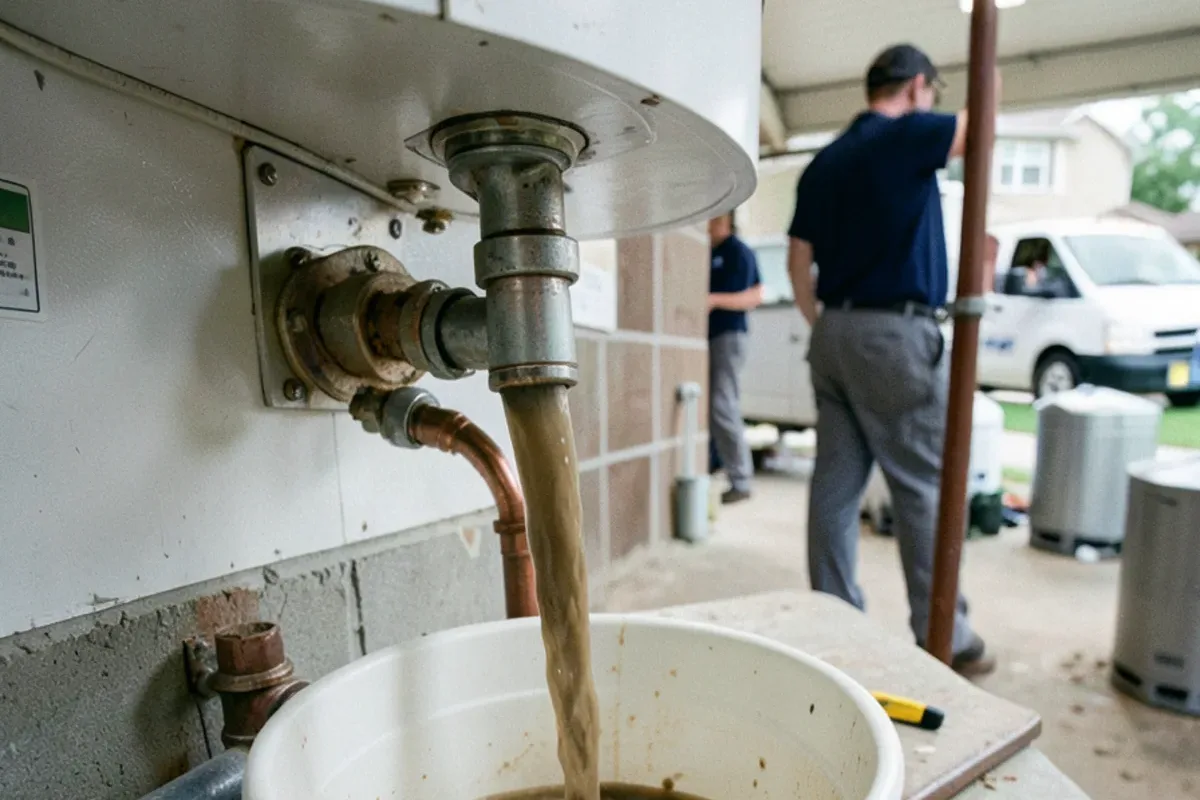
Hot water that runs rusty, smells like rotten eggs, or comes with popping and rumbling from the tank is telling you about the inside of the heater. Rusty hot water points to a corroding tank or a spent anode rod, the sacrificial part that protects the steel. A rotten-egg smell in the hot water usually comes from a reaction between the anode and bacteria, often fixable by changing the anode type. Popping and rumbling is sediment baked onto the bottom that a flush can clear. Our guide on the rotten-egg smell in hot water explains the anode side in more detail.
When repair is not worth it
Age decides a lot. A tank heater lasts roughly eight to twelve years, so one original to a 1990s home is living on time. We will fix a thermocouple, an element, a thermostat or a relief valve on a sound tank without hesitation, because those are good repairs. But pouring a major repair into a rusted, fifteen-year-old tank that is near the end is money better spent on a new heater sized right and under warranty. We tell you plainly where your tank sits on that line so you can decide.
Hard water and the heaters in Auburn Hills homes
What your heater runs on shapes how long it lasts. City water from GLWA is moderately hard, and the private wells north of the city, in Oakland Township, Orion and Oxford, are harder still and often carry iron. That mineral bakes onto the tank bottom and elements as scale, cutting efficiency and shortening the tank’s life. On a well especially, pairing the heater with a water softener is what keeps the next tank from scaling up as fast as the last one. We flag it when the sediment we drain says hardness is the real culprit.
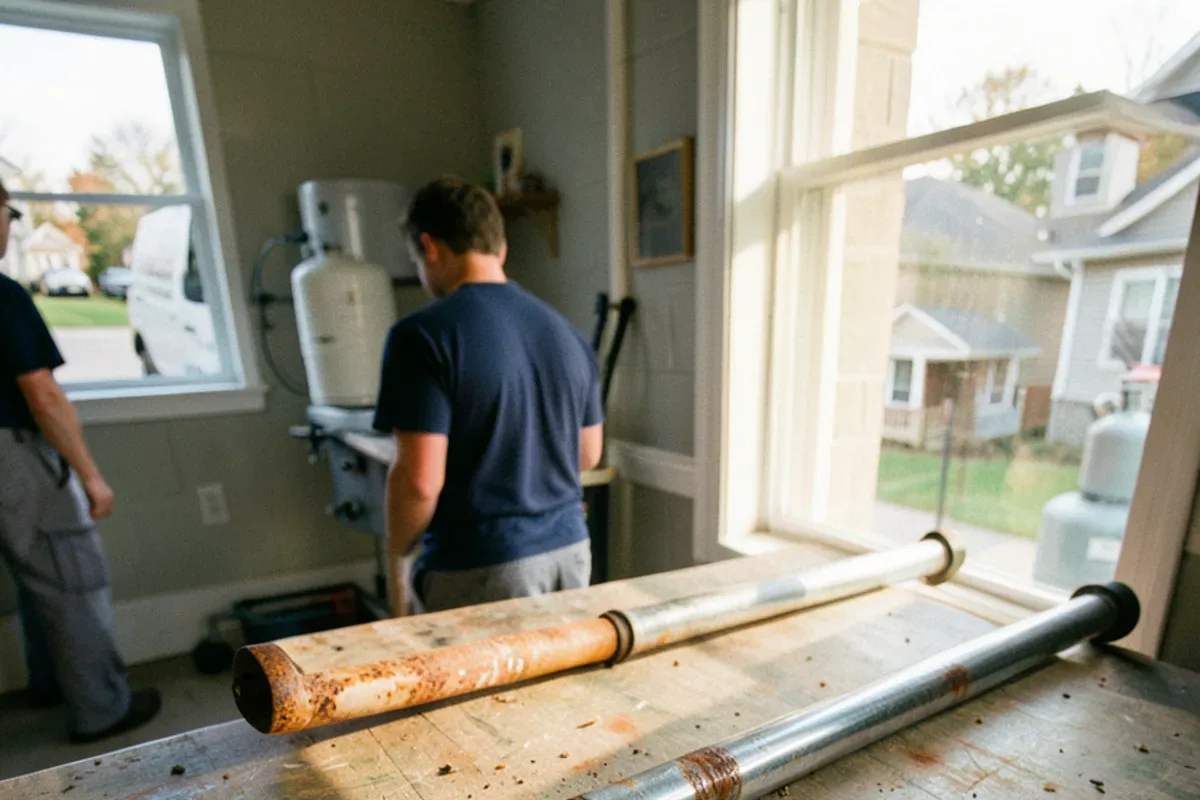
Water heater repair around Auburn Hills and nearby cities
- Plumber in Rochester Hills
Tanks original to its 1990s homes are now past their service life, so repairs here often turn into a replace-or-fix decision.
- Plumber in Troy
Finished basements put the heater near living space, so a dripping relief valve or weeping tank gets noticed and fixed fast.
- Plumber in Orion Township
Hard well water bakes scale onto tanks and elements, so sediment and short life are the common repairs here.
- Plumber in Pontiac
Older homes run aging heaters where pilot and thermocouple failures are the everyday no-hot-water call.
- Plumber in Bloomfield Township
Larger homes with high demand run heaters hard, so elements and sediment build-up show up sooner.
- Plumber in Rochester
Downtown-era homes have heaters tucked in tight spaces where a leaking tank needs careful diagnosis before replacement.
- Plumber in Waterford Township
Lake-area homes on wells see hard-water scale and smell issues that trace back to the anode and the tank bottom.
- Plumber in Oakland County
County-wide, moderately hard city water and harder well water both shorten tank life through scale on the bottom and elements.
Water heater repair questions from Auburn Hills customers
Why do I suddenly have no hot water?
On a gas heater it is usually a pilot or igniter that went out, a failed thermocouple shutting the gas off, or a dead gas control valve. On an electric heater it is typically a tripped high-limit, a burned-out element or a bad thermostat. We test the parts in order so you know whether it is a small fix or a larger one before any part is replaced.
Is a leaking water heater always a replacement?
No. Water under a heater can come from a dripping relief valve, a loose connection or plain condensation, all of which are repairs. It is only a replacement when water is weeping from the tank body itself, which means the inner shell has rusted through and cannot be fixed. We confirm the actual source before recommending either.
Why does my hot water smell like rotten eggs?
Usually a reaction between the water heater’s anode rod and sulfur bacteria in the water, which is more common on well water. It is often fixed by switching to a different anode material rather than replacing the heater. We confirm the smell is only in the hot water, since a cold-water smell points to the supply instead.
Is it worth repairing an older water heater?
It depends on the part and the age. A thermocouple, element, thermostat or relief valve on a sound tank is a good repair at any age. But a major repair on a rusted tank already past ten or twelve years is money better spent on a new, right-sized heater under warranty. We tell you where your tank sits so you can choose.
Still not sure what you're dealing with? Describe it on the phone and we'll tell you what we'd check first.
(207) 419-2600Last updated October 28, 2026