
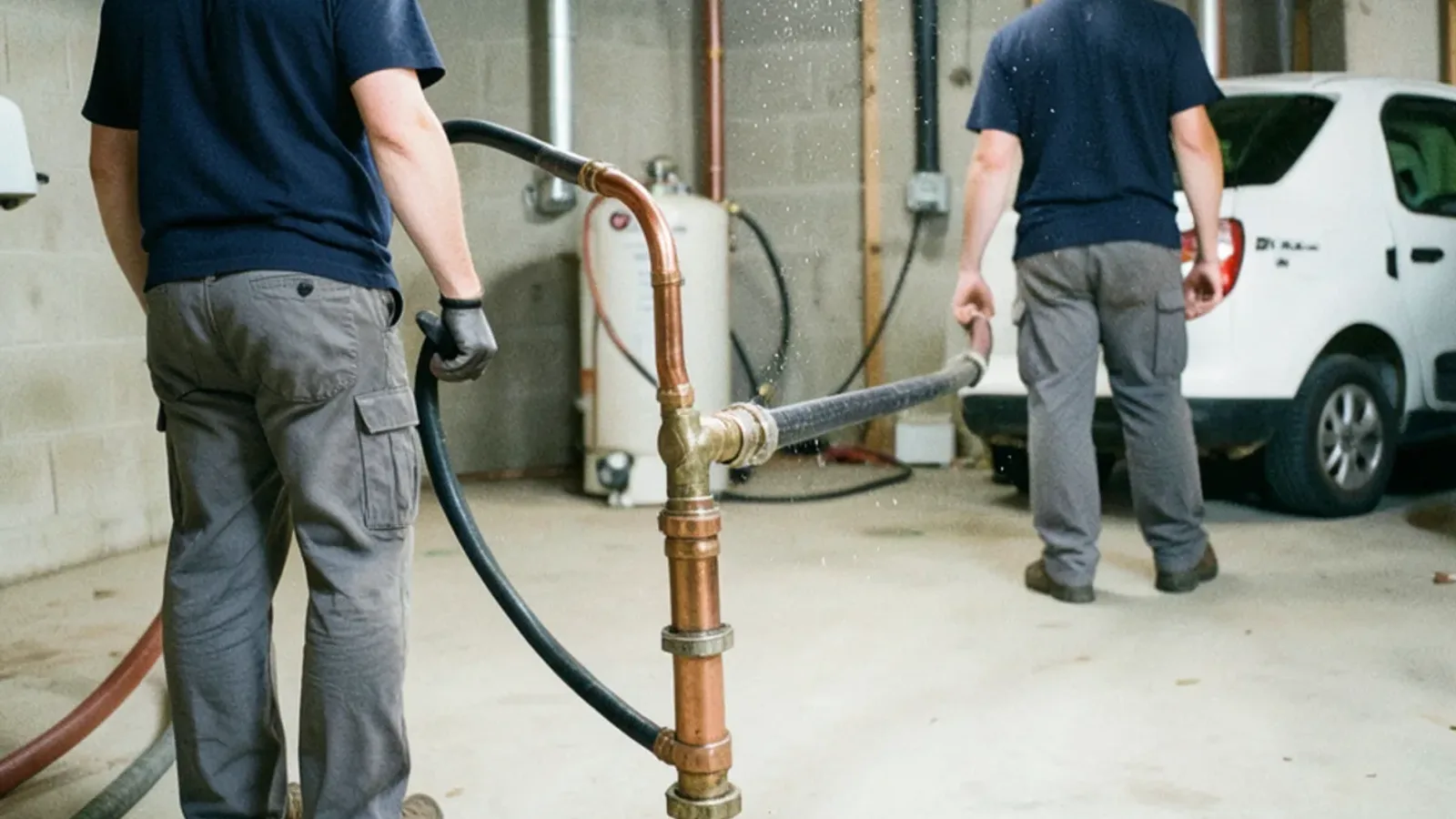
Hydro jetting clears a drain the way a cable cannot. Instead of punching through a clog, a high-pressure stream of water scours grease, scale, sludge and fine roots off the entire pipe wall, so the line runs at full diameter and stays clear far longer. In Auburn Hills it is the right tool for greasy kitchen lines, restaurant drains along the I-75 corridor, and any pipe that clogs again weeks after a cabling.
It is not the answer to every clog, and on a fragile old pipe it is the wrong one. Here is when jetting earns its place and when it does not.
What jetting removes that a cable leaves behind
A cable is a tool for cutting through a blockage and pulling out a root ball. It opens a path, but it leaves the grease, soap scale and sludge coating the pipe wall, which is why a cabled kitchen line often slows again within a month. Jetting is different. The water, delivered through a nozzle that drives forward and sprays back against the wall, strips that coating off and flushes it out. The pipe is left closer to bare than cabling can get it, so the clear lasts.
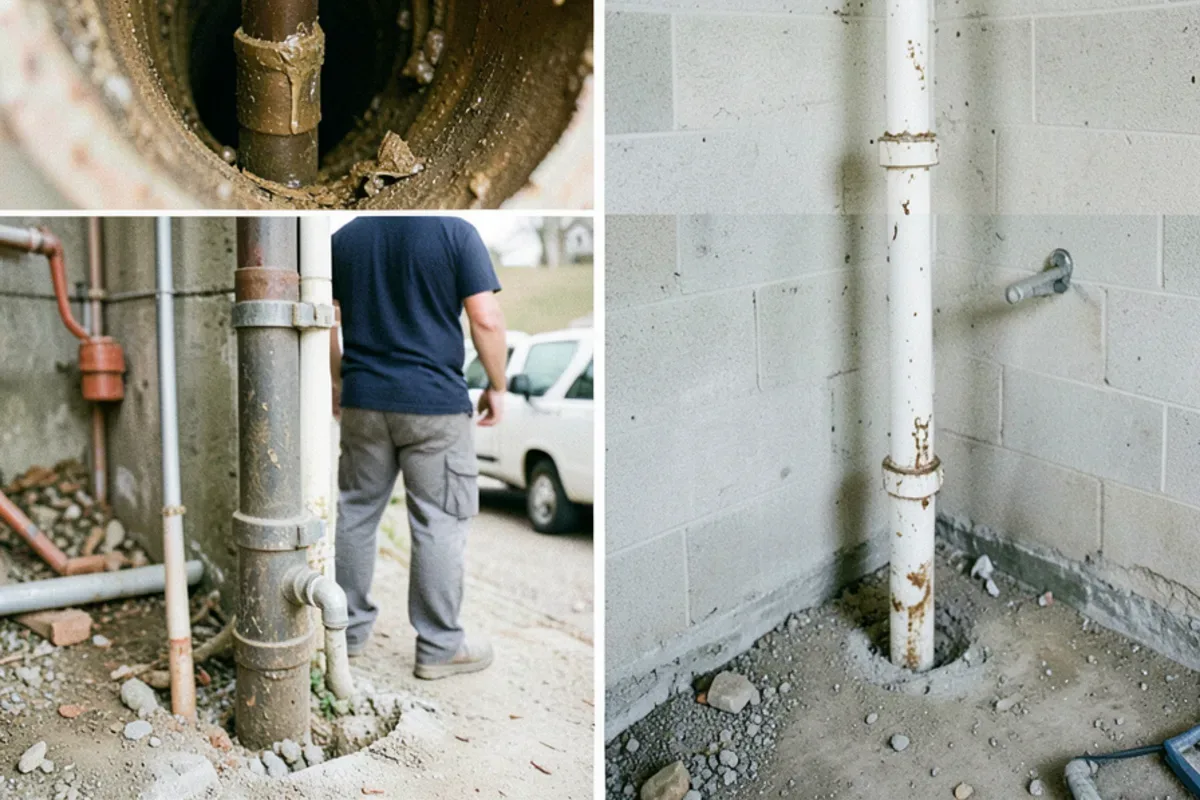
That difference is why we reach for the jetter on recurring clogs rather than clearing the same line over and over. If a drain has backed up more than once, jetting plus a camera look usually ends the cycle.
Restaurant and commercial lines along I-75
The clearest case for jetting is a food-service drain. Grease that washes down a commercial kitchen line cools and layers on the pipe, and no amount of cabling keeps ahead of it. Restaurants and cafeterias along the I-75 corridor and near Great Lakes Crossing run their lines on a jetting schedule for that reason, often paired with grease trap service so the trap catches what the kitchen produces. Scheduled jetting during closed hours keeps a slow drain from becoming a health-department problem during service.
Roots, scale and the lines jetting suits at home
At home, jetting handles more than grease. Fine root hairs that have found a joint in an older lateral are cut and flushed, scale inside aging cast iron is knocked down, and the sludge that settles in a flat run is carried out. In the newer subdivisions, a long basement branch that sits close to level and collects buildup is a good candidate. We match the nozzle and pressure to the pipe, so the same machine cleans a four-inch main and a smaller kitchen line without overdoing either.
When jetting is the wrong tool
High-pressure water belongs in a sound pipe. On a line that a camera shows is cracked, badly corroded or already collapsing, jetting can turn a weak spot into a hole, so the right move there is to find and fix the damage rather than blast it. That is why we look before we jet on any line with a history, and why jetting and a sewer camera inspection go together. If the pipe turns out to be failing, the conversation shifts to repair or replacement.
What a jetting visit costs and covers
The size and length of the line, how much buildup is in it, and whether a camera runs before and after set the cost. A single greasy kitchen branch is a short visit; a long commercial main heavy with grease takes more. On a line with a history we usually camera it first so the jetting is aimed and so we confirm the pipe can take the pressure, then camera it after to show the wall is clean. We go over the scope before the machine starts.
Hydro jetting around Auburn Hills and nearby cities
- Plumber in Rochester Hills
Restaurants and busy family kitchens here layer grease on long branch runs that jetting clears where a cable cannot.
- Plumber in Troy
Office parks and retail along the corridor have food service with commercial lines that need scheduled jetting.
- Plumber in Rochester
Downtown Rochester restaurants run grease-heavy lines into older pipe that benefits from jetting over repeated cabling.
- Plumber in Pontiac
Aging cast iron laterals scale up inside, and jetting knocks the scale down to restore the real pipe diameter.
- Plumber in Bloomfield Township
Large kitchens with disposals send more grease and food down the line than a cable keeps ahead of.
- Plumber in Sterling Heights
West Macomb commercial kitchens and strip-center food service rely on regular jetting to avoid service-hour backups.
- Plumber in Birmingham
Downtown restaurants and remodeled homes mix new fixtures with old drains where grease collects at the transition.
- Plumber in Madison Heights
Light-industrial and food-service buildings have floor drains and process lines that jetting clears of sludge and scale.
- Plumber in Oakland County
Across the county, greasy kitchen lines and root-infiltrated older laterals are the two jobs jetting handles best.
Hydro jetting questions from Auburn Hills customers
Is hydro jetting better than snaking a drain?
For the right line, yes. Snaking cuts through a clog but leaves grease and scale on the wall, so a greasy or recurring line slows again soon. Jetting scours the whole wall and flushes it out, which lasts far longer. For a simple one-off clog or a root ball, a cable is enough; for buildup, jetting is the better tool.
Can hydro jetting damage my pipes?
In a sound pipe, no. The danger is jetting a line that is already cracked, badly corroded or collapsing, where high pressure can open a hole. That is why we camera a line with any history of trouble before jetting, to confirm the pipe can take it. If the camera shows damage, we repair the pipe instead of blasting it.
How often should a restaurant line be jetted?
It depends on the volume of grease, but food-service lines are usually jetted on a regular cycle rather than waiting for a backup, because grease rebuilds steadily. Pairing scheduled jetting with grease-trap service keeps the line ahead of the buildup and avoids a slow drain during business hours. We help set an interval to the kitchen.
Do you camera the line before jetting?
On any line with a history of backups, yes. The camera shows what is in the pipe and whether it is sound enough for high pressure, so the jetting is aimed and safe. We often run it again afterward so you can see the wall is actually clean, rather than only the center opened the way a cable would leave it.
Still not sure what you're dealing with? Describe it on the phone and we'll tell you what we'd check first.
(207) 419-2600Last updated October 28, 2026