
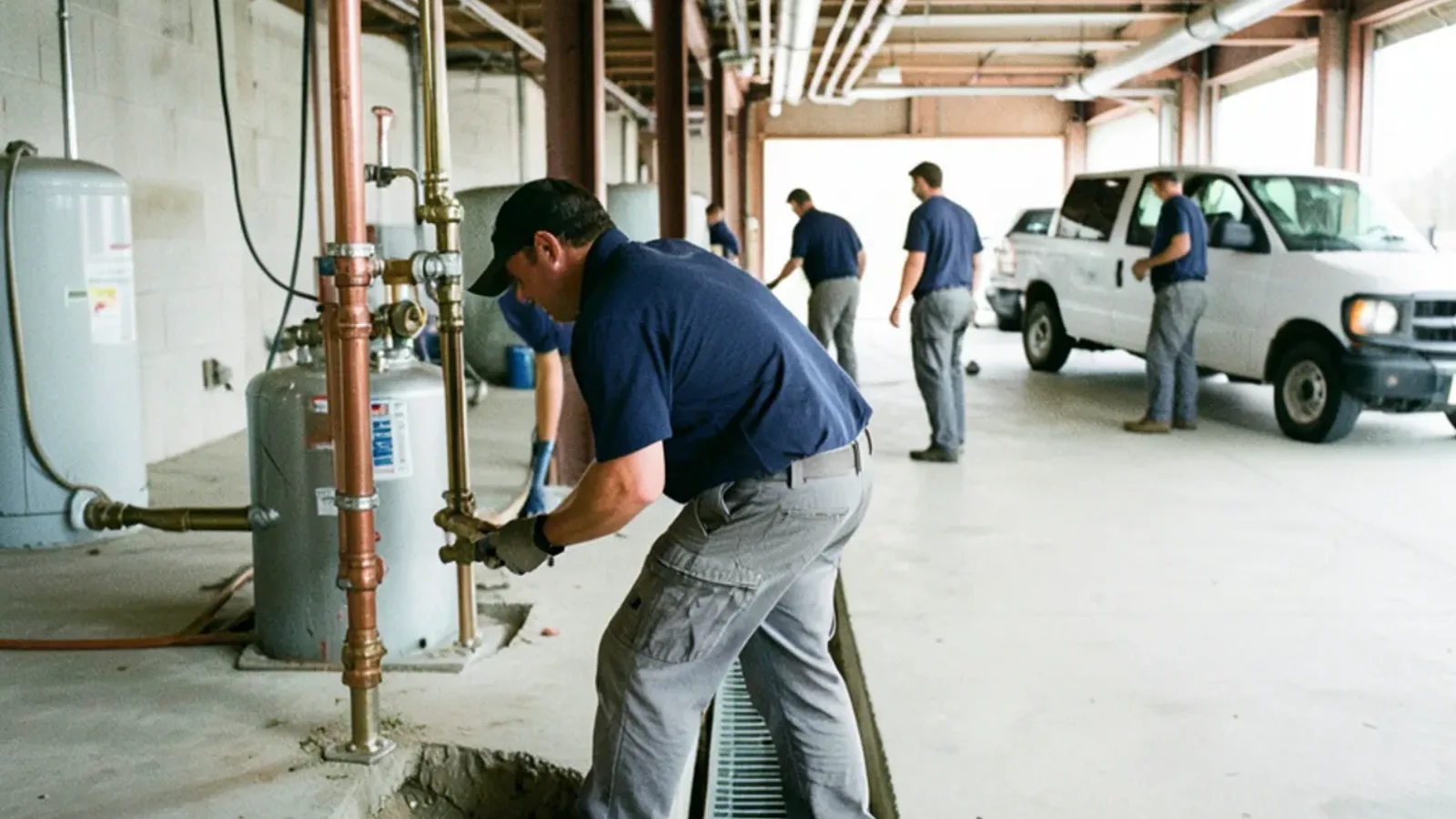
Industrial plumbing in Auburn Hills serves the plants, warehouses and research facilities along the I-75 corridor, where the Chrysler Technical Center anchors a base of manufacturing, distribution and R&D. The work is heavier than a storefront: process water lines, trench and floor drains built for volume, backflow protection on more than one service, and large water heaters, all kept running on a plant’s schedule.
This page covers plumbing for industrial buildings, which is a different animal from the offices and retail on our commercial page.
Plumbing built for a plant, not an office
A warehouse or plant moves water at a scale an office never does, and the plumbing is sized and built for it. Process lines feed equipment and wash-down stations; trench and floor drains carry volume off a production floor and have to stay clear; make-up water and larger water heaters supply the building; and the whole thing is tied to a service with backflow protection that regulators watch closely because the risk of cross-connection is real. Downtime is costly, so the work is planned around production and shutdown windows rather than dropped on the floor mid-shift.
Process water lines and wash-down stations
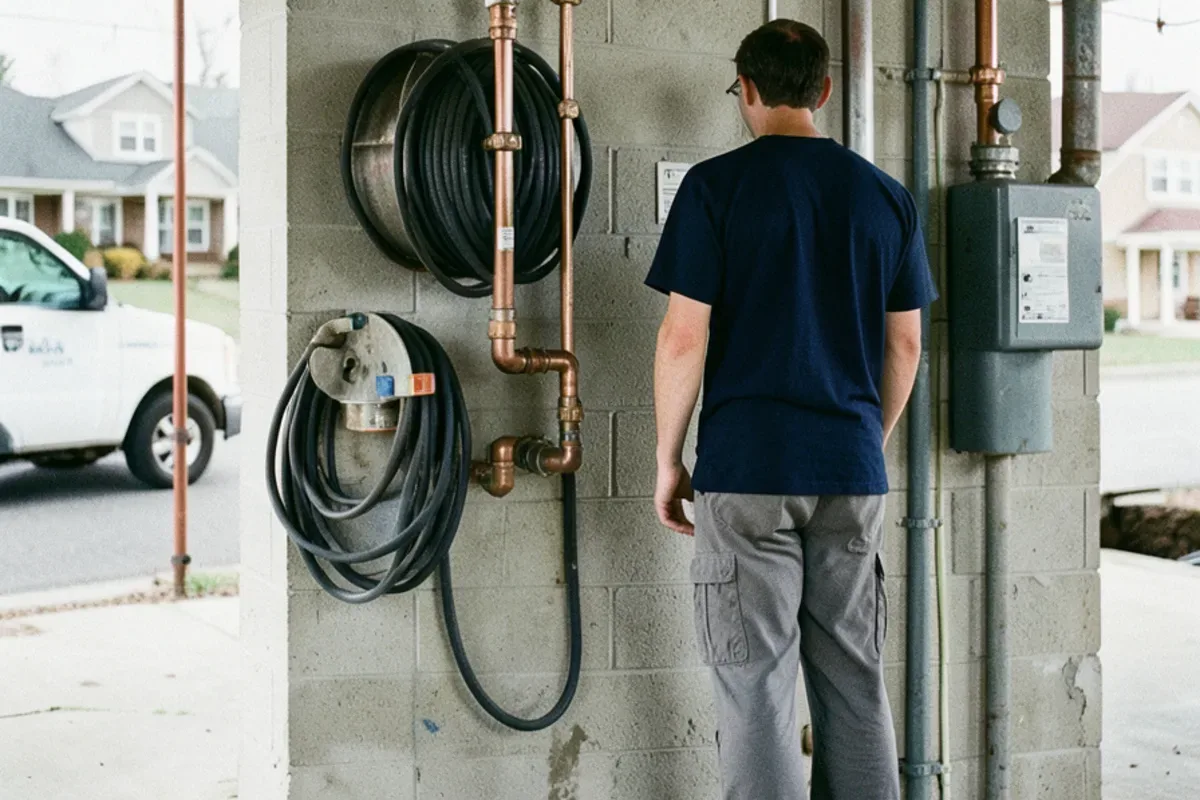
The lines that feed equipment and wash-down points are the arteries of a plant, and they fail in ways a house never sees: high demand, constant cycling, chemicals and the sheer size of the pipe. We install, extend and repair process water lines, add or relocate hose stations and equipment feeds as a line changes, and isolate sections so a repair does not shut the whole floor. Keeping these documented matters, because the next change or repair goes faster when someone knows where the lines run and what they feed.
Floor drains, trench drains and keeping them clear
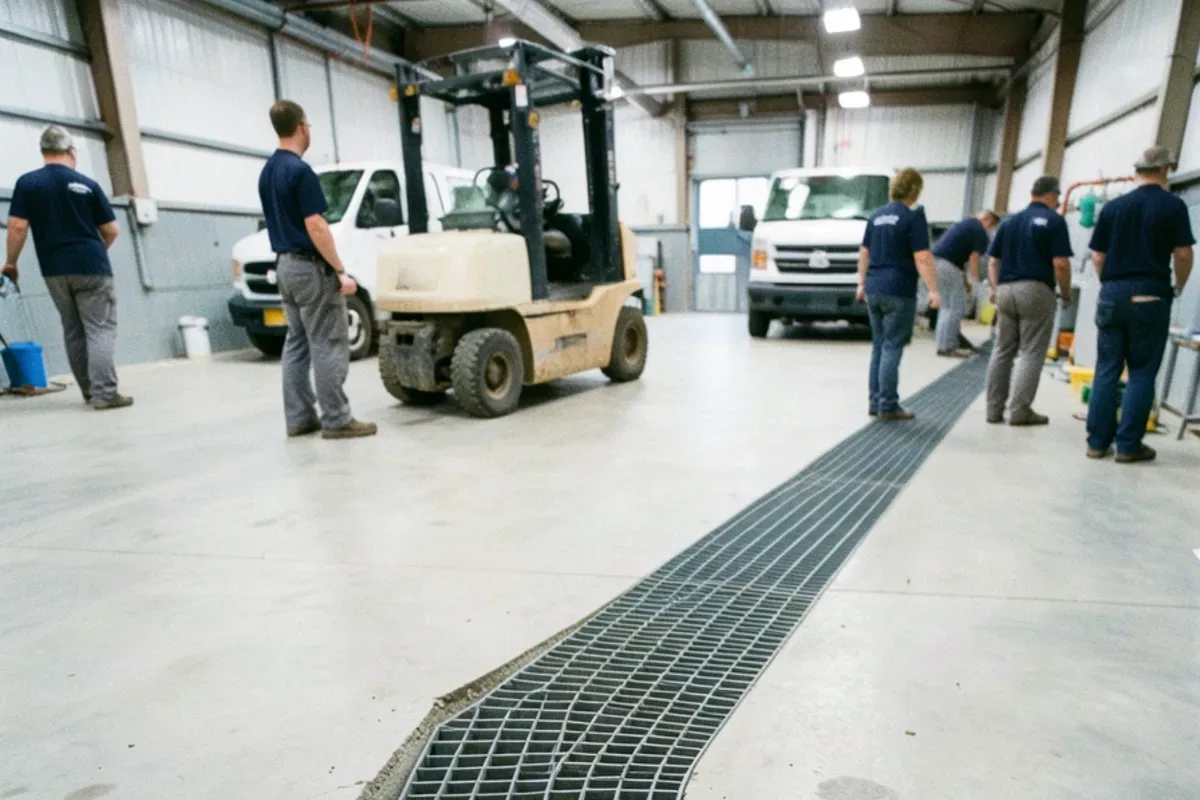
Drainage on an industrial floor is a maintenance item, not a one-time install. Trench and floor drains collect whatever the process puts down them, and when they slow, water backs onto the floor and stops work. We jet and clear these on a schedule, camera the lines that recur, and keep the interceptors and separators that catch solids or oils working. For a facility with a kitchen or cafeteria, grease handling is part of it too, the same way our grease trap and hydro jetting work keeps a commercial kitchen open.
Backflow and cross-connection on an industrial service
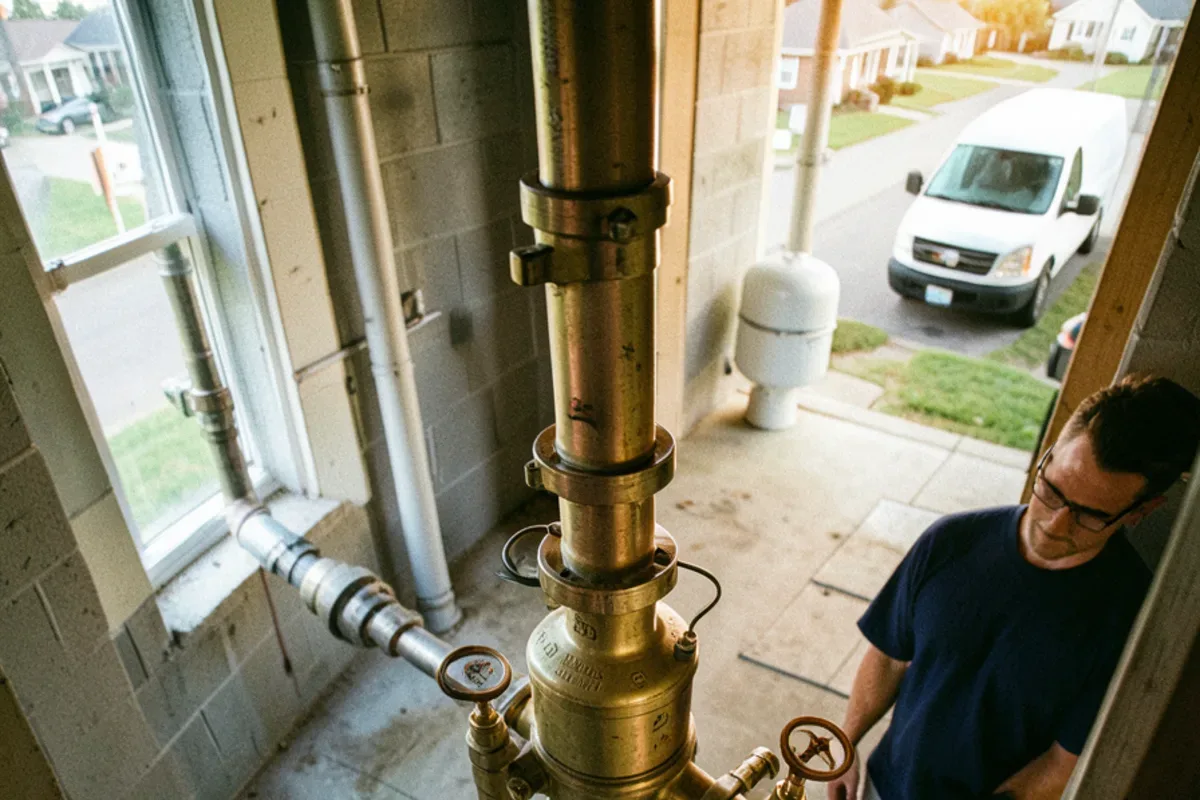
Cross-connection is the serious risk in an industrial building, because process water, chemicals and equipment can push back into the potable supply if nothing stops them. That is why these facilities carry reduced-pressure backflow assemblies on the service and often on individual process connections, and why those assemblies are tested on a required cycle by a certified tester who reports to the water purveyor. We test, repair and install these the way our backflow testing work does for any building, with the added attention an industrial cross-connection survey needs.
Eyewash, safety fixtures and code
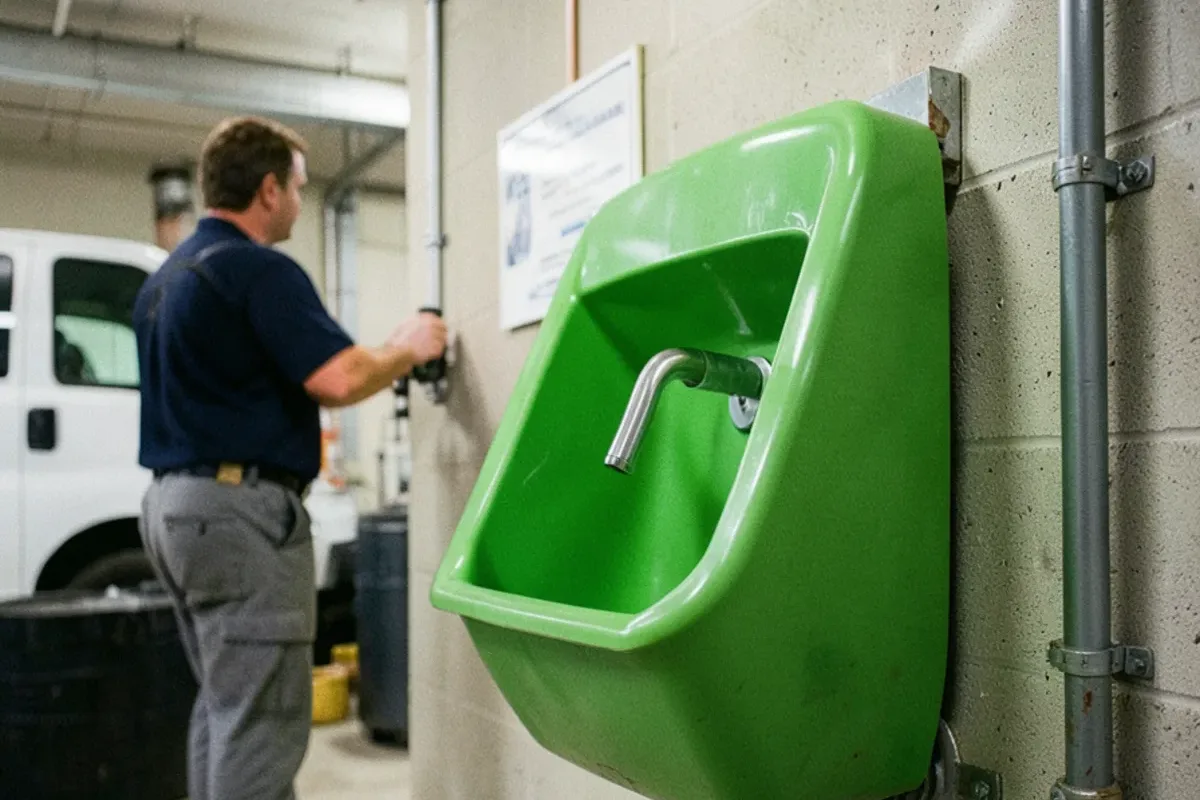
Industrial buildings carry plumbing that offices do not: emergency eyewash and safety-shower stations that have to deliver the right flow and be kept functional, floor sinks and indirect waste for equipment, and large commercial water heaters feeding the building. All of it is permitted and inspected under the 2021 Michigan Plumbing Code, and a facility is inspected to a higher bar because the consequences of a failure are larger. We install and maintain these fixtures to that standard, and keep the records a plant’s own safety and compliance people rely on.
Industrial plumbing around Auburn Hills and nearby cities
- Plumber in Rochester Hills
Light-industrial and R&D buildings near the corridor need process lines, trench drains and backflow kept running.
- Plumber in Troy
The tech and office parks include flex and light-manufacturing space with process water and floor-drain needs.
- Plumber in Pontiac
Older manufacturing and warehouse buildings here need process-line repair and drain maintenance at scale.
- Plumber in Madison Heights
A dense light-industrial corridor relies on floor-drain jetting, process lines and backflow compliance.
- Plumber in Sterling Heights
West Macomb manufacturing and distribution buildings need the same heavy process and drainage plumbing.
- Plumber in Rochester
Flex and R&D space on the edges needs process water, safety fixtures and documented backflow testing.
- Plumber in Bloomfield Township
Corporate and lab facilities carry process and safety plumbing that must be maintained to a higher standard.
- Plumber in Waterford Township
Warehouse and light-industrial buildings along the routes need trench-drain and process-line service.
- Plumber in Oakland County
County-wide, the I-75 industrial base shares the need for process lines, drainage and cross-connection control.
Industrial plumbing questions from Auburn Hills customers
How is industrial plumbing different from commercial work?
Scale and risk. A plant or warehouse moves water through process lines, wash-down stations and trench drains built for volume, carries backflow protection on more than one connection, and has safety fixtures like eyewash stations. The consequences of a failure or a cross-connection are larger, so the work is sized, documented and inspected to a higher bar than an office or store.
Can you keep process drains and lines from stopping production?
Yes, by treating them as scheduled maintenance. Trench and floor drains are jetted and cleared before they back up, recurring lines are cameraed, and interceptors and separators are kept working. Process line repairs are staged so a section isolates without shutting the whole floor, and the work is planned around your production and shutdown windows rather than mid-shift.
Do industrial buildings need backflow testing?
Yes, and often more of it. Process water and chemicals can push back into the potable supply, so these services carry reduced-pressure assemblies, sometimes on individual connections, tested on a required cycle by a certified tester who reports to the water purveyor. We test, repair and install them with the cross-connection attention an industrial facility needs.
Do you maintain eyewash and safety stations?
Yes. Emergency eyewash and drench-shower stations have to deliver the right flow and stay functional, and they are part of a facility’s plumbing and safety compliance. We install and maintain them, along with floor sinks, indirect waste and large water heaters, to the 2021 Michigan Plumbing Code, and keep the records a plant’s safety and compliance team relies on.
Still not sure what you're dealing with? Describe it on the phone and we'll tell you what we'd check first.
(207) 419-2600Last updated October 28, 2026