
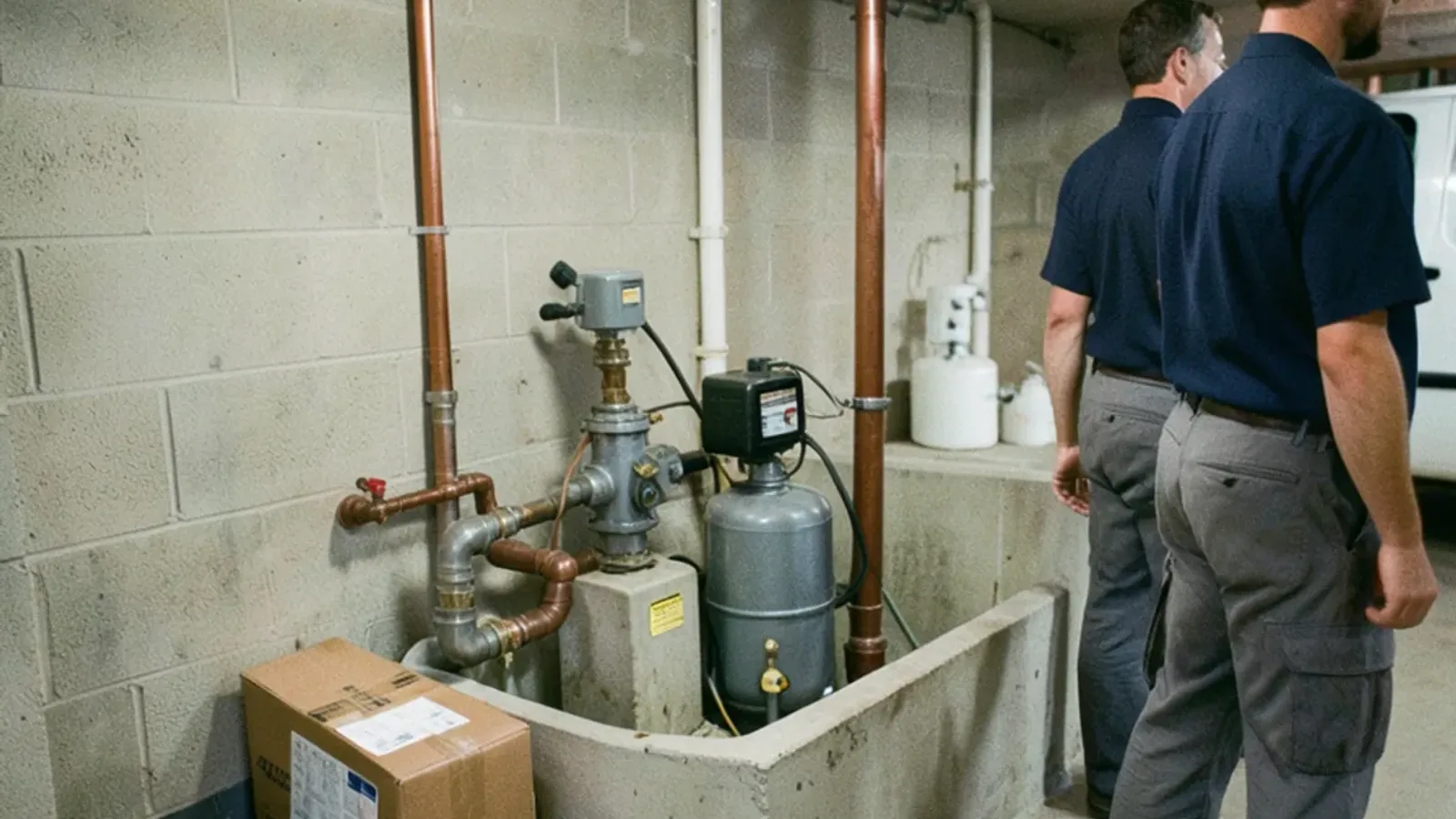
A battery backup sump pump is a second pump that takes over when the first one cannot run, almost always because a storm has cut the power. It sits in the same pit on its own float and its own battery, so when the lights go out the basement still stays dry. In Auburn Hills the storms that flood a basement are often the same ones that drop the power, which is exactly when a backup earns its keep.
This page is about that second line of defense: how it works, what it will and will not do, and how we size one to your pit.
The outage and the flood arrive together
The problem a backup solves is timing. The heavy summer storms that raise the water table and fill a sump pit are the same storms that bring down branches and knock out power across Oakland County. A primary pump with no electricity is just a lump in the pit, and the water keeps rising. A battery backup runs independent of the grid, so the hours when the power is out are the hours it covers. For a finished basement, that window is the difference between a dry floor and a ruined one.
How a battery backup system works
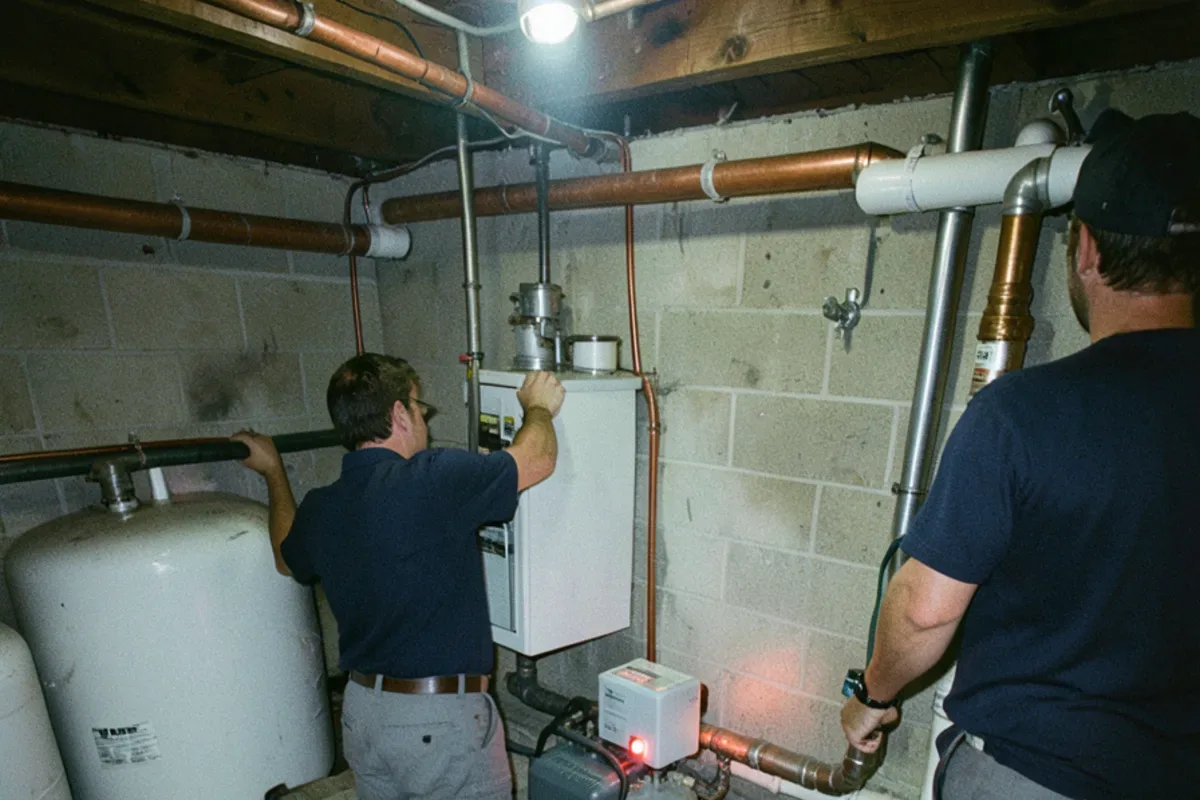
A backup is a complete second pump, not an accessory on the first one. It has its own motor, its own float set slightly higher than the primary’s, and its own discharge, usually teed into the main line above a check valve. A controller keeps a deep-cycle battery charged while the power is on and switches the pump to battery when it senses an outage or the water climbing past the primary’s reach. Many controllers also sound an alarm and some report to your phone, so you know the backup has kicked in rather than finding out later.
What a backup will and will not cover
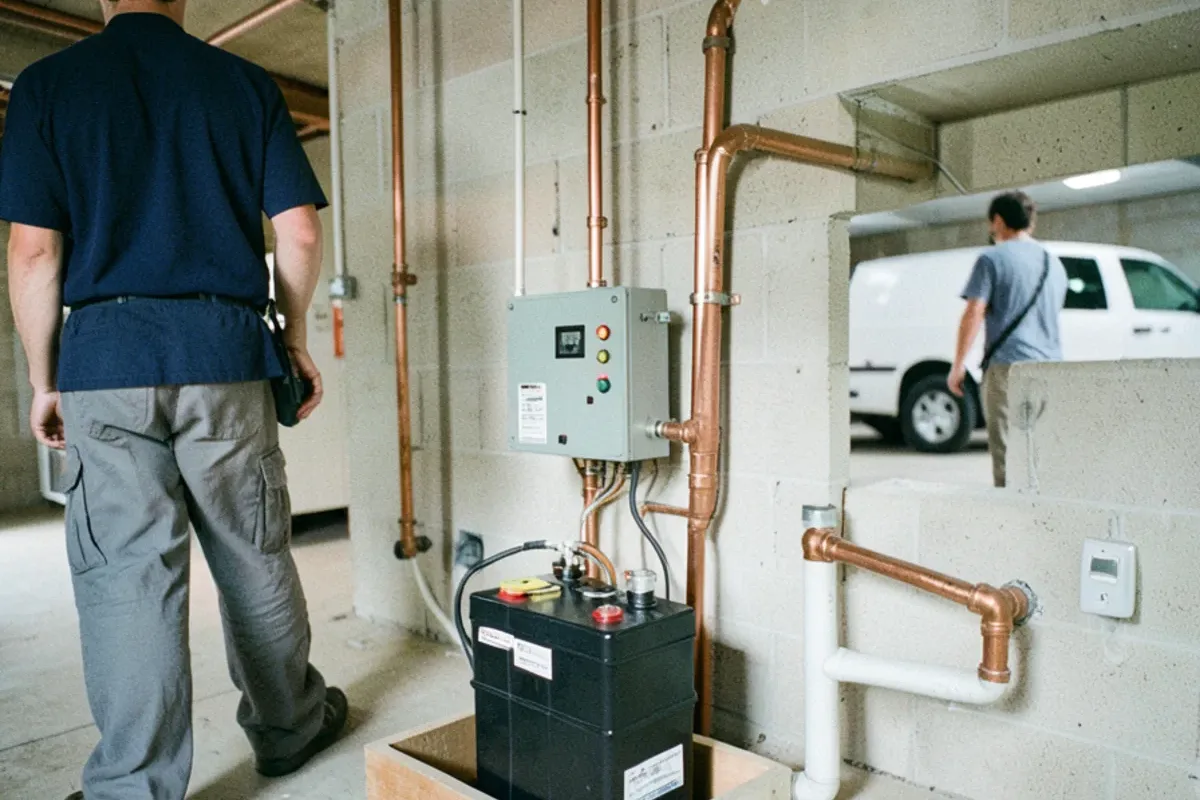
A backup is sized in pumping hours, not days, so it is honest to be clear about its limits. A fully charged battery runs the pump for a number of hours of actual pumping, which stretches across a longer outage because the pump only runs when the pit fills. It carries a typical storm-and-outage well. It is not meant to replace a primary pump that has failed, and it will not keep up with a flood far beyond the primary’s capacity. If your pit regularly overwhelms one pump even with power, the better answer is a larger primary and the backup behind it, which we size together.
Keeping the battery ready for the storm
A backup is only as good as its battery, and a battery that has quietly died over three summers is a backup in name only. The battery is the part that wears, usually every three to five years, and it should be tested, not assumed. We check the charge and the controller, run the pump on battery to confirm it actually lifts water, and clear the backup’s own float and check valve. Setting a reminder to test it before storm season, the way you would a smoke detector, keeps the surprise out of the next outage.
Adding a backup to an existing Auburn Hills pit
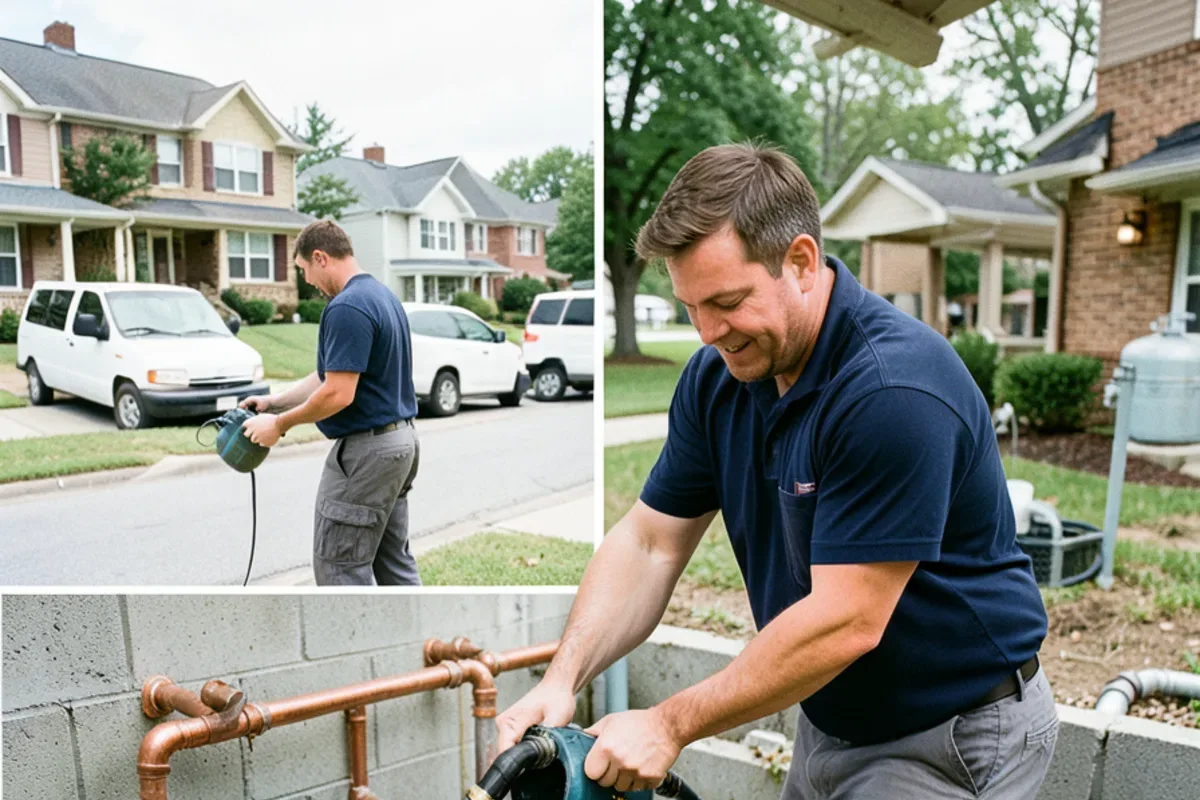
Most homes here already have a primary sump pump and a basin with room for a second pump, so adding a backup is usually a clean job: set the backup pump and float, mount the controller, place and connect the battery, and tie the discharge into the existing line above the check valve. Where the basin is too small for two pumps, a larger basin comes first. We confirm the primary is in good shape at the same visit, because a backup is meant to cover an outage, not prop up a primary that is already failing.
Battery backup sump pumps around Auburn Hills and nearby cities
- Plumber in Rochester Hills
Finished basements over flat clay lots make an outage-proof pump worth it, and most pits here already fit a second pump.
- Plumber in Troy
Storm outages are common, and a finished lower level means a battery backup is cheap next to replacing flooring.
- Plumber in Waterford Township
High lake-country water tables keep pits filling, so coverage through a power loss matters more than almost anywhere.
- Plumber in West Bloomfield Township
Lakeside homes with finished lower levels run primary pumps hard, and an outage during a storm is the real risk.
- Plumber in Bloomfield Township
Large finished basements hold too much value to lose to one storm-and-outage, so backups are standard here.
- Plumber in Orion Township
Wooded lots lose power to downed branches in the same storms that fill the pit, exactly when a backup is needed.
- Plumber in Independence Township
Clay and lake soils keep groundwater high, and rural power lines drop in storms, pairing flood and outage risk.
- Plumber in Lake Orion
Low lots near the lake fill quickly and lose power with the weather, so a tested backup keeps the basement dry.
- Plumber in Oakland County
County-wide, the storm that floods the pit is the storm that cuts the power, which is the whole case for a backup.
Battery backup sump pumps questions from Auburn Hills customers
Do I really need a battery backup sump pump in Auburn Hills?
If a wet basement would be expensive, yes. The storms that flood a pit here are the same ones that knock out power, and a primary pump with no electricity does nothing. A backup runs off its own battery through the outage. For a finished basement or one with anything valuable in it, that coverage is worth far more than the system costs.
How long will a battery backup run during an outage?
It is measured in hours of actual pumping, and because the pump only runs when the pit fills, that stretches across a longer outage. A healthy, fully charged battery carries a typical storm-and-outage well. A very long outage with heavy inflow can outlast it, which is why the battery needs to be in good shape going into storm season.
How often does the backup battery need replacing?
Usually every three to five years. The battery is the part that wears, and it can die quietly, so a backup that has not been tested in a few summers may not run when you need it. We test it on battery power during service and recommend checking it before storm season, the same way you would a smoke detector battery.
Can a backup pump replace my main sump pump?
No. A backup is sized to cover an outage, not to be the everyday pump. It runs on a float set higher than the primary and is not built to handle the full inflow a healthy primary manages on grid power. If your primary has failed, it needs repair or replacement; the backup is the second layer behind a working primary, not a substitute.
Still not sure what you're dealing with? Describe it on the phone and we'll tell you what we'd check first.
(207) 419-2600Last updated October 28, 2026