
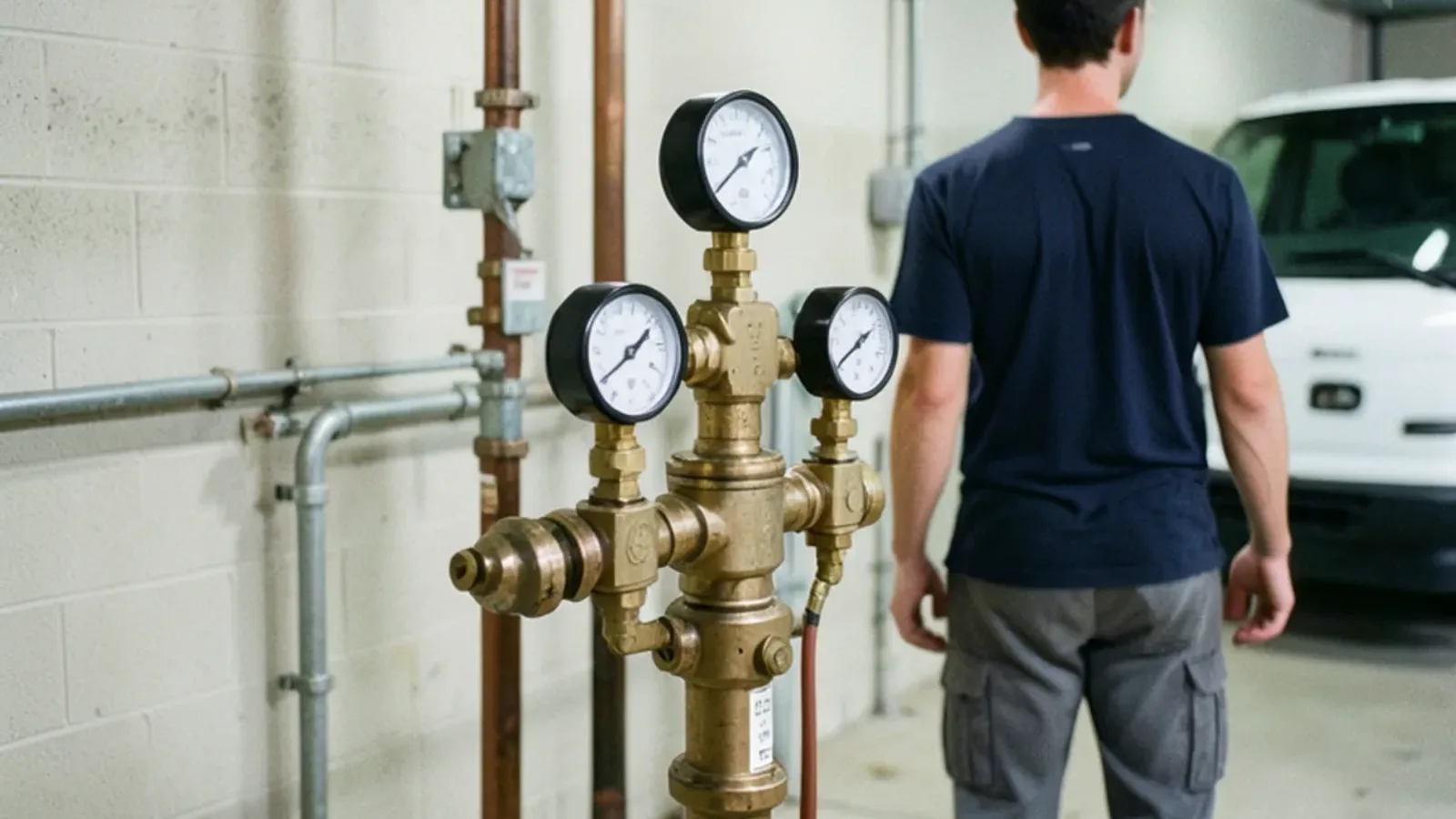
Backflow prevention keeps the water a building uses from being pushed back into the public supply, and the assemblies that do it have to be tested to prove they still work. In Auburn Hills that testing is required every year on irrigation systems, fire lines and commercial services, performed by a certified backflow assembly tester whose results go to the water system.
Testing, repair and new installation are what this page covers, for the businesses, irrigation systems and fire lines across the area that carry these assemblies.
What backflow is and why it is tested
Water in a building’s pipes is supposed to flow one way, from the public main into the property. Backflow is when it reverses, which can happen when pressure in the main drops, during a main break or heavy firefighting draw, or when pressure inside a system climbs above the supply. If a cross-connection exists, an irrigation system full of fertilizer, a boiler full of treatment chemicals, a hose in a utility sink, that reversal can pull contaminated water back into the drinking supply for the whole neighborhood. A backflow assembly is the mechanical check that stops it, and testing proves the checks still seal. Where a physical gap can be built in, an air gap, an open vertical space between the supply and whatever it fills, is the surest break of all; where the plumbing has to stay connected, a tested assembly stands in for it.
The assemblies on an Auburn Hills property
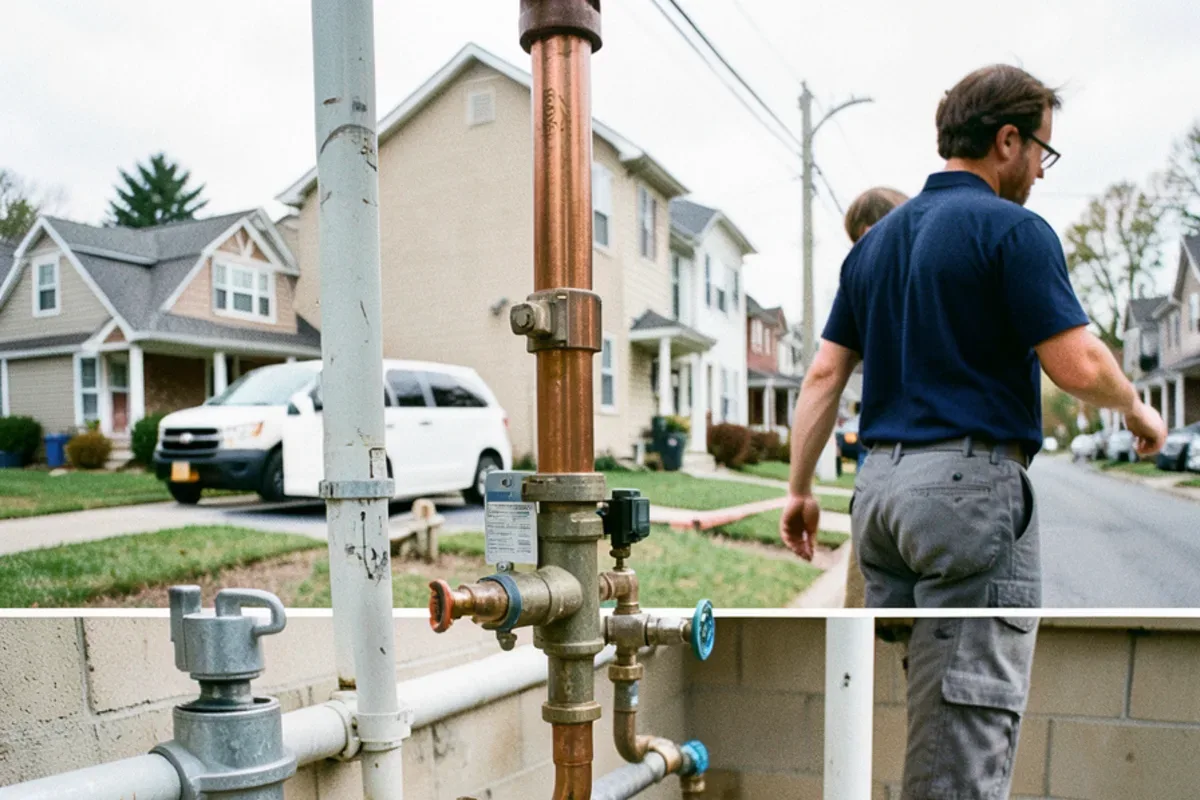
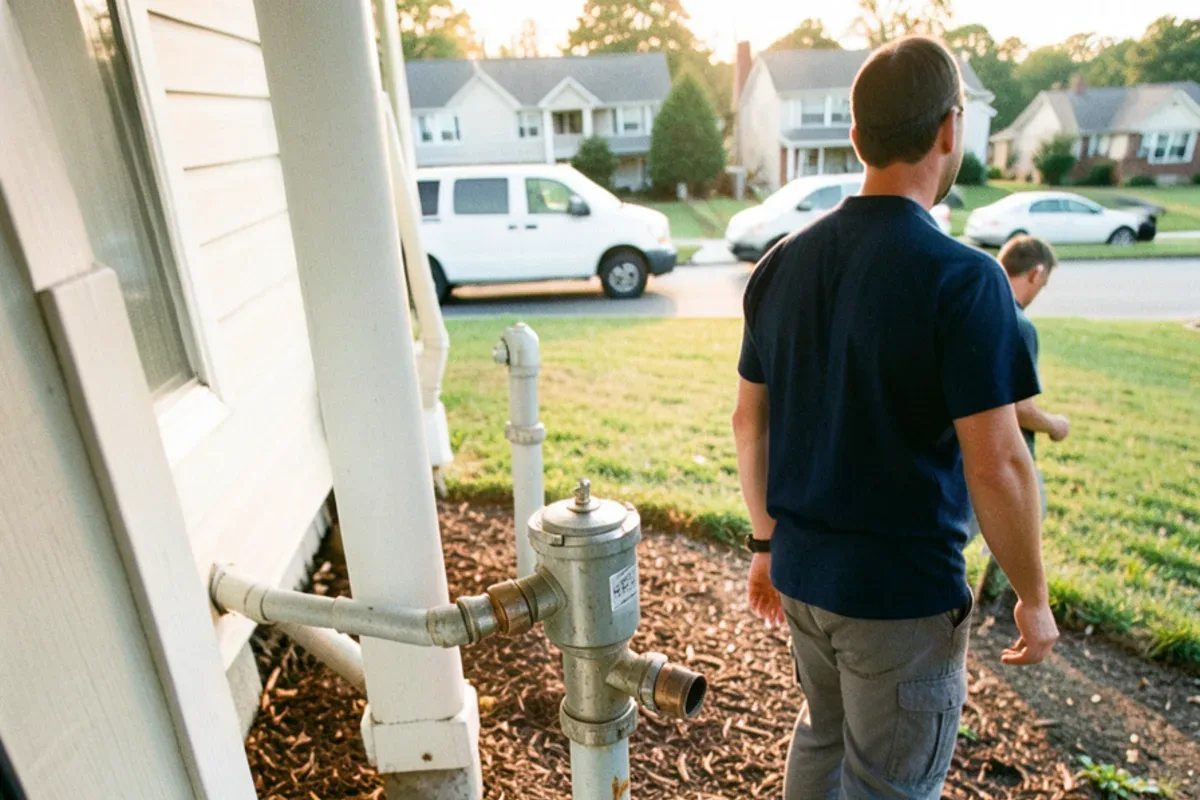
The kind of assembly matches the hazard. A reduced-pressure principle assembly, the RPZ, protects against the worst hazards and is what you find on commercial services, boiler feeds and process connections; it has a relief port that dumps to the floor if the checks fail, which is why it needs a drain. A double-check valve assembly protects lower-hazard connections. On lawn irrigation you often see a double-check or a pressure vacuum breaker. We identify what you have, confirm it is the right type for the hazard, and test it, because an assembly that is wrong for the connection is a problem even when it passes.
Annual testing and reporting to the water system
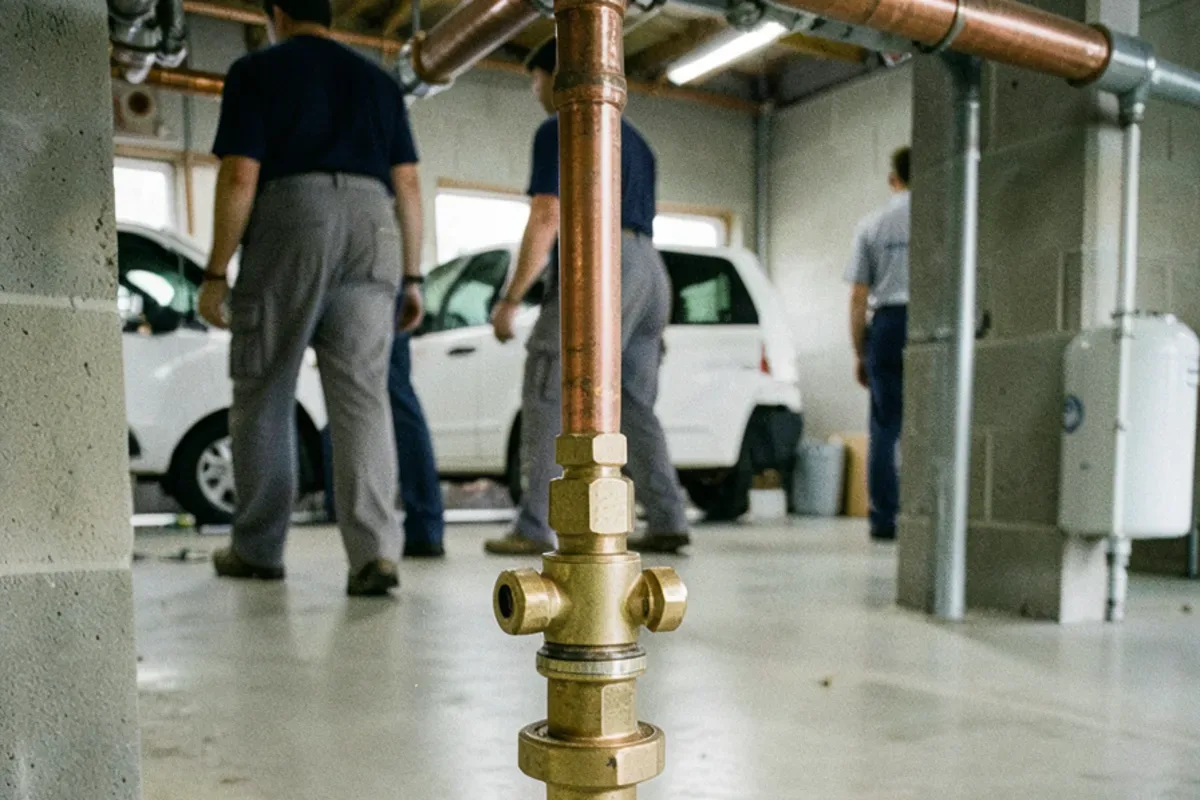
These assemblies are mechanical, and their internal checks and relief valve wear, so a working assembly today can fail to seal next year. That is why testing is required on a cycle, typically yearly, and why it is done by a certified backflow assembly tester using calibrated gauges on the assembly’s test cocks. The test confirms each check holds against reverse flow and the relief opens at the right pressure. The results are reported to the water purveyor on the required form, which is the part that keeps the property in compliance and off the water system’s notice list.
Repairing and rebuilding an assembly that fails
When a test shows an assembly is not sealing, it does not always mean replacement. The checks and the relief valve have rubber seats and springs that wear or catch debris, and most assemblies have repair kits made for exactly that, so a rebuild with new internals often brings a failed unit back to passing. We rebuild where the body is sound and replace where it is cracked, frozen or obsolete. Either way the assembly is retested after the repair and the passing result is filed, so a failure becomes a fixed, documented assembly rather than an open compliance item.
New installs, irrigation and fire lines
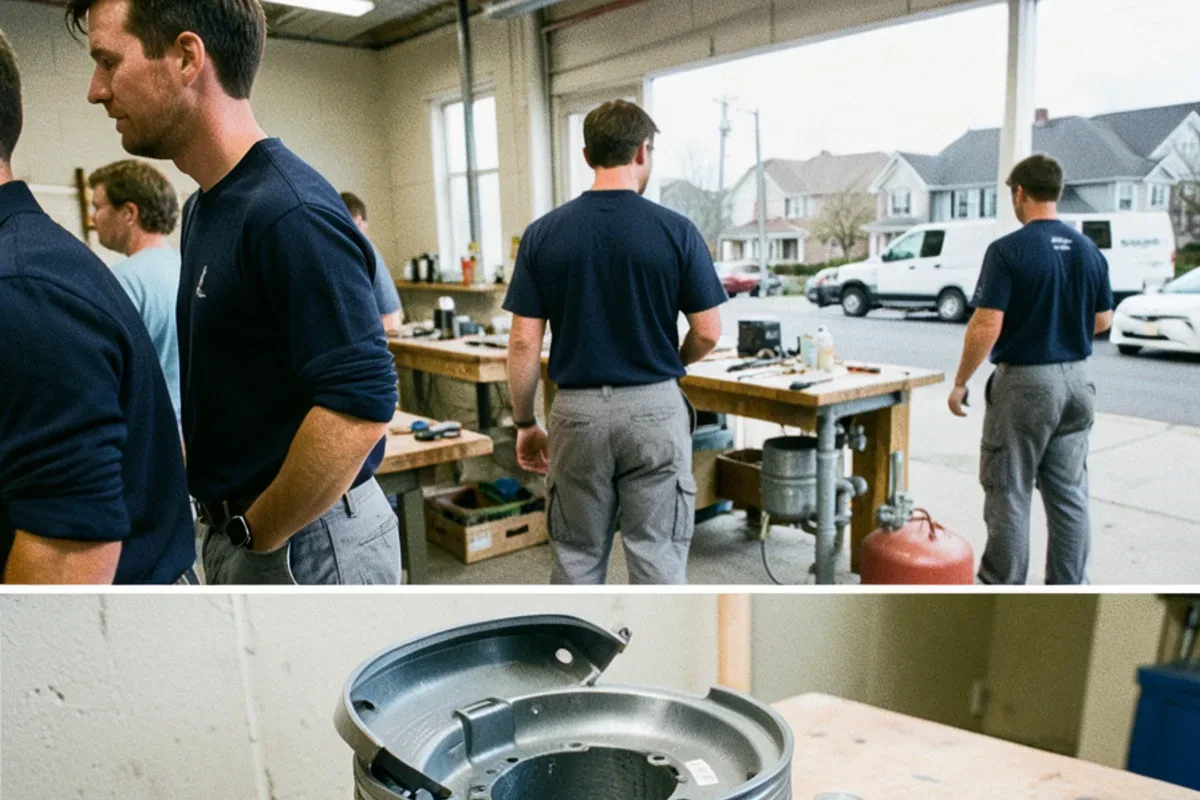
New backflow protection goes in whenever a connection creates a cross-connection the code cares about. Adding a lawn irrigation system is the common residential one, since the sprinkler zones sit in fertilized soil and need a double-check or vacuum breaker. A new commercial service, a boiler, or a fire-suppression line each need the right assembly sized and installed. Fire lines usually carry a double-check detector assembly, a DCDA, which protects the main and meters any flow through the line, and they carry their own rules since the assembly cannot choke the flow a fire needs. We install the correct type for the hazard, set it where it can be tested and drained, and file the first test so it starts its cycle in compliance.
Freeze protection on outdoor assemblies
An irrigation backflow assembly lives outside, and a Michigan winter is hard on it. Water left in the assembly freezes, expands and cracks the body or the internals, which is why irrigation systems here are blown out and the assembly drained before the first hard freeze, and why a cracked assembly is a common spring find when the system is turned back on. We winterize assemblies, repair the ones that froze, and reinstall or replace them in spring, so the yearly test does not turn up a failure the freeze caused months earlier.
Backflow testing and prevention around Auburn Hills and nearby cities
- Plumber in Rochester Hills
Commercial services and the many irrigation systems here carry assemblies that need yearly testing and winter draining.
- Plumber in Troy
Office parks and retail along the corridor run RPZ assemblies on their services that must be tested and reported.
- Plumber in Bloomfield Township
Large homes with lawn irrigation need a double-check or vacuum breaker tested each year and drained before the freeze.
- Plumber in Birmingham
Downtown businesses and irrigated properties carry assemblies the water system tracks on an annual cycle.
- Plumber in Bloomfield Hills
Estates with extensive irrigation have multiple assemblies to test, winterize and repair each season.
- Plumber in Madison Heights
Light-industrial and commercial buildings carry RPZ assemblies on process and service connections requiring testing.
- Plumber in Sterling Heights
West Macomb commercial and irrigated sites need the same annual testing, reporting and freeze protection.
- Plumber in Rochester
Downtown businesses and irrigated properties need assemblies tested, rebuilt and reported to stay in compliance.
- Plumber in Oakland County
County-wide, irrigation, fire lines and commercial services all carry assemblies tested yearly by a certified tester.
Backflow testing and prevention questions from Auburn Hills customers
How often does a backflow assembly need to be tested?
Typically once a year. The internal checks and relief valve are mechanical and wear, so an assembly that works now can fail to seal next year. A certified backflow assembly tester checks it with calibrated gauges on the test cocks and reports the result to the water purveyor on the required form, which is what keeps the property in compliance.
What happens if my backflow assembly fails the test?
It usually means a rebuild, not a replacement. The checks and relief valve have rubber seats and springs that wear or catch debris, and most assemblies have repair kits for exactly that, so new internals often bring a failed unit back to passing. We replace a body that is cracked, frozen or obsolete, then retest and file the passing result either way.
Do I need a backflow preventer for my lawn irrigation system?
Yes. Sprinkler zones sit in fertilized, treated soil, which is a cross-connection, so an irrigation system needs a double-check or pressure vacuum breaker to keep that water from reversing into the supply. It then has to be tested yearly like any assembly, and drained before winter, since an outdoor assembly cracks if water freezes inside it.
Who do the backflow test results go to?
To the water purveyor that serves the property, on the required report form. The water system tracks which assemblies are due and which have passed, and a missed or failed test lands the property on its notice list. Filing the passing result after each test and after any repair is what keeps the assembly, and the property, in compliance.
Does a home need backflow testing, or only businesses?
Both can. A business, an irrigation system, a fire line or a commercial service carries an assembly the water system tracks and tests every year. A home usually needs one only where it has lawn irrigation, a boiler or another cross-connection, and that assembly is tested and winterized the same way. A house with no irrigation and no special connection often has no assembly to test at all.
Still not sure what you're dealing with? Describe it on the phone and we'll tell you what we'd check first.
(207) 419-2600Last updated October 28, 2026