
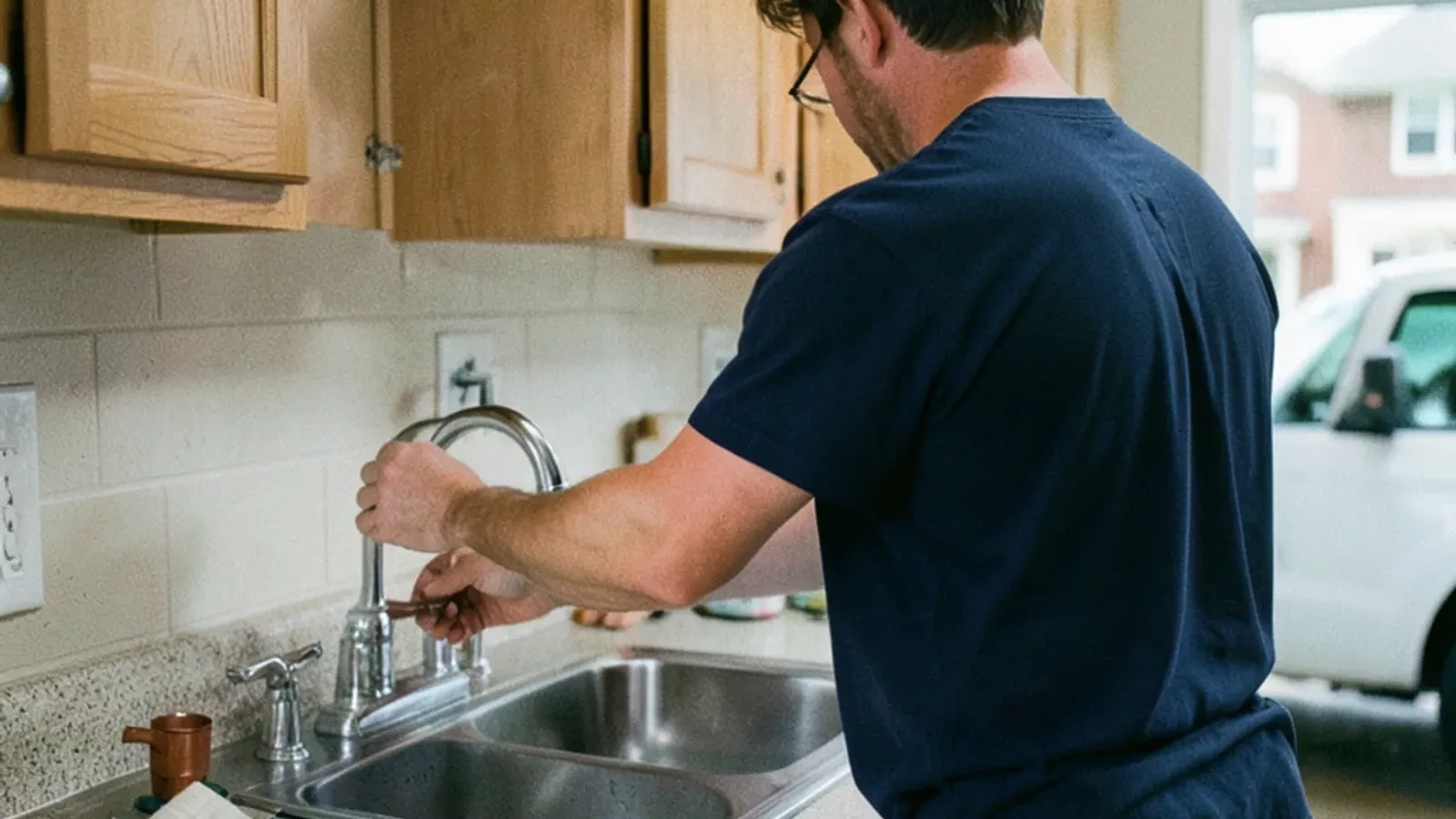
A dripping faucet, weak flow, or a leak under the sink are the small problems in an Auburn Hills kitchen or bath that get expensive if they wait. A drip wastes water and wears a fixture; a slow leak in the cabinet rots the base and feeds mold. Most of it is a cartridge, an aerator, a supply line or a trap, fixable in a visit without replacing the whole faucet or sink.
Here is what each symptom usually is, and when a repair gives way to a new fixture.
Why a faucet drips and how it is fixed
A faucet drips because the part that shuts the water off has worn. On the single-handle faucets in most Auburn Hills kitchens and baths, that is the cartridge, a worn one lets water past even when the handle is off. On older two-handle faucets it is a rubber washer or a seat. A drip from the spout is the valve; water seeping around the base of the handle is a worn O-ring. We rebuild with the right parts for the brand rather than replacing a good faucet, and only recommend a new one when parts are no longer made or the body itself is corroded.
Weak flow at one faucet
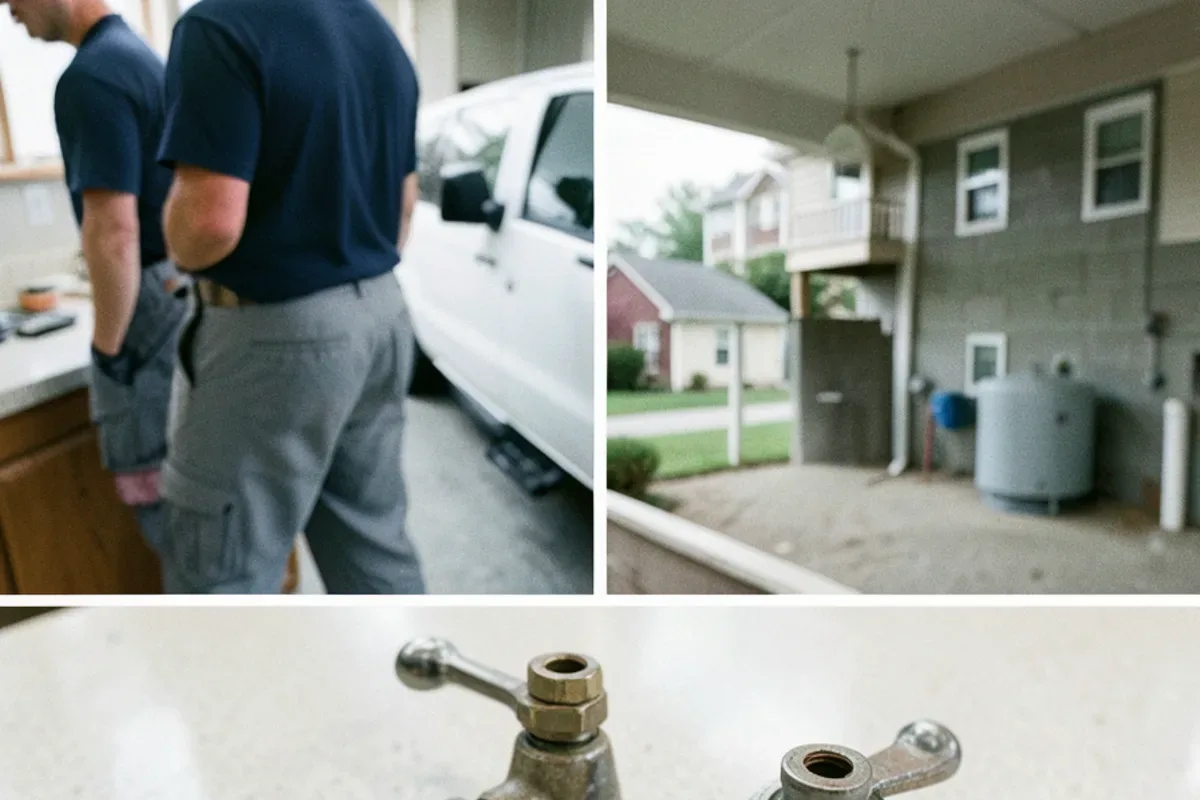
When one faucet trickles while the rest of the house is fine, the problem is local, not the water line. The usual cause is the aerator, the small screen at the tip of the spout, clogged with the mineral scale that moderately hard Auburn Hills water leaves behind. Unscrewing and cleaning or replacing it restores the flow in minutes. If a cleaned aerator does not fix it, the next suspects are a partly closed or corroded shutoff under the sink or a kinked or scaled supply line, all of which we check in order.
The leak you find in the cabinet
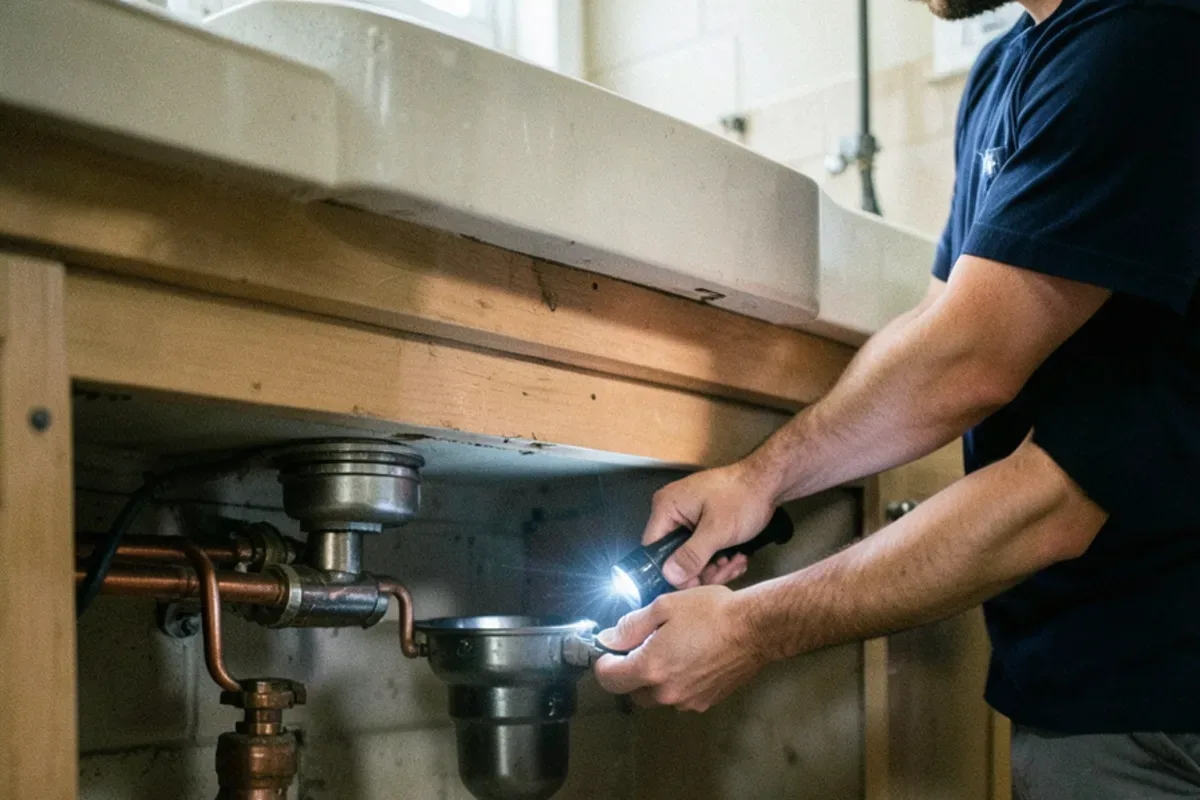
Water in the sink base is the leak that does quiet damage. It comes from a few places: the P-trap or its slip joints, the supply lines or shutoff valves, the sink strainer or the faucet connections above, or, under a kitchen sink, the dishwasher or disposal connection. We trace it to the exact joint rather than tightening everything and hoping, because the fix differs, a new trap washer, a reseated strainer, or a replaced supply line, and because a cabinet floor that is already swollen and dark says the leak has been going long enough to deserve a real repair.
Corroded shutoffs and old supply lines
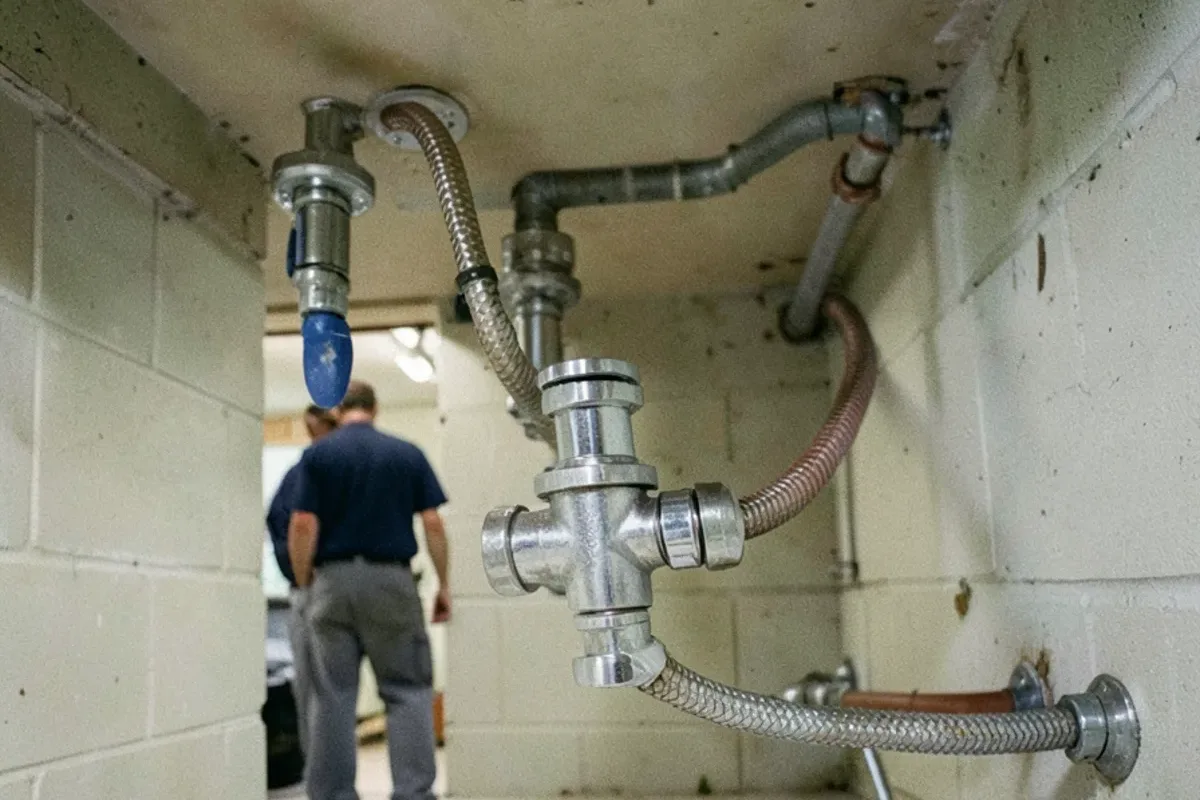
The small shutoff valves under a sink are easy to forget until they seize. On older Auburn Hills homes, and even on 1990s ones, the original multi-turn stops and their supply lines corrode, drip at the packing, or refuse to close when you finally need them, which turns a simple faucet swap into a bigger job. When we are under the sink anyway, replacing a seized stop with a quarter-turn valve and swapping a crusty supply line for a braided one is cheap insurance, so the next repair, or the next emergency, starts with a shutoff that actually works.
When a new faucet or sink makes sense
Repair is usually the call, but not always. A faucet whose parts are discontinued, whose body is corroded through, or that has been rebuilt once already is better replaced. A sink that is cracked, badly chipped or rusted at the drain is the same. When you are replacing a faucet by choice, we confirm the new one fits the sink’s hole configuration and the deck, set it with fresh supply lines and shutoffs, and check the drain and trap while we are there, so a cosmetic upgrade does not leave an old leak behind.
Faucet and sink repair around Auburn Hills and nearby cities
- Plumber in Rochester Hills
Single-handle faucets in its 1990s kitchens and baths drip at the cartridge, and hard-water aerators clog the flow.
- Plumber in Troy
Under-sink leaks in finished spaces get traced to the exact joint before the cabinet floor is ruined.
- Plumber in Rochester
Older homes have seized multi-turn shutoffs and corroded supplies that are swapped during a faucet repair.
- Plumber in Birmingham
Remodeled kitchens keep original stops that corrode, so a faucet swap includes new quarter-turn valves.
- Plumber in Bloomfield Township
Multiple baths and kitchen prep sinks mean more faucets, cartridges and aerators to service.
- Plumber in Royal Oak
Older homes have two-handle faucets whose washers and seats wear, plus aged supply lines under the sink.
- Plumber in Madison Heights
Postwar homes have original shutoffs and supplies that leak at the packing and get renewed with any repair.
- Plumber in Clawson
Small older homes with dated fixtures see drips and weak aerators that a cartridge or cleaning fixes.
- Plumber in Oakland County
County-wide, worn cartridges, scaled aerators and tired under-sink shutoffs are the everyday faucet and sink calls.
Faucet and sink repair questions from Auburn Hills customers
Why does my faucet drip even when it is turned off?
Because the part that shuts the water off has worn. On a single-handle faucet that is the cartridge; on a two-handle one it is a washer or seat. A drip from the spout is the valve, while water around the handle base is a worn O-ring. We rebuild with the right parts for the brand rather than replacing a faucet that is otherwise fine.
Why is the water pressure low at just one faucet?
When only one faucet is weak, the cause is local. Usually it is the aerator at the spout tip clogged with mineral scale from the hard water here, which cleans or replaces in minutes. If that does not fix it, a partly closed or corroded shutoff under the sink or a kinked supply line is next, and we check those in order.
There is water under my sink. Where is it coming from?
From the trap and its slip joints, the supply lines or shutoffs, the sink strainer, or, under a kitchen sink, the dishwasher or disposal connection. We trace it to the exact joint instead of tightening everything, since each needs a different fix. A swollen, dark cabinet floor means it has been leaking a while and needs a real repair.
Should I replace my faucet or repair it?
Repair is usually right, a cartridge, washer or aerator restores most faucets. Replace when the parts are discontinued, the body is corroded through, or it has already been rebuilt once. A new faucet by choice is fine too; we confirm it fits the sink, set it with fresh supplies and shutoffs, and check the drain so no old leak is left behind.
Still not sure what you're dealing with? Describe it on the phone and we'll tell you what we'd check first.
(207) 419-2600Last updated October 28, 2026