
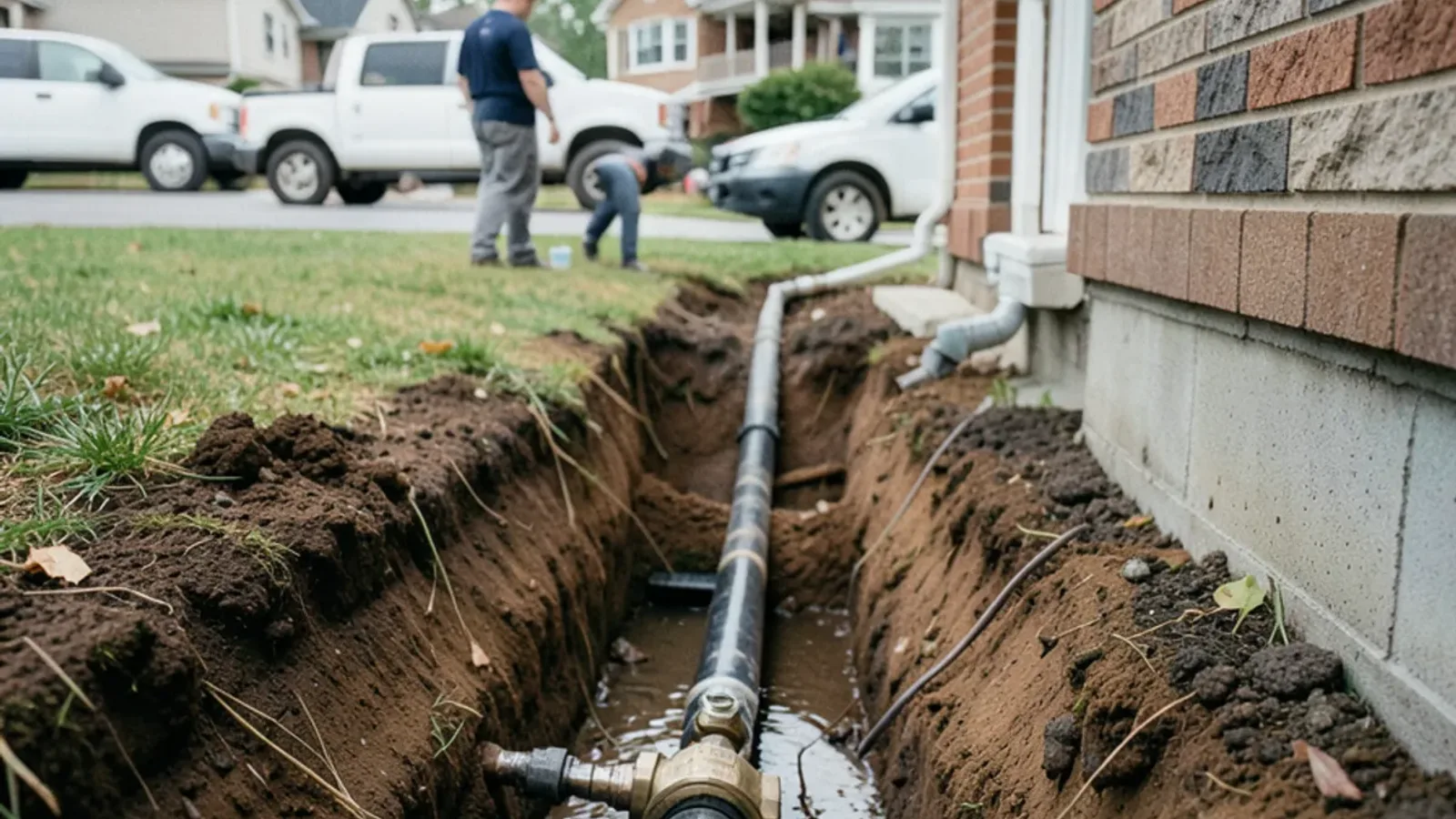
The main water line is the single pipe that brings water from the street into your Auburn Hills home, running underground from the curb stop to the meter. When it leaks you get a soggy patch of lawn, a drop in pressure at every fixture, or a wet spot near where the line enters, and because it is buried and under constant pressure, a small leak only grows.
This is the service line, not the pipes inside the walls. Here is how to read the signs, who owns which part, and what repair or replacement involves.
Where your water service line runs and who owns it
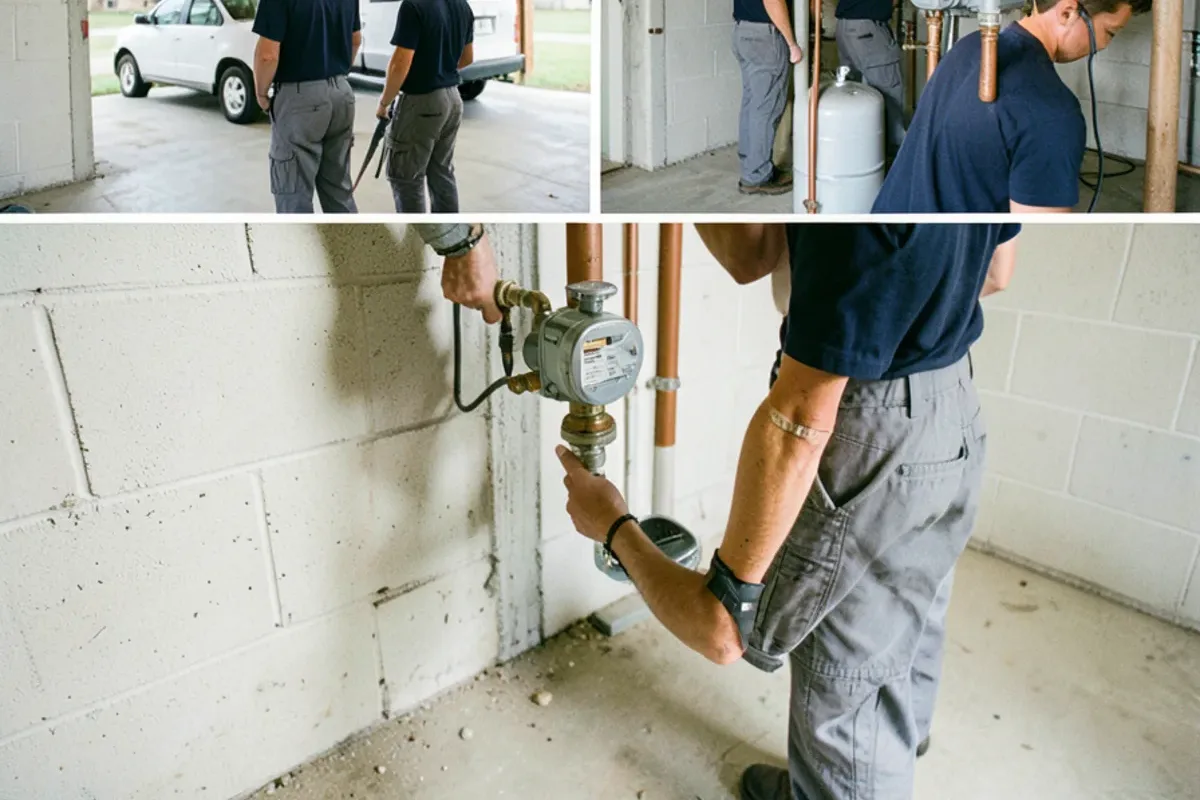
Water leaves the street main, passes a curb stop near the property line, and travels underground to the meter inside your home. The split in responsibility usually falls at the curb stop: the water provider owns the main and the connection up to it, and the homeowner owns the service line from the curb stop into the house. So a leak bubbling up in the street is generally the provider’s, while a wet lawn, a pressure drop, or water at the meter inside is on your side and is what we repair. If you are unsure which side a leak is on, we help sort that before anyone digs.
The signs a main line is leaking
A service-line leak shows aboveground before you ever see the pipe. A strip of lawn that stays green and spongy when the rest is dry, water pooling along the line’s path, a steady drop in pressure at every tap at once, a jump in the water bill, or a damp spot where the line enters the basement are the common tells. Because the line is under constant pressure, what starts as a seep becomes a washout, so a soft patch of yard is worth tracing early rather than waiting for the pressure to fall off entirely.
Repair or replace the service line
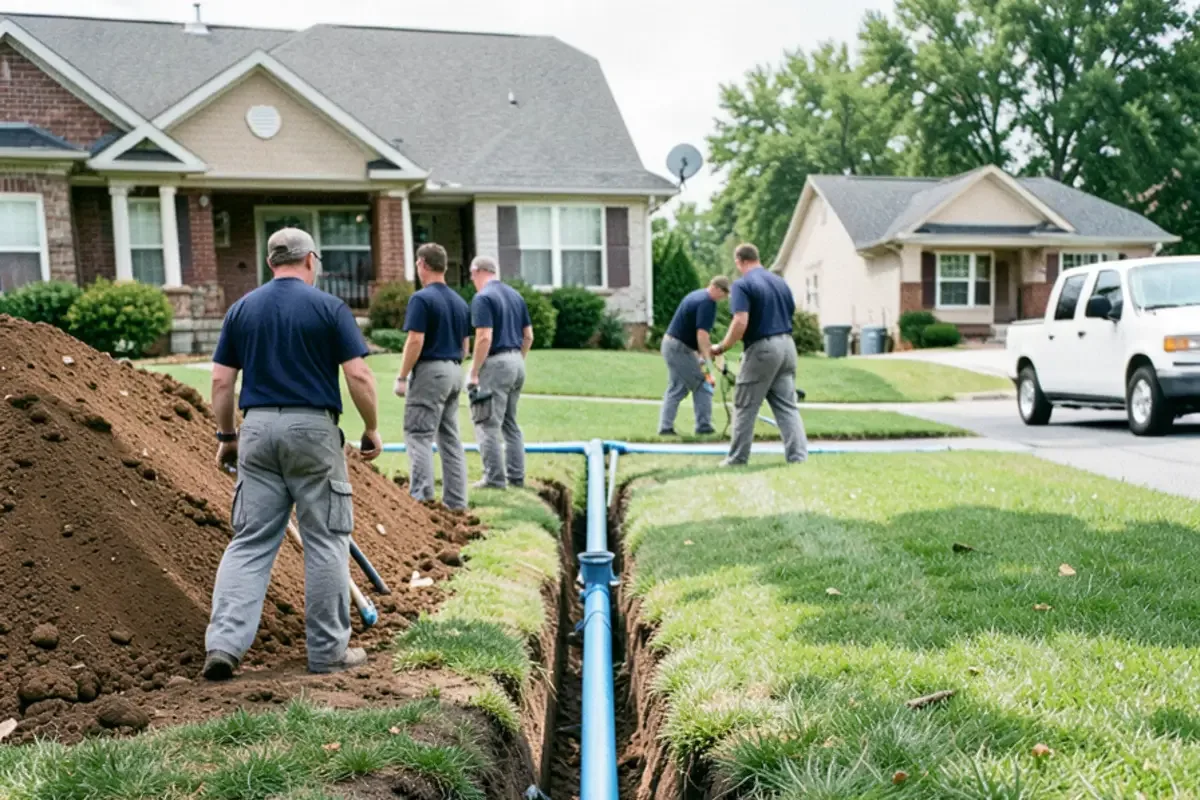
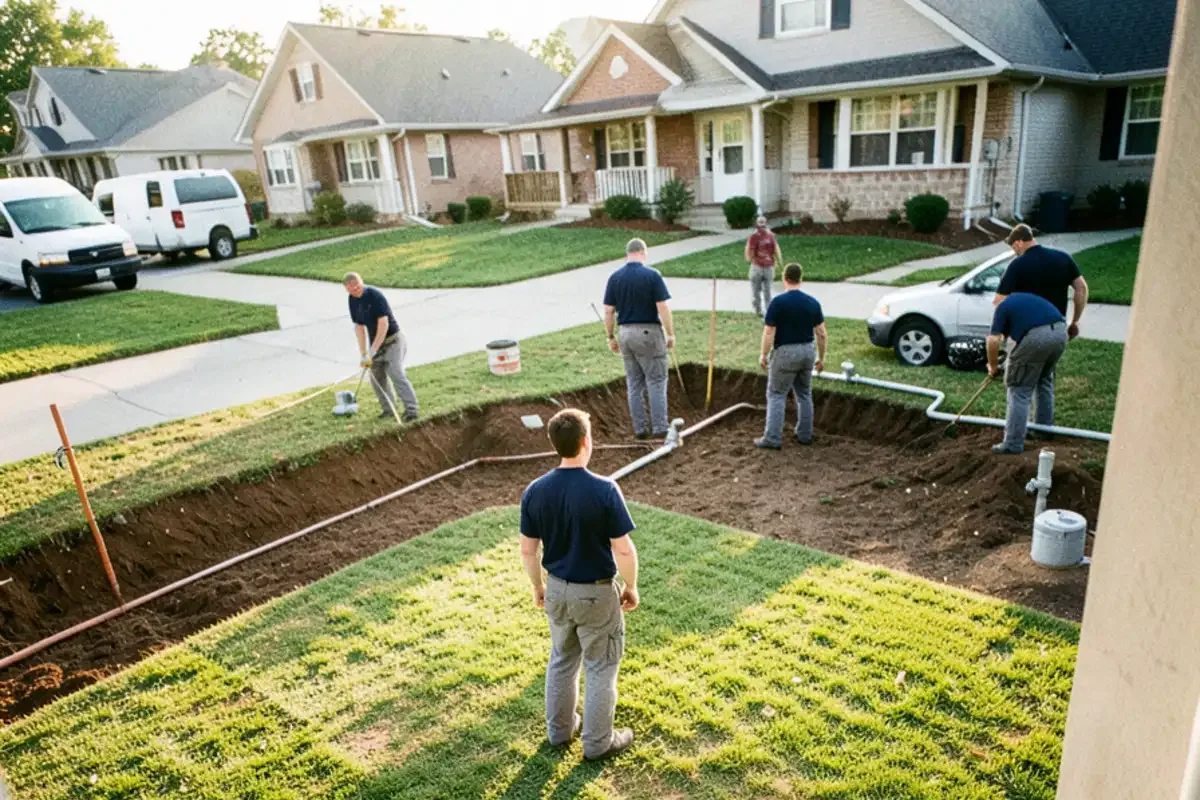
What we find decides the fix. A single failure at a fitting or a spot of damage can be excavated and repaired where it is. But an old line, whether it is early polybutylene, corroded galvanized or thin copper, that has leaked once will usually leak again, and replacing the run is the better value than digging the same yard twice. Replacement means a new line, commonly PEX-rated service pipe or copper, from the curb stop to the meter. Where the yard makes trenching hard, a pulled-in or trenchless replacement is sometimes an option worth pricing against open-cut.
Low pressure that is the line, not the fixtures
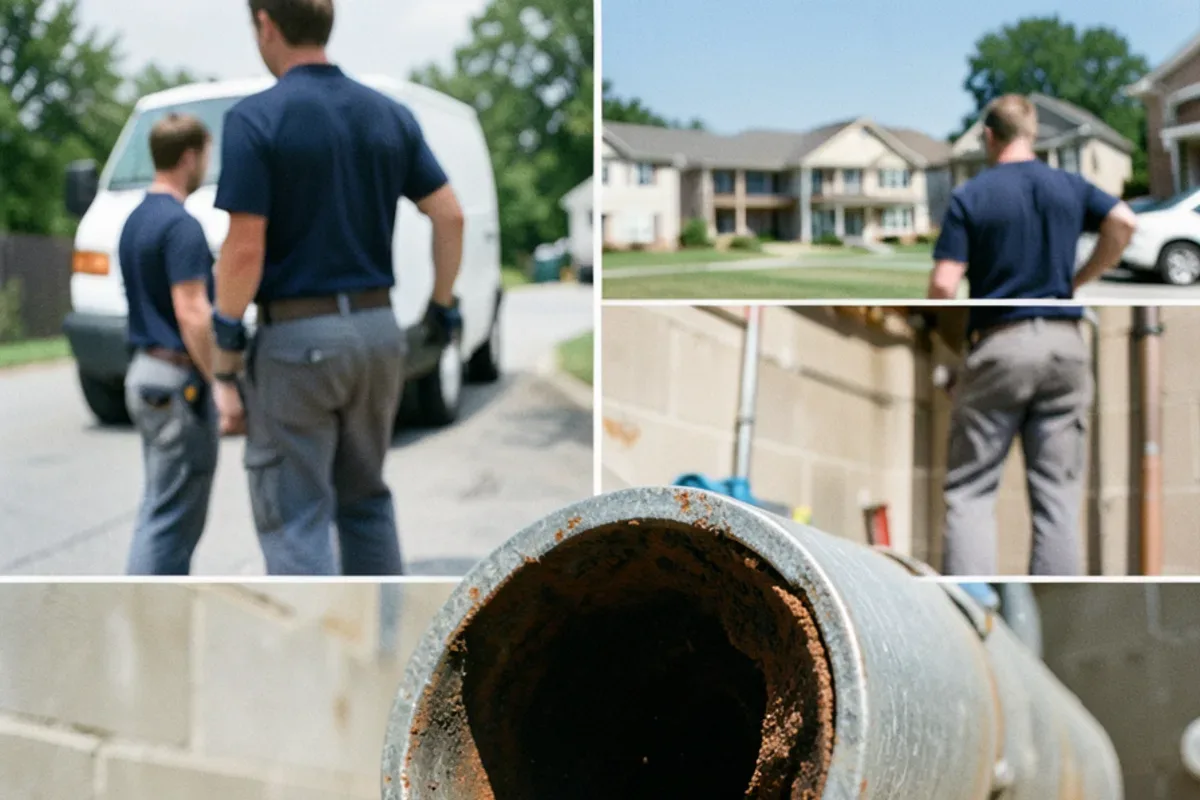
Not every pressure problem is the main line, so we rule the cheap causes out first. A single slow fixture is an aerator or a valve. Low pressure through the whole house can be a failing pressure-reducing valve, a partly closed main shutoff, or corrosion narrowing an old galvanized service line from the inside. If the drop is gradual and whole-house, and especially if the service pipe is old galvanized, the line itself is often the answer. On a private well north of the city, low pressure is a different story that points to the well pump and pressure tank instead.
Permits, the county and restoring the yard
Replacing or tapping a water service line is permitted work. The plumbing permit comes from the Auburn Hills Community Development Department, and a water connection at the main goes through the Oakland County Water Resources Commissioner, which requires a deposit, a bond and insurance on file and an inspection before the trench is closed. We carry those, schedule the inspection, and restore the lawn or any driveway cut as part of the job, so the only lasting sign is water pressure the way it should be.
Main water line repair around Auburn Hills and nearby cities
- Plumber in Pontiac
Older Pontiac homes often still have galvanized service lines that rust closed and choke pressure through the house.
- Plumber in Rochester
Downtown-era homes have aging service lines where a buried leak shows first as a spongy strip of lawn.
- Plumber in Rochester Hills
Early-subdivision service lines are reaching the age where a first leak signals the run is ready to replace.
- Plumber in Troy
Whole-house pressure complaints here often trace to the service line or a failing pressure-reducing valve, not the fixtures.
- Plumber in Birmingham
Established neighborhoods have old service lines under mature landscaping, where replacement is planned around the yard.
- Plumber in Bloomfield Township
Long service runs across large lots mean a buried leak travels before it surfaces, and replacement is a longer trench.
- Plumber in Madison Heights
Mid-century homes commonly have galvanized service pipe that narrows with rust and drops pressure over time.
- Plumber in Royal Oak
Older homes with original service lines develop leaks at the fittings that are better replaced than patched again.
- Plumber in Oakland County
County-wide, a soggy lawn and falling pressure point to a service line that is usually replaced once rather than repaired twice.
Main water line repair questions from Auburn Hills customers
Who is responsible for the water line from the street to my house?
The split is usually at the curb stop near the property line. The water provider owns the street main and the connection up to it; you own the service line from the curb stop into the house. So water bubbling in the street is generally theirs, while a soggy lawn, a whole-house pressure drop, or water at the meter inside is yours and is what a plumber repairs.
How can I tell my main water line is leaking?
Look for a strip of lawn that stays green and spongy when the rest is dry, water pooling along the line’s path, a steady pressure drop at every fixture, a jump in the bill, or a damp spot where the line enters the basement. Since the line is always under pressure, a small seep grows, so trace a soft patch of yard early.
Should I repair or replace a leaking service line?
A single fitting failure can be repaired in place. But an old line, early polybutylene, corroded galvanized or thinning copper, that has leaked once tends to leak again, so replacing the run from curb stop to meter is usually the better value than excavating the same yard twice. We show you what the line is before recommending one over the other.
Why is my water pressure low throughout the whole house?
Whole-house low pressure can be a failing pressure-reducing valve, a partly closed main shutoff, or an old galvanized service line rusting shut from the inside. We rule out the quick causes first. If the drop is gradual and the service pipe is old galvanized, the line itself is often the cause and replacement restores the pressure.
Still not sure what you're dealing with? Describe it on the phone and we'll tell you what we'd check first.
(207) 419-2600Last updated October 28, 2026