
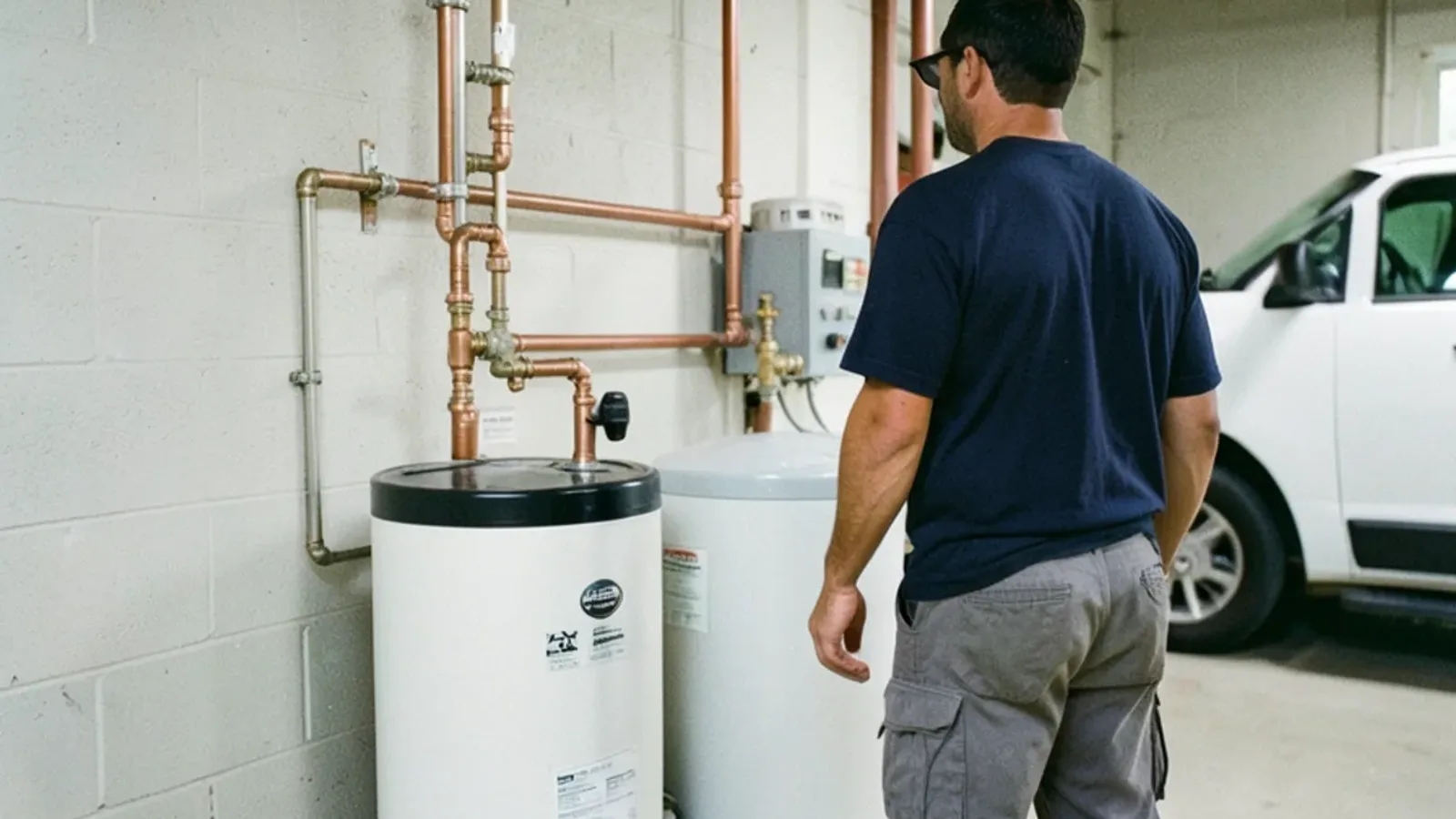
Hard water leaves its mark all over an Auburn Hills home: scale crusting on faucets and showerheads, spotty dishes, stiff laundry, soap that will not lather, and water heaters and fixtures that wear out early. A water softener sized to your actual hardness fixes it at the source, whether your home is on city water or a private well.
City water from GLWA is moderately hard here, and the wells north of town are harder still and often carry iron. Here is how a softener works and how we size one to your water.
What hard water does in an Auburn Hills home
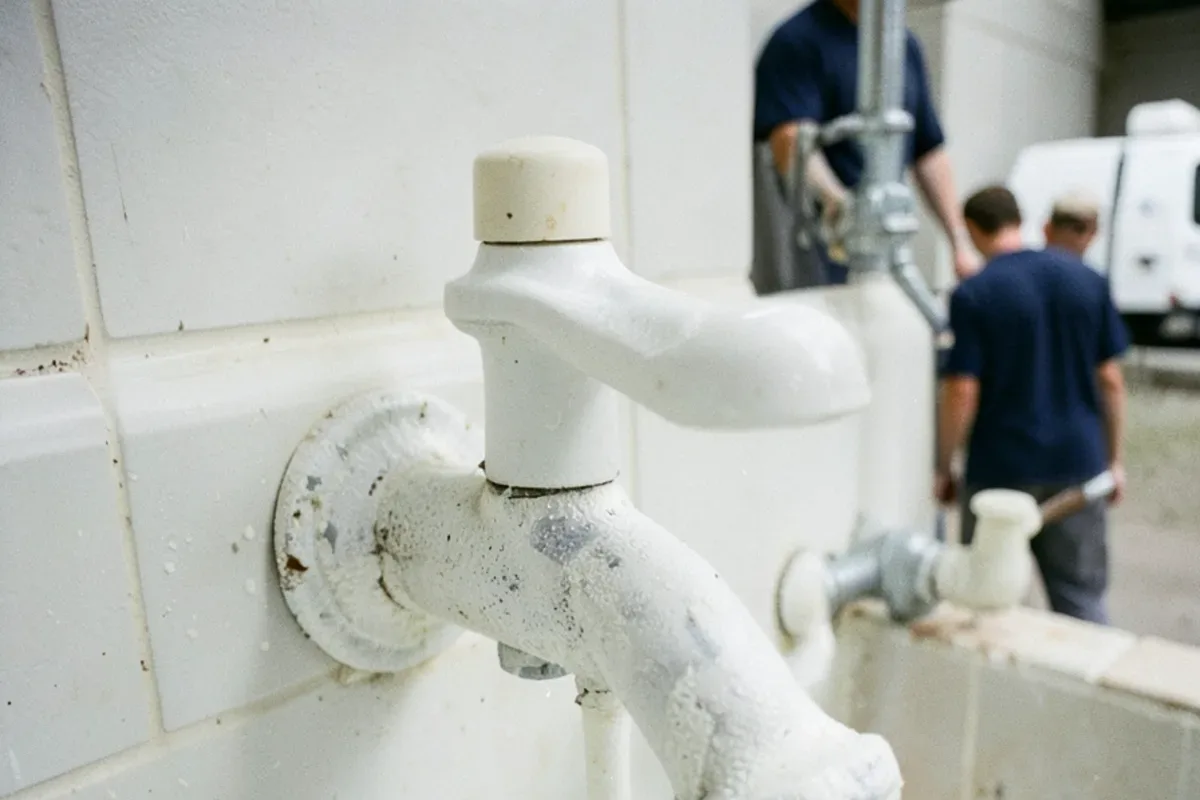
Hard water is water carrying dissolved calcium and magnesium, and those minerals come out of solution as scale wherever water sits or heats. You see it as the white crust on a showerhead and faucet aerator, the film on glass shower doors, spots on dishes out of the washer, and soap and detergent that never quite lather or rinse clean. Where you do not see it matters more: scale layers inside the water heater and narrows pipes and valves over years, which is why a home with hard water burns through heaters and fixtures faster than it should.
How a softener actually works
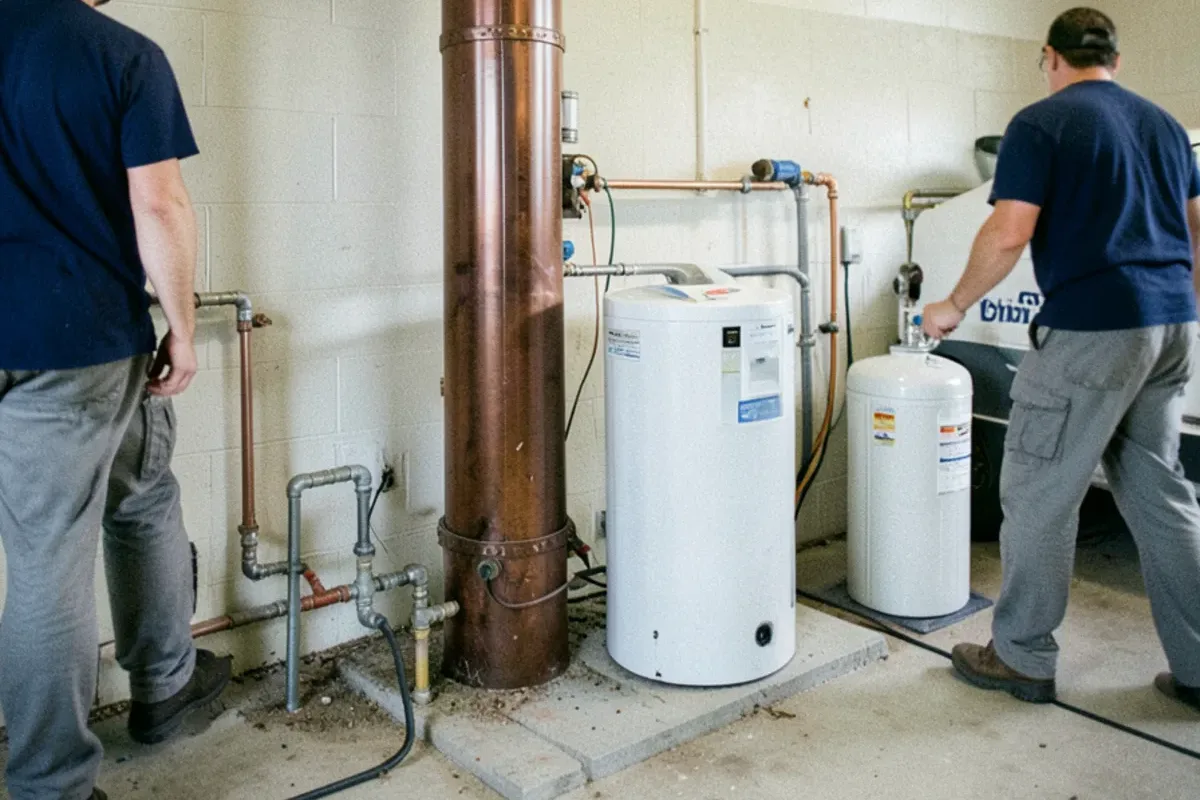
A softener swaps the hardness minerals out of the water. Water passes through a tank of resin beads that hold sodium and grab the calcium and magnesium as it flows by, so what comes out the other side is soft. When the resin fills up with hardness, the softener regenerates, rinsing itself with a strong salt brine from the second tank that strips the minerals off the resin and flushes them to the drain, recharging the beads. That cycle repeats on a schedule or, better, on demand based on how much water you actually use, which is where sizing comes in.
Sizing it to your water, city or well
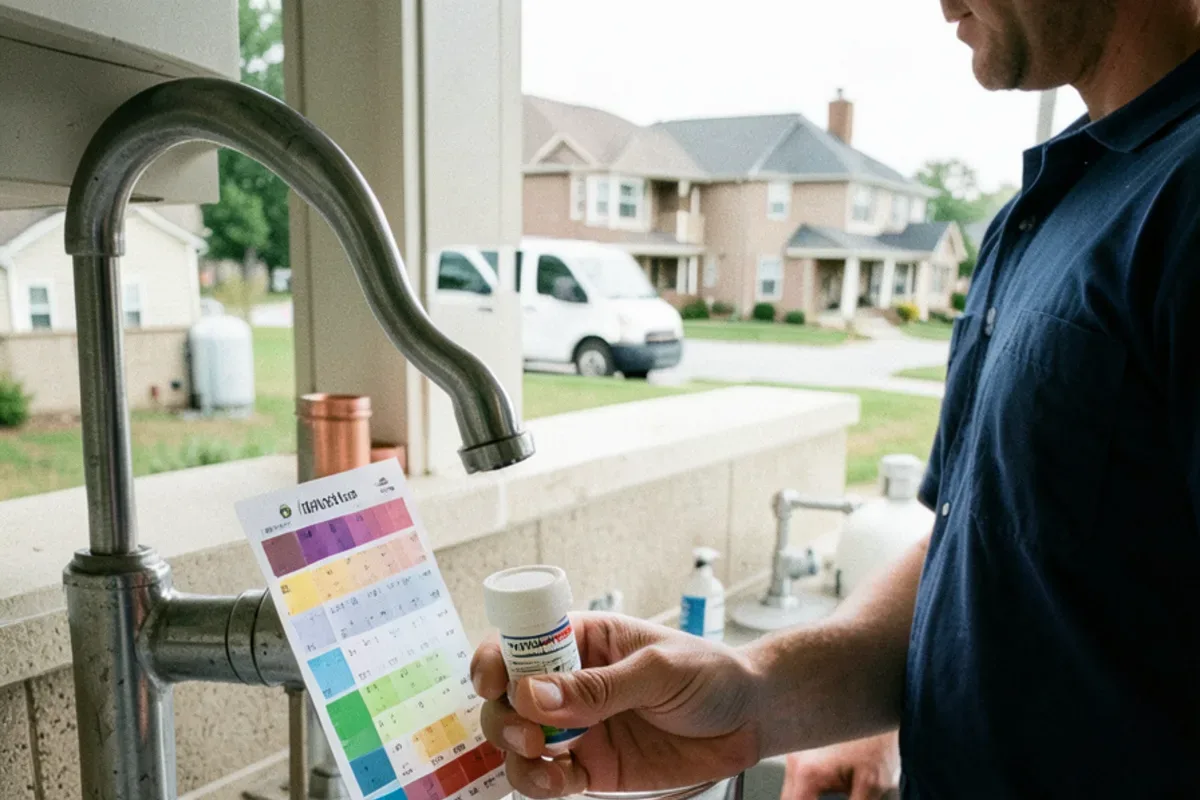
A softener is sized to two numbers: how hard your water is, measured in grains per gallon, and how much water the household uses in a day. Get it right and the unit regenerates efficiently and never runs out of soft water; get it wrong and it either wastes salt and water or leaves you with hard water by evening. City water here is moderately hard and a known quantity. A private well has to be tested first, because well hardness varies and the iron that often rides with it changes the plan. We size to a test, not a guess, so the softener fits the water it is treating.
Iron, arsenic and the well-water pairing
North of Auburn Hills, a softener is often only part of the answer. Well water in Oakland Township, Orion, Oxford and the townships beyond commonly carries iron that stains fixtures rust-orange, and arsenic is a documented concern in parts of Brandon, Independence and Holly. A standard softener handles hardness and a little iron, but heavier iron wants a dedicated iron filter ahead of it, and arsenic needs its own treatment that a softener does not provide. We look at a full well test and build the order of treatment to the water, rather than selling a softener as a cure-all it is not.
Installing and plumbing it in
A softener installs on the main line where water enters the home, after the meter or pressure tank, so all the water except an outdoor sill cock meant for the garden runs through it. We fit it with a bypass so the unit can be serviced without shutting the house water off, set the drain line for regeneration with the proper air gap, and program the regeneration to the measured hardness and the household. On city water a softener also protects a new tankless or tank water heater from the scale that shortens its life, which is often reason enough on its own.
Water softener installation around Auburn Hills and nearby cities
- Plumber in Rochester Hills
Moderately hard GLWA water scales fixtures and heaters here, so softeners are a common fix for spotting and film.
- Plumber in Troy
City water hardness shows on glass shower doors and in the dishwasher, and a softener protects a new water heater too.
- Plumber in Orion Township
Private wells here are hard and often iron-bearing, so a softener usually pairs with an iron filter sized to a test.
- Plumber in Oakland Township
Well homes see hardness and iron that stain fixtures, calling for a softener and sometimes a filter ahead of it.
- Plumber in Independence Township
Clarkston-area wells carry hardness and, in places, arsenic, so treatment is built to a full well test, not a softener alone.
- Plumber in Bloomfield Township
Large homes with high water use need a softener sized to demand so it never runs out of soft water by evening.
- Plumber in Waterford Township
Lake-country wells here run hard with iron, which a softener and iron filter together bring under control.
- Plumber in Birmingham
Older homes on city water get scale on fixtures and in heaters that a right-sized softener ends.
- Plumber in Oakland County
County-wide, moderately hard city water and hard, iron-bearing well water both make softening worthwhile, sized to the source.
Water softener installation questions from Auburn Hills customers
Is the water in Auburn Hills hard enough to need a softener?
City water from GLWA is moderately hard here, enough to scale fixtures and the water heater over time and to leave spots and film. Private wells north of town are harder still and often carry iron. Whether a softener is worth it depends on how the hardness is showing up in your home, which a quick hardness test settles.
Does a water softener remove iron and arsenic from well water?
No, not on its own. A standard softener handles hardness and a little iron, but heavier iron needs a dedicated filter ahead of it, and arsenic requires its own treatment a softener does not provide. On a well we work from a full water test and set the order of treatment to the water, rather than treating a softener as a cure-all.
How is a water softener sized?
By two numbers: your water hardness in grains per gallon and the household’s daily water use. The right size regenerates efficiently and never runs out of soft water. Too small leaves you hard water by evening; too large wastes salt. City hardness here is known; a well is tested first, since its hardness and iron vary from home to home.
Will a softener help my water heater last longer?
Yes. The scale that hard water bakes onto a tank bottom and heating elements, or inside a tankless exchanger, is what cuts efficiency and shortens a heater’s life. Softening the water before it reaches the heater keeps that scale from forming, which is often reason enough to install one alongside a new water heater, especially on hard well water.
Still not sure what you're dealing with? Describe it on the phone and we'll tell you what we'd check first.
(207) 419-2600Last updated October 28, 2026