
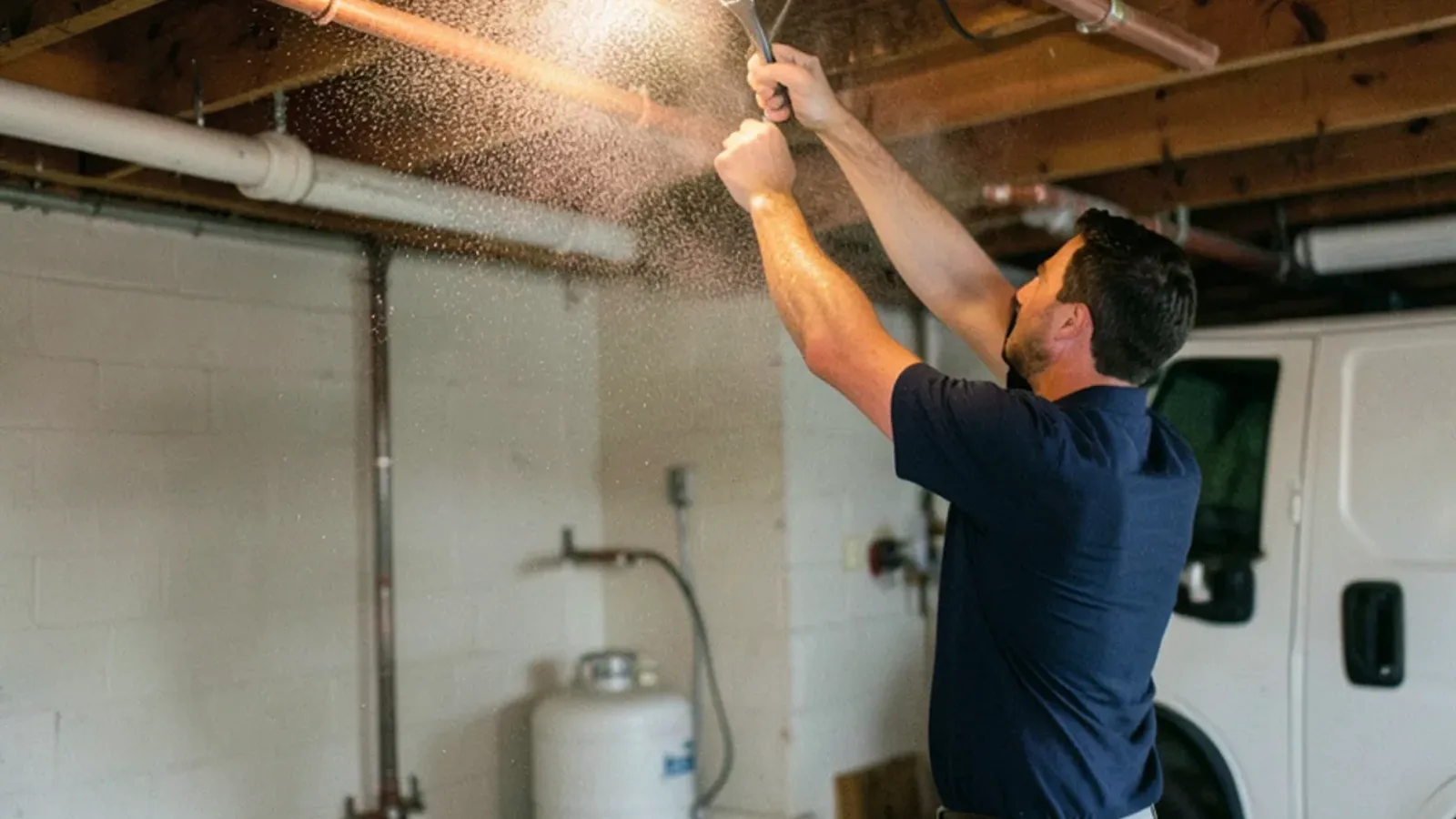
A burst pipe in Auburn Hills sends water out under full city pressure, and it keeps coming until the main is closed. The first move is always the shutoff; the repair is cutting the failed length out and joining new pipe to sound material on both sides.
What burst, and why, decides whether it is a ten-minute fix or the first sign a whole run is done. In a city built mostly in the 1980s and 1990s, the usual suspects are not the same as in an older suburb.
What makes a pipe burst in a newer Auburn Hills home
Four causes cover most of what we see. A line freezes in a cold rim joist or garage wall and splits as the ice expands. A gray polybutylene fitting cracks, which these 1980s and 1990s homes are prone to as the plastic and its crimps age. A copper line develops a pinhole from years of slightly aggressive water and finally opens up. Or water hammer, the bang when a valve slams shut, works a joint loose over time. The older Auburn Heights core and nearby Pontiac add a fifth: galvanized steel that has rusted thin from the inside.
The cause matters because it points to what else is at risk. One frozen split is bad luck. A cracked poly fitting usually means the others on that run are on the same clock, and a pinhole in copper rarely travels alone.
Close the main before anything else
Nothing you do matters until the water is off. The main valve is on the wall nearest the street, usually by the meter or the sump, and in a newer home it is a quarter-turn lever. Once it is closed, open a low faucet to drain the pressure out of the system, switch the water heater to pilot or off, and keep away from any water near outlets or the panel. Then photograph the break and the wet area before you start moving things, since that record helps with a claim.
How we repair the burst section
With the water off, the failed length comes out and new pipe goes in. On copper that means cutting back to clean metal and sweating or pressing in a new section. On polybutylene we remove the cracked fitting and transition to PEX or copper with the right adapter, because you cannot trust a new crimp on old poly next to one that already failed. On galvanized we cut past the corrosion and transition to modern pipe. The joint is tested under pressure before the wall or ceiling closes up.
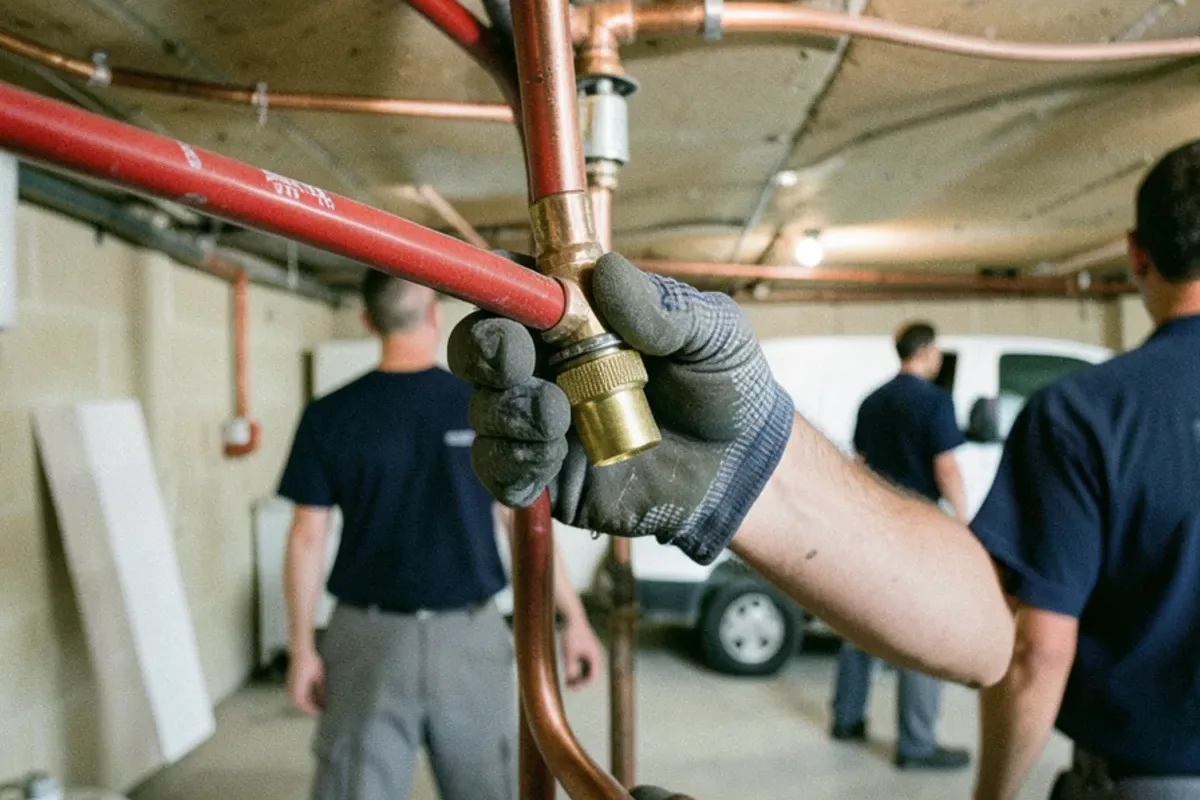
If the break is in a finished ceiling or behind tile, the smallest opening that reaches it comes first, and we protect the surfaces around it. A leak that was hiding before it burst sometimes shows a second weak spot nearby, which we point out rather than leave for next winter.
When one burst means the whole run should go
A single frozen split in otherwise sound copper is a spot repair and done. But a cracked polybutylene fitting, or a pinhole in copper that is the second or third this year, is a signal. At that point replacing the failing material is usually the better value than paying for the same emergency again. For poly, that is polybutylene pipe replacement; for a home where several materials are failing at once, it is whole-home repiping. We lay out both so you can decide with the numbers in front of you.
What changes the price of a burst-pipe repair
A few honest factors set the cost. Where the break is comes first, since an exposed basement run is quick while a slab or a finished ceiling has to be opened and put back. The pipe material is next, because poly and galvanized need transition work that straight copper does not. Then the extent, whether a spot repair holds or the run should be replaced, and whether the permanent work needs a permit. We go through these before cutting anything.
Turning the water back on and checking the work
The last step is slow, on purpose. The main comes back on gradually while we watch the new joint and the meter for any movement with every fixture closed. On a home that just had a poly fitting fail, we check the nearby fittings too, because the point of the visit is to not be back in two weeks. If a line froze, we talk through why that spot got cold and what keeps it from happening next January.
Burst pipe repair around Auburn Hills and nearby cities
- Plumber in Rochester Hills
Its 1980s and 1990s homes carry the same polybutylene and early copper that account for most burst-line calls in Auburn Hills.
- Plumber in Troy
Finished basements are common, so a split in a ceiling run means careful opening and protection before the pipe is repaired.
- Plumber in Orion Township
Homes on private wells keep feeding a burst line from the pressure tank until the main is shut, so the shutoff lesson matters more here.
- Plumber in Pontiac
Older Pontiac streets still have galvanized steel that rusts thin and lets go, which needs cutting past the corrosion to modern pipe.
- Plumber in Rochester
The pre-1960 downtown core mixes aging copper and galvanized, both prone to the pinholes and splits that bring a burst call.
- Plumber in Lake Orion
Seasonal cottages and unheated additions near the lake are the kind of spaces where a line freezes and cracks in January.
- Plumber in Waterford Township
Lake-country homes with crawl spaces have exposed runs that freeze, so a thaw often reveals a split that needs replacing.
- Plumber in Bloomfield Township
Larger homes have long supply runs and multiple baths, so a burst upstairs can travel far before it is noticed.
- Plumber in Oakland County
Across the county the common burst causes are freezing, poly fitting failure and copper pinholes in homes of this era.
Burst pipe repair questions from Auburn Hills customers
Can you repair a burst pipe without replacing the whole line?
Yes, when the rest of the line is sound. A single frozen split in good copper is a spot repair. The time to replace the run is when the material itself is failing, like polybutylene cracking at its fittings or copper springing a second or third pinhole, because then the same emergency keeps returning until the pipe is changed.
Why do polybutylene pipes burst in Auburn Hills homes?
Polybutylene is the gray or blue plastic run in homes built from the late 1970s into the mid 1990s, which covers much of the city. It tends to fail at the fittings and crimps as it ages and reacts to treated water, often cracking with little warning. One failure usually means the others on that run are close behind, which is why replacement is often the smarter fix.
What should I do while I wait for a plumber?
Close the main valve by the meter or sump, open a low faucet to bleed the pressure, and switch the water heater to pilot or off. Keep away from water near outlets or the panel, and lift belongings off the floor. Photograph the break first if you safely can, since that helps if you file an insurance claim.
Does a burst-pipe repair need a permit?
A quick spot repair of a split section generally does not. Replacing a run of supply pipe, or doing work that changes the system, can need a plumbing permit from the Auburn Hills Community Development Department under the 2021 Michigan Plumbing Code. We tell you when your repair crosses that line and handle the inspection that goes with it.
Still not sure what you're dealing with? Describe it on the phone and we'll tell you what we'd check first.
(207) 419-2600Last updated October 28, 2026