
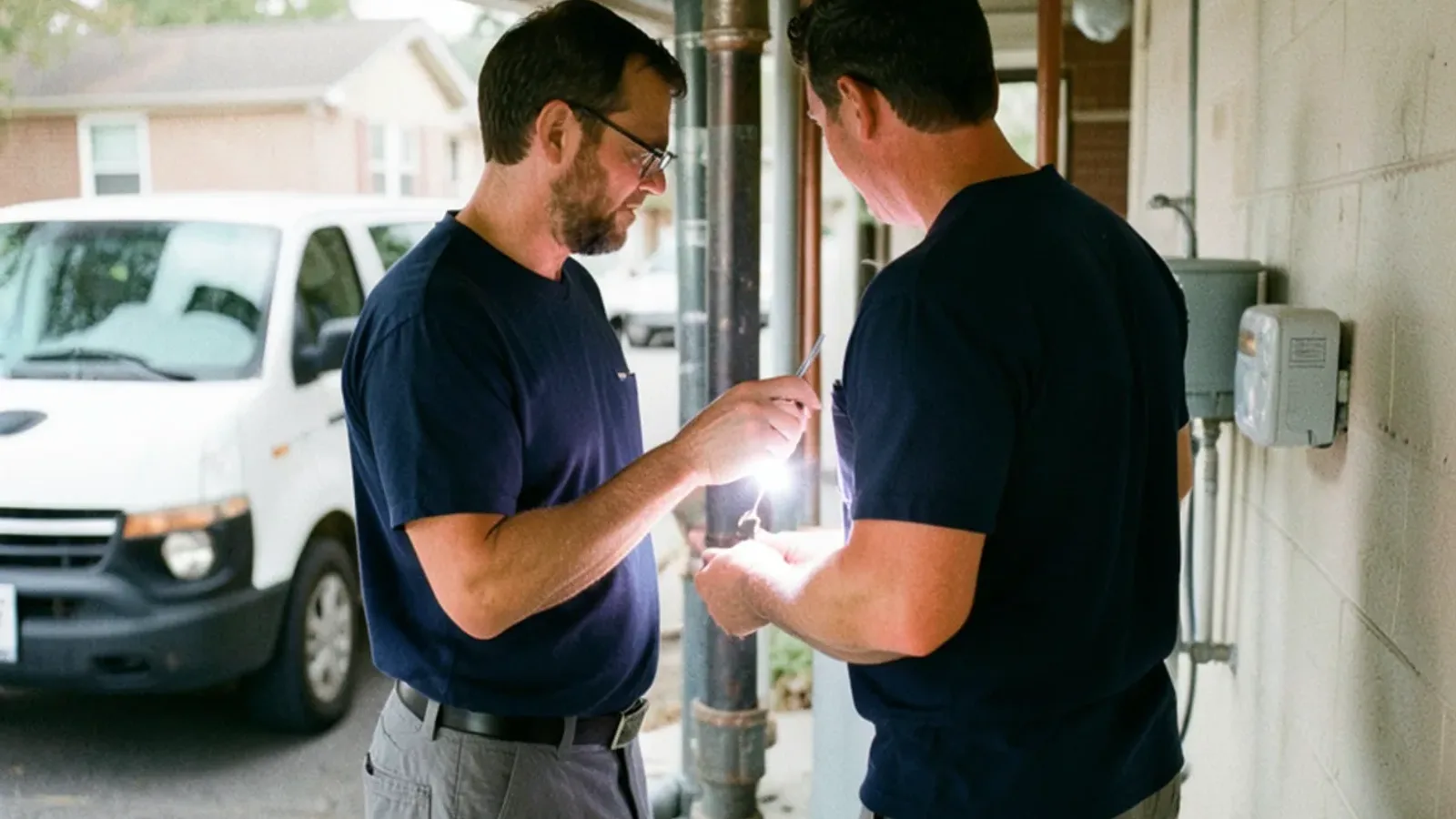
Condo and HOA plumbing in Auburn Hills comes down to one question before anyone picks up a wrench: whose pipe is it, the owner’s or the association’s? The city has a large share of condos and apartments, clustered near Oakland University and Great Lakes Crossing, and in a stacked or attached building a leak in one unit is often felt in another, with the repair and the bill turning on where the pipe sits.
This page is about plumbing in that shared setting, for unit owners, boards and property managers alike.
Who owns which pipe in a condo
The dividing line is usually the same, though the association’s documents have the final word. What is inside your unit and serves only you, the fixtures, the branch lines to them, your water heater, is typically the owner’s. The shared stacks, the main lines, and the pipe within the common structure that serves more than one unit are typically the association’s. A leak is a boundary question as much as a plumbing one, so the first thing we do on a condo call is work out which side of that line the problem is on, because it decides who authorizes and pays for the fix.
When one unit’s leak reaches another
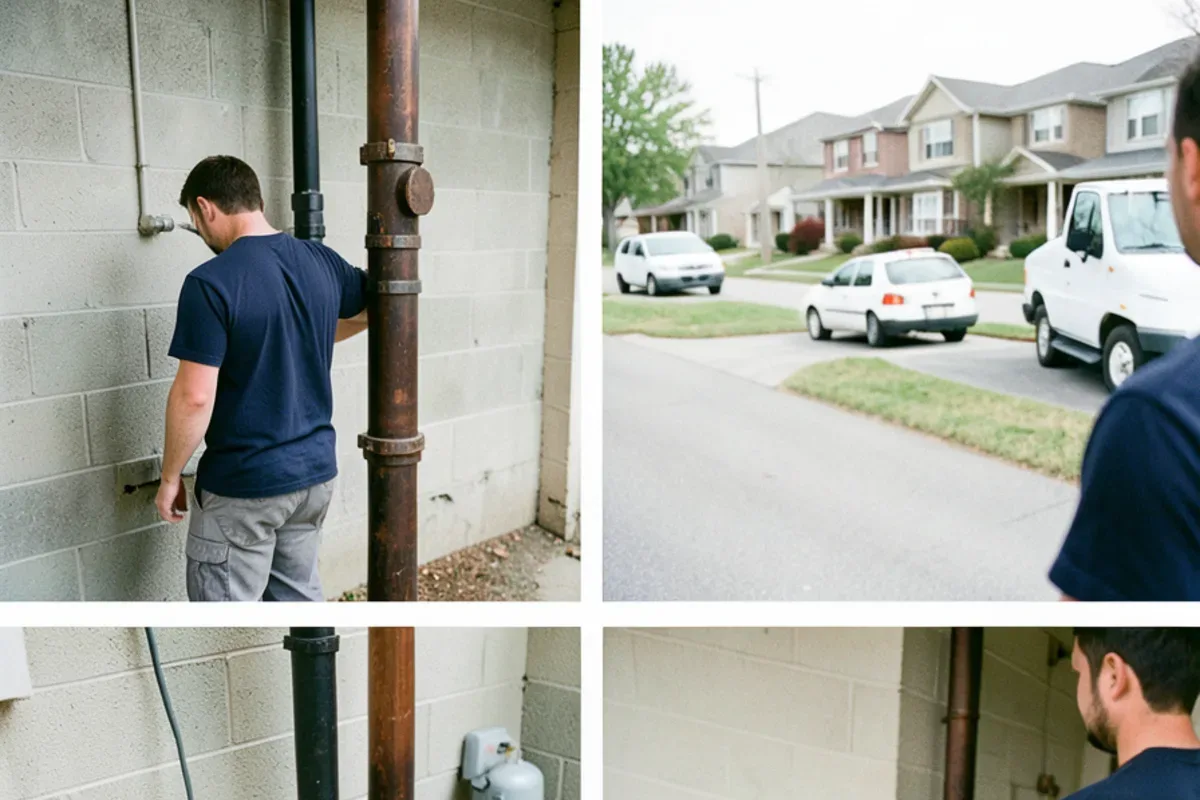
The defining problem of stacked living is that water does not respect unit lines. A failed supply line, an overflowing toilet or a leaking water heater on an upper floor shows up as a stain on the ceiling of the unit below, sometimes days later and two rooms over. Tracing it back to the source, which unit, which pipe, is the real work, and it often needs access to more than one unit. We are used to coordinating that with owners and the board, and to documenting what we find so the responsibility is clear and the repair is not held up by an argument about whose it was.
Shared stacks and the student-rental turnover
Near Oakland University, many condos and apartments are rentals that turn over on the academic calendar, and that shapes the plumbing. A clog low in a shared stack backs up into the lowest unit first, no matter which unit caused it, so clearing it is a building problem even when the cause is one tenant’s. Turnover brings its own run of fixture repairs, water-heater swaps and the occasional surprise left by a departing tenant. For a landlord with several units, handling these as scheduled work between leases beats an emergency the week a new tenant moves in.
Common water heaters, winterizing and vacant units
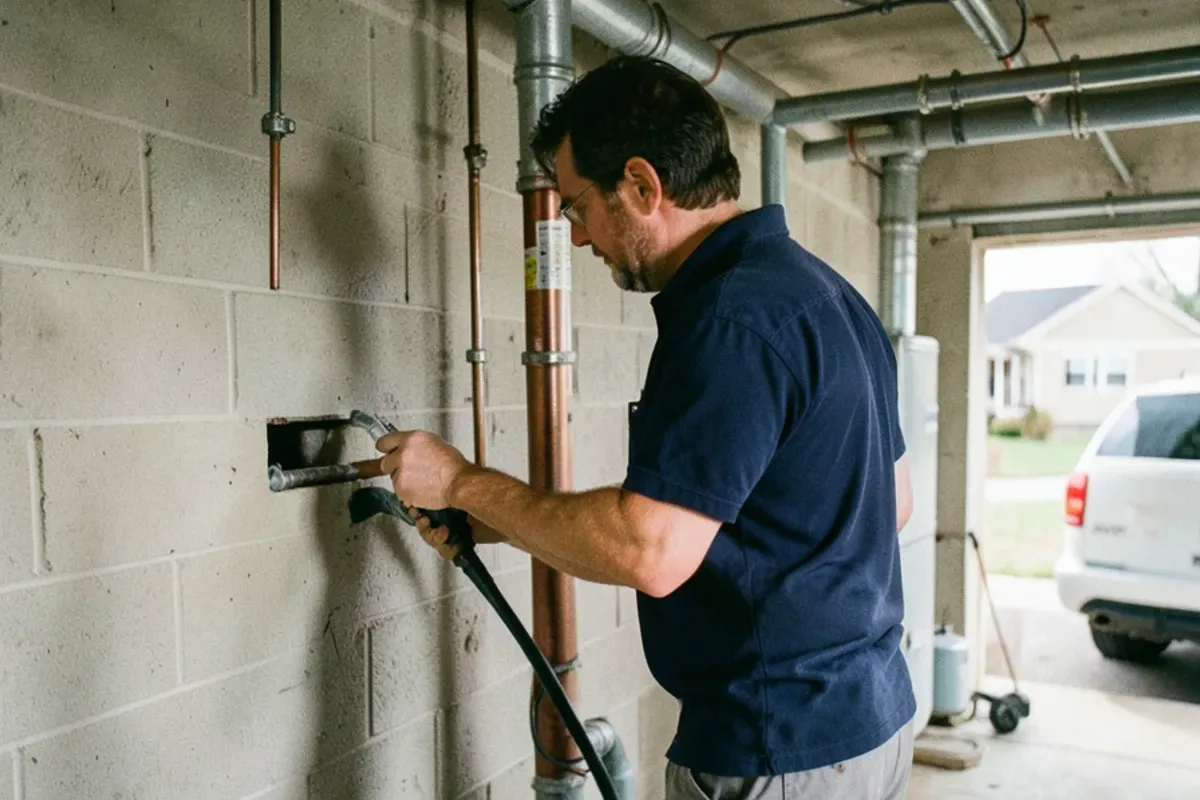
Associations own plumbing beyond the stacks. Some buildings have common water heaters or boiler-fed hot water the association maintains, shared shutoffs that isolate a riser, and vacant units, between tenants or owned by someone away, that can freeze and split if the heat is left off. A burst line in an empty unit floods the ones below before anyone notices. Part of serving an HOA is knowing where the building shutoffs are, keeping a vacant-unit minimum temperature in mind, and being able to isolate a riser fast when a unit upstairs lets go.
Working with boards and property managers
An HOA or a management company needs more than a repair; it needs a record and a clear answer about responsibility. We document what failed, where the pipe sits relative to the owner-association line, and what the fix was, so the board can bill it correctly and plan for the rest of the building. For a manager with several Auburn Hills properties, that history is what turns recurring emergencies into planned maintenance, and it works the same way our property management and backflow testing scheduling does for commercial buildings.
Condo and HOA plumbing around Auburn Hills and nearby cities
- Plumber in Rochester Hills
Large condo and townhouse developments here share stacks and risers where a unit leak reaches its neighbors.
- Plumber in Troy
Dense condo communities and corporate rentals need the owner-association boundary settled on every leak call.
- Plumber in Bloomfield Township
Attached-condo and association communities carry shared water heaters and shutoffs the board maintains.
- Plumber in Birmingham
Downtown condos and lofts in older buildings have shared stacks where an upper-unit leak shows below.
- Plumber in Royal Oak
Condo conversions and multi-unit buildings mix owner and association pipe that has to be sorted on site.
- Plumber in Madison Heights
Apartment and condo complexes turn over tenants and need stack clearing and turnover repairs between leases.
- Plumber in Rochester
Condos near downtown and the university house renters whose turnover brings fixture and water-heater work.
- Plumber in Pontiac
Converted and multi-family buildings have shared stacks and vacant units that freeze if the heat is left off.
- Plumber in Oakland County
County-wide, stacked living means a leak crosses unit lines and the first question is always whose pipe it is.
Condo and HOA plumbing questions from Auburn Hills customers
Who pays for a plumbing repair in a condo, me or the association?
It turns on where the pipe sits, and the association’s documents have the final word. What is inside your unit and serves only you is usually yours; shared stacks and main lines that serve more than one unit are usually the association’s. A leak is a boundary question first, so we establish which side of that line the problem is on before the repair.
A leak from the unit above is coming into mine. What happens?
We trace it back to the source, which often means access to the upper unit, because water travels along the structure before it shows below. Then we establish whose pipe failed and document it, so responsibility is clear. Coordinating access between units and the board is part of the job, and keeping a record keeps the repair from stalling over who pays.
Do you work with HOAs and property managers?
Yes. Boards and managers need a record and a clear answer on responsibility, not a fix alone. We document what failed, where it sits relative to the owner-association line, and what we did, so the board can bill correctly and plan. For managers with several properties, that history turns recurring emergencies into scheduled maintenance.
Why does a clog in another unit back up into mine?
Because stacked units share drain stacks, and a clog low in a shared stack backs up into the lowest unit first, whatever unit caused it. That makes it a building problem even when the cause is one tenant upstairs. Clearing it from the shared cleanout and confirming the stack is open is how we keep it from returning to the lowest unit.
Still not sure what you're dealing with? Describe it on the phone and we'll tell you what we'd check first.
(207) 419-2600Last updated October 28, 2026