
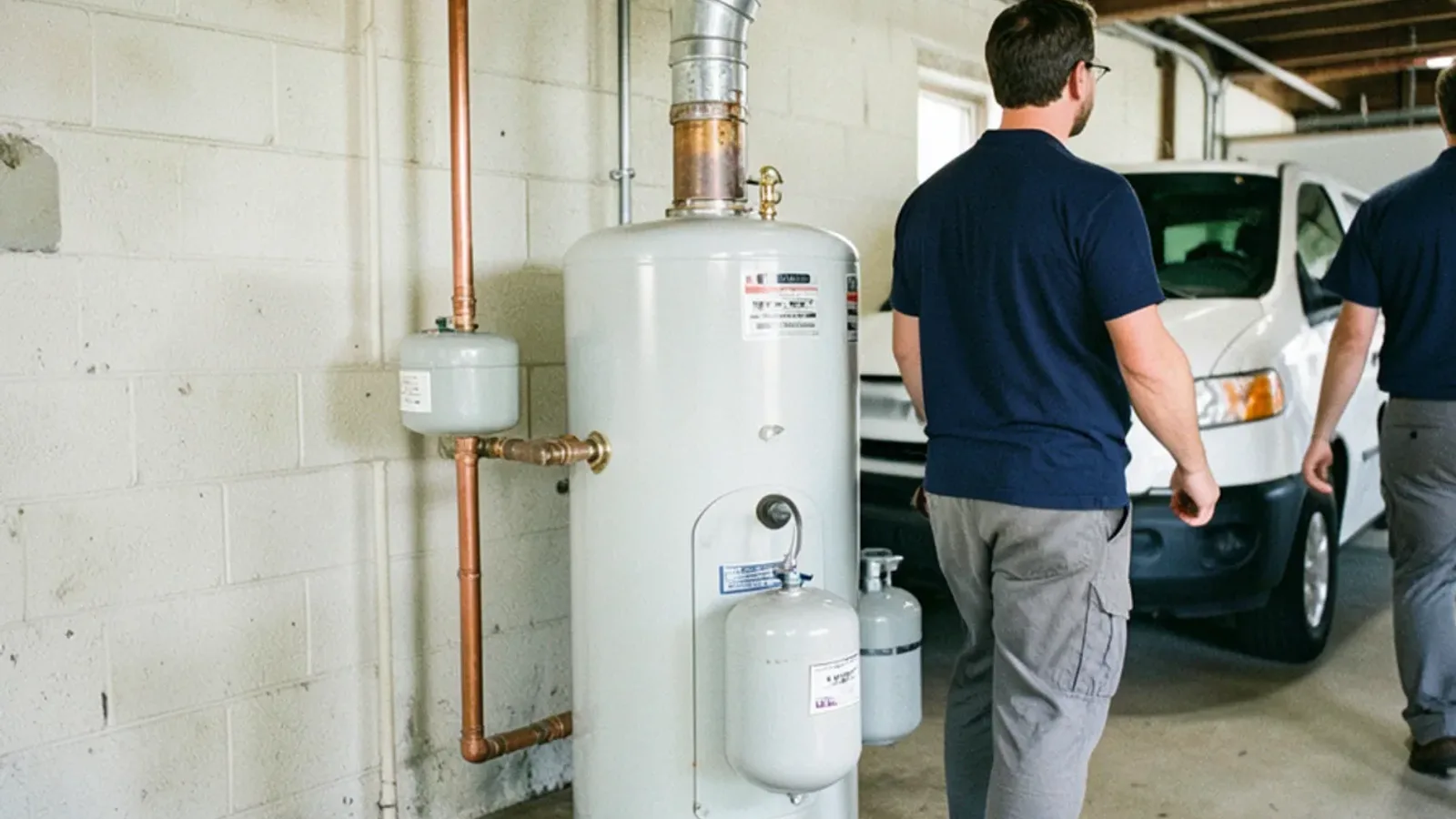
A water heater installation in Auburn Hills is more than setting a tank in place. Sizing it to the household, choosing gas or electric, venting it correctly, adding the expansion tank a closed city-water system needs, and permitting the work are what separate a heater that lasts from one that struggles. Most of ours replace a twenty- to forty-year-old unit in a 1980s or 1990s home.
Here is how we size and install a new heater so it fits the home, the water and the code.
Sizing the heater to your household
A heater that is too small runs out mid-shower; one too large wastes energy keeping water hot you never use. Sizing a tank is about first-hour delivery, how much hot water it can supply during the busy morning hour, rather than only the gallons it holds. We match that to the number of bathrooms and people and the fixtures that draw at once. A two-person condo and a five-person house with three baths need very different heaters, and getting it right up front is cheaper than discovering it cold. Where demand is high or space is tight, a tankless unit may fit better than a bigger tank.
Gas or electric, and venting either one
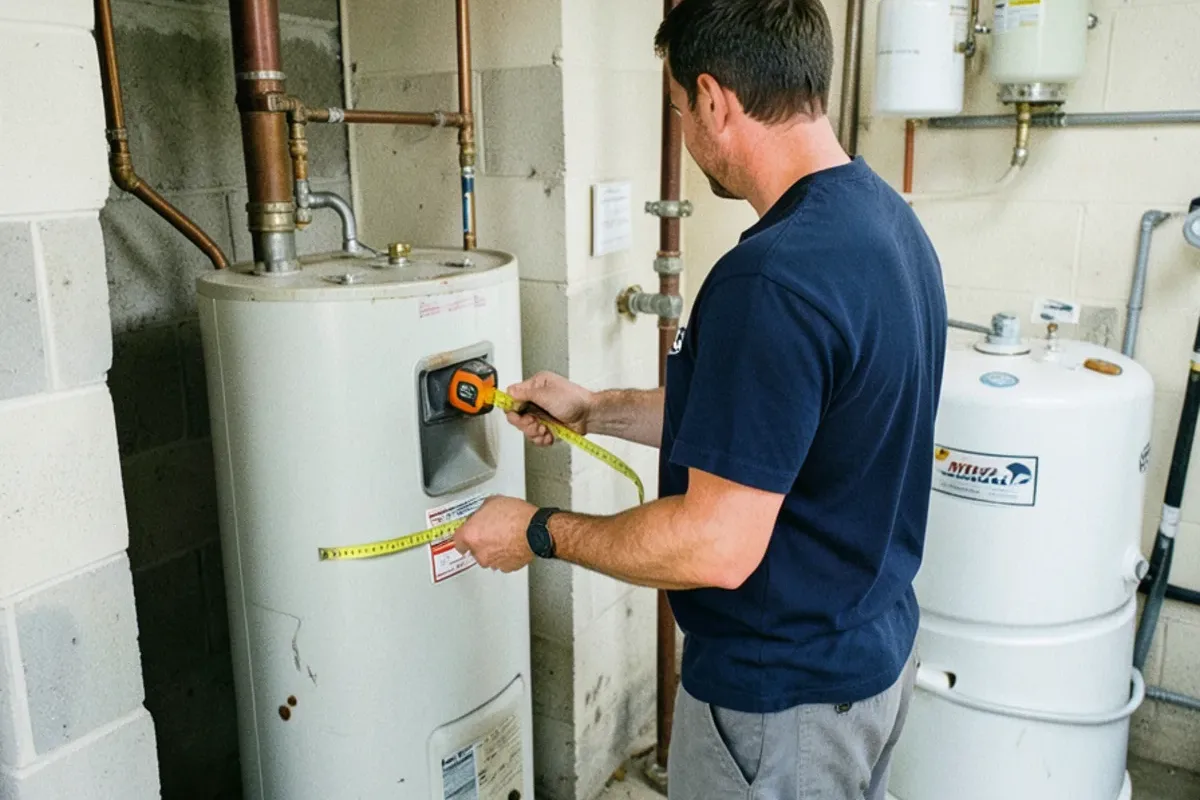
Most Auburn Hills homes replace like for like, but the choice is worth a moment. Gas heats faster and is often cheaper to run here; it needs proper venting, either an atmospheric draft to the chimney or a power vent where a chimney is not available or is being retired. Electric is simpler to install and vent-free but slower to recover and costlier per gallon on most rate plans. We confirm the venting is sound on a gas install, because a backdrafting flue is a carbon-monoxide risk, and a bad vent is one of the most common problems we find on an older heater being replaced.
The expansion tank a closed system needs
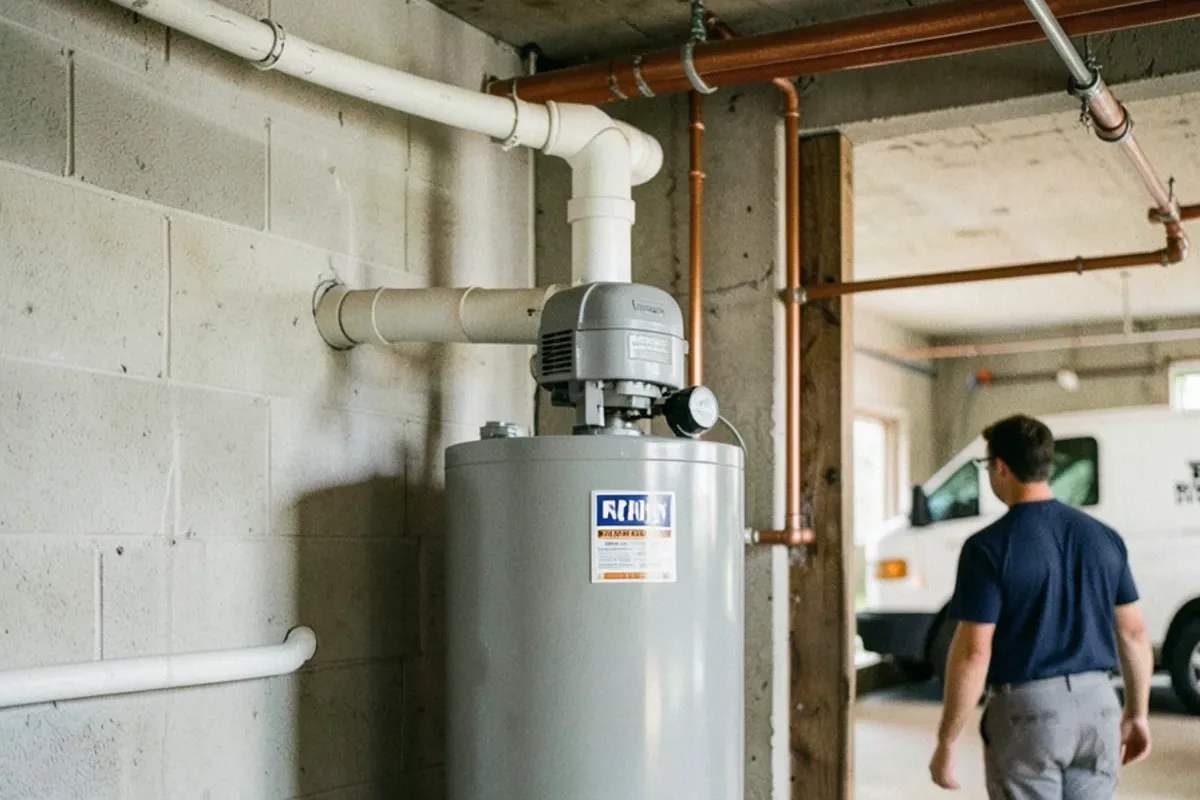
Homes on city water from GLWA usually have a check valve or pressure-reducing valve at the meter, which makes the plumbing a closed system. When the new heater warms water, it expands with nowhere to go, spiking the pressure and stressing the tank, the relief valve and the fittings. A thermal expansion tank gives that expansion somewhere to go and is required on a closed system under the code. Many older heaters here were installed without one, so adding it is often part of doing the new install right, not an upsell.
Permits, venting checks and code
A water heater replacement is permitted and inspected work under the 2021 Michigan Plumbing Code, with the plumbing permit from the Auburn Hills Community Development Department. That is not a formality: the inspection confirms the venting, the gas connection, the relief valve and discharge, the expansion tank and the drain pan are all right, the things that make a heater safe. We pull the permit, install to code with a proper pan and discharge where the location calls for it, and handle the inspection, so the heater is both covered by its warranty and signed off.
Water heaters in condos and tight closets
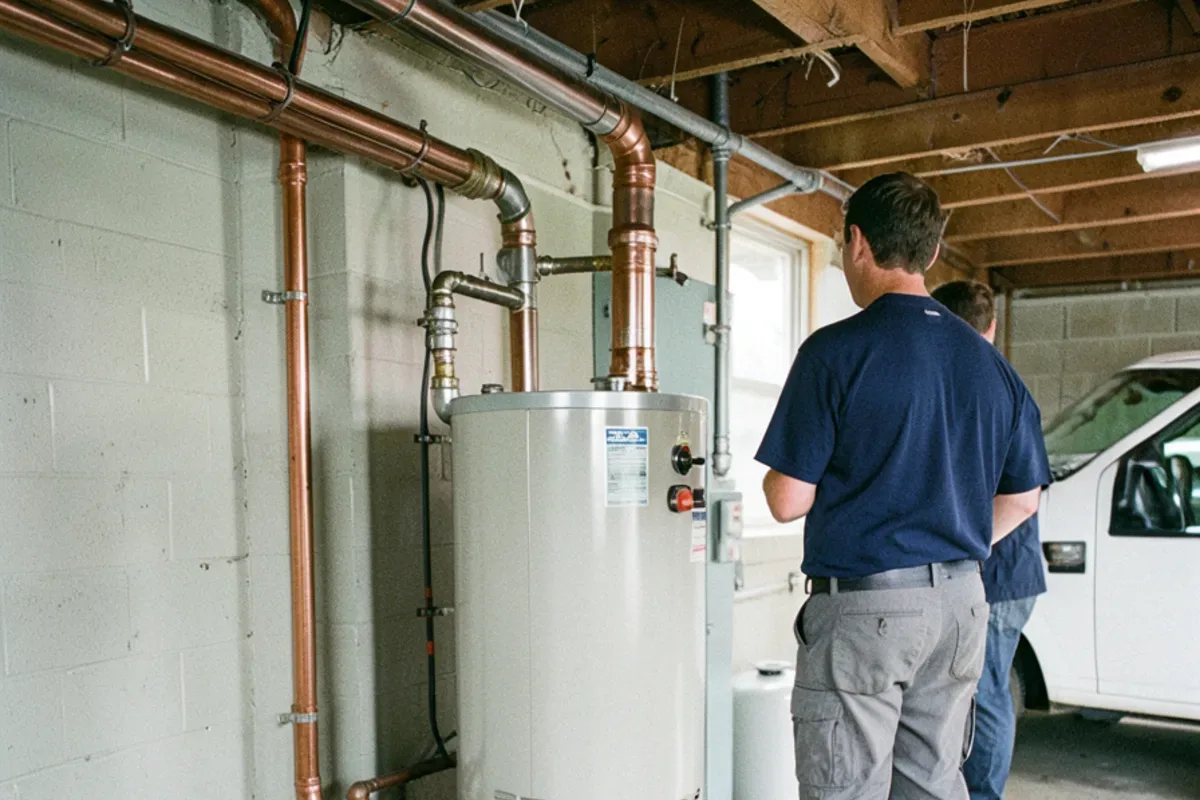
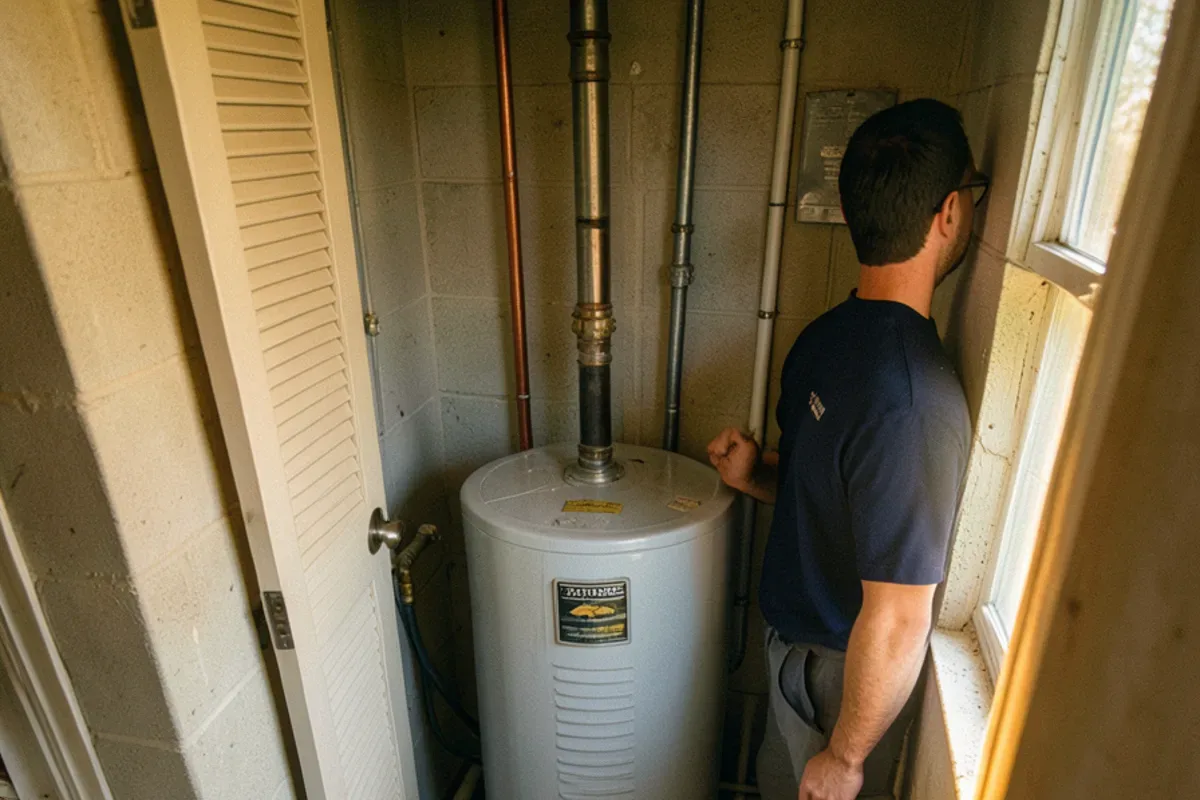
A lot of Auburn Hills heaters live in closets, not open basements, especially in the condos and townhouses near Oakland University. A tight closet changes the install: clearances for combustion air and service, the vent routing, and whether a pan with a leak sensor makes sense over a finished floor below. In a stacked building, where a heater sits over a neighbor’s unit, we pay particular attention to the pan and discharge, because the point is that the next tank failure is caught by the pan and not the ceiling downstairs.
Water heater installation around Auburn Hills and nearby cities
- Plumber in Rochester Hills
Twenty- to forty-year-old tanks in its 1990s homes are due, and most replacements here also add the expansion tank the originals lacked.
- Plumber in Troy
Finished-basement installs need a pan and piped discharge, which we add as part of a code-correct replacement.
- Plumber in Bloomfield Township
Large multi-bath homes need careful sizing for busy-hour demand, and often a larger tank or a tankless unit.
- Plumber in Birmingham
Renovated older homes retire marginal chimneys, so power-vent heaters are a common install choice here.
- Plumber in Orion Township
Hard well water shortens tank life, so right-sizing and a softener pairing are part of the install conversation.
- Plumber in Rochester
Older homes with tight utility spaces need clearances and venting confirmed before a new tank goes in.
- Plumber in Lake Orion
Lake-area homes and seasonal use make sizing and freeze-aware placement part of a sound install.
- Plumber in West Bloomfield Township
Condos and finished lower levels mean closet installs where the pan and discharge protect the space below.
- Plumber in Oakland County
County-wide, aging tanks, closed city-water systems and venting checks are the constants of a correct water-heater install.
Water heater installation questions from Auburn Hills customers
What size water heater do I need?
It is set by your busy-hour hot-water demand, not tank gallons alone. We match the first-hour delivery to how many baths and people you have and what draws at once. A two-person condo and a five-person, three-bath house need very different heaters. Sizing it up front avoids both cold showers from a tank too small and wasted energy from one too large.
Should I replace my tank with gas, electric, or tankless?
Most homes replace like for like, but it is worth weighing. Gas heats fast and is often cheaper to run here but needs sound venting. Electric is simpler and vent-free but slower and pricier per gallon. Tankless suits high demand or tight spaces. We go through your fuel, venting and space before recommending one over another.
Do I need an expansion tank with a new water heater?
On city water, almost always. A check valve or pressure-reducing valve at the meter makes the plumbing a closed system, so heated water has nowhere to expand and spikes the pressure. The code requires a thermal expansion tank on a closed system to absorb that. Many older heaters here lack one, so adding it is part of a correct install.
Is a permit required to install a water heater?
Yes. A replacement is permitted and inspected work under the 2021 Michigan Plumbing Code, with the permit from the Auburn Hills Community Development Department. The inspection checks the venting, gas connection, relief valve, expansion tank and pan, the safety items. We pull the permit and handle the inspection so the install is both code-compliant and warranty-valid.
Still not sure what you're dealing with? Describe it on the phone and we'll tell you what we'd check first.
(207) 419-2600Last updated October 28, 2026