
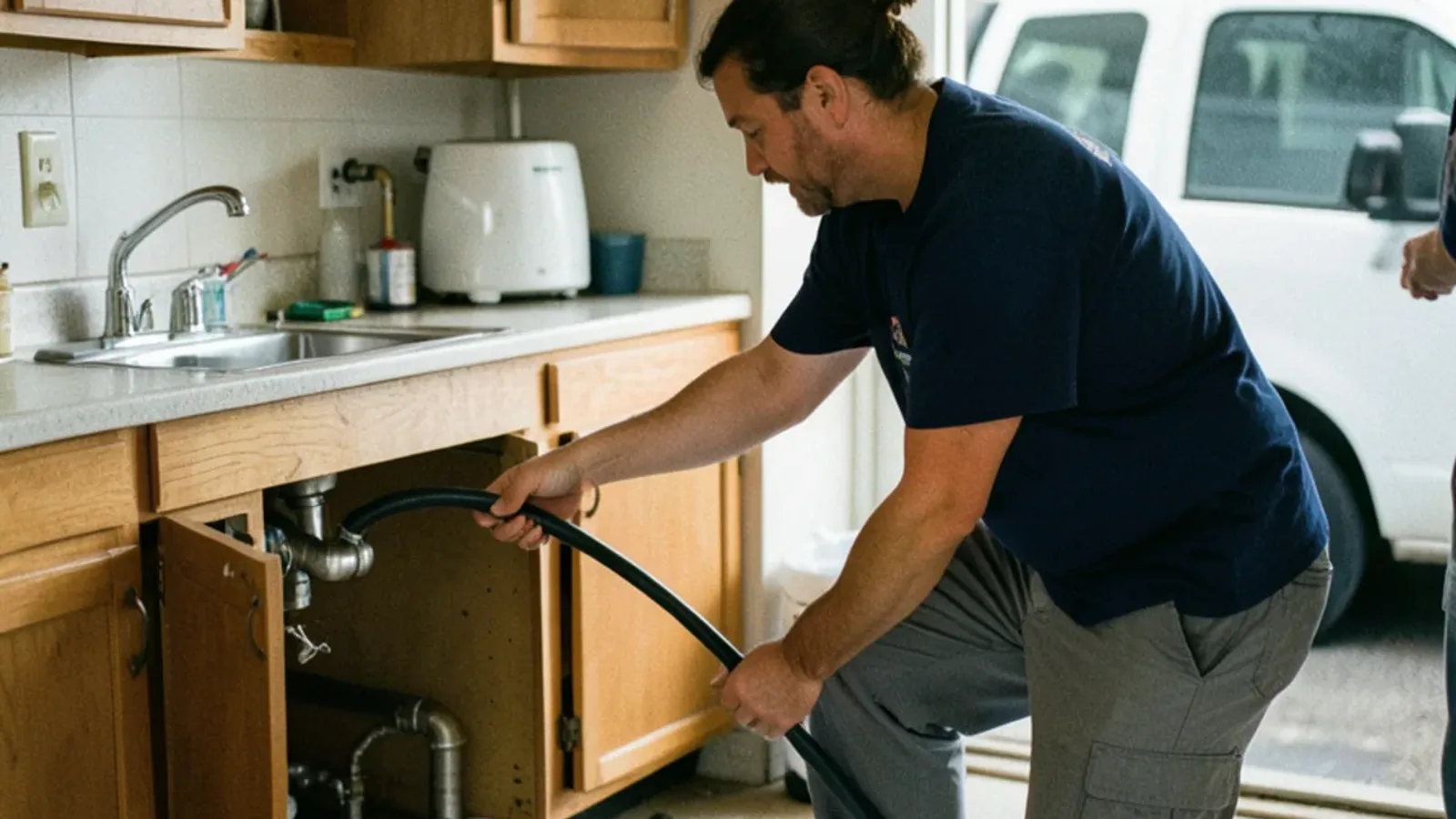
Most drain problems in Auburn Hills start at one fixture: a tub that empties slowly, a kitchen line that gurgles, or a laundry standpipe that backs up on wash day. Clearing it well means cutting the clog back to the full pipe diameter rather than poking a hole through the middle so it limps along until next month.
A drain that clogs again and again is telling you something a plunger will not fix, and the cause is usually the pipe, the slope or what is going down it. Here is how we find and clear each kind.
The branch drains that back up most often
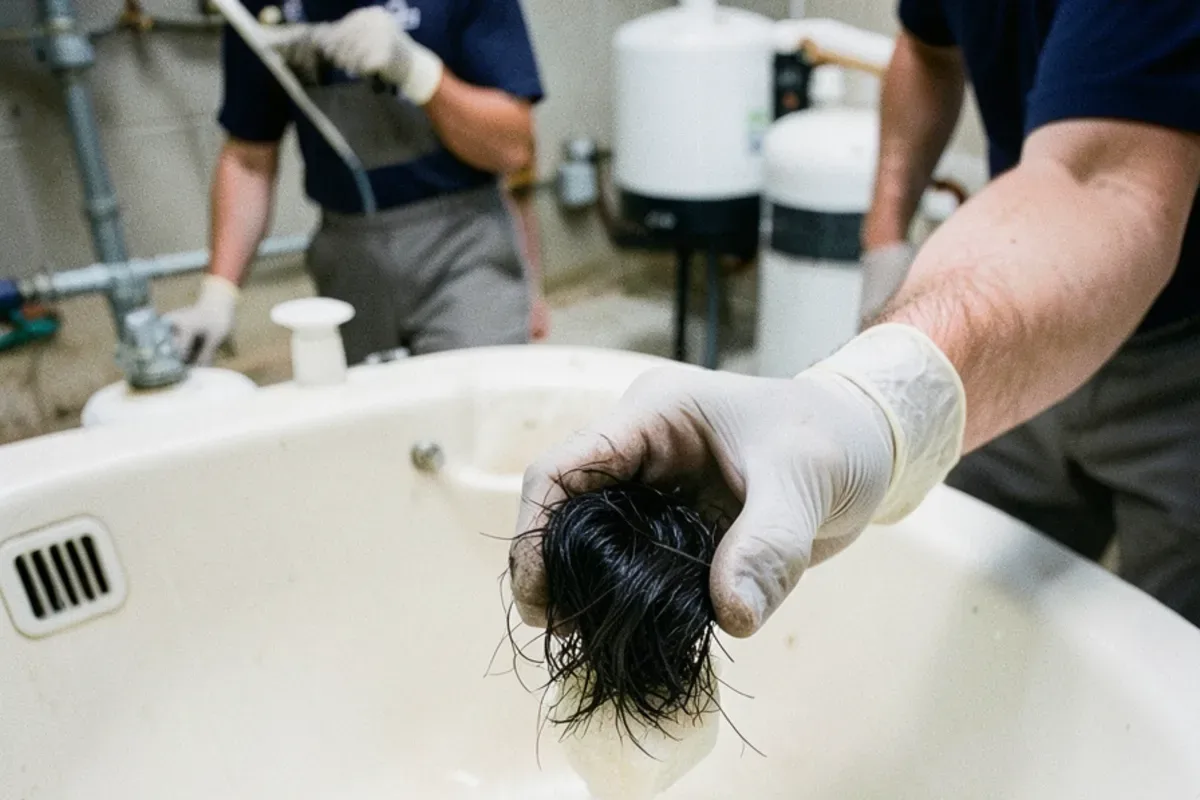
Inside a home the clogs sort by room. Kitchen lines fill with grease and food that cools and hardens on the pipe wall, especially in the PVC and ABS drains common in 1990s homes, where a slightly flat run lets buildup collect. Tub and shower drains choke on hair and soap. Bathroom sinks catch toothpaste and hair at the stopper. Laundry standpipes clog with lint and the slimy scale that detergent leaves behind. Each wants a different tool and cable head, which is why the first question is where it is slow.
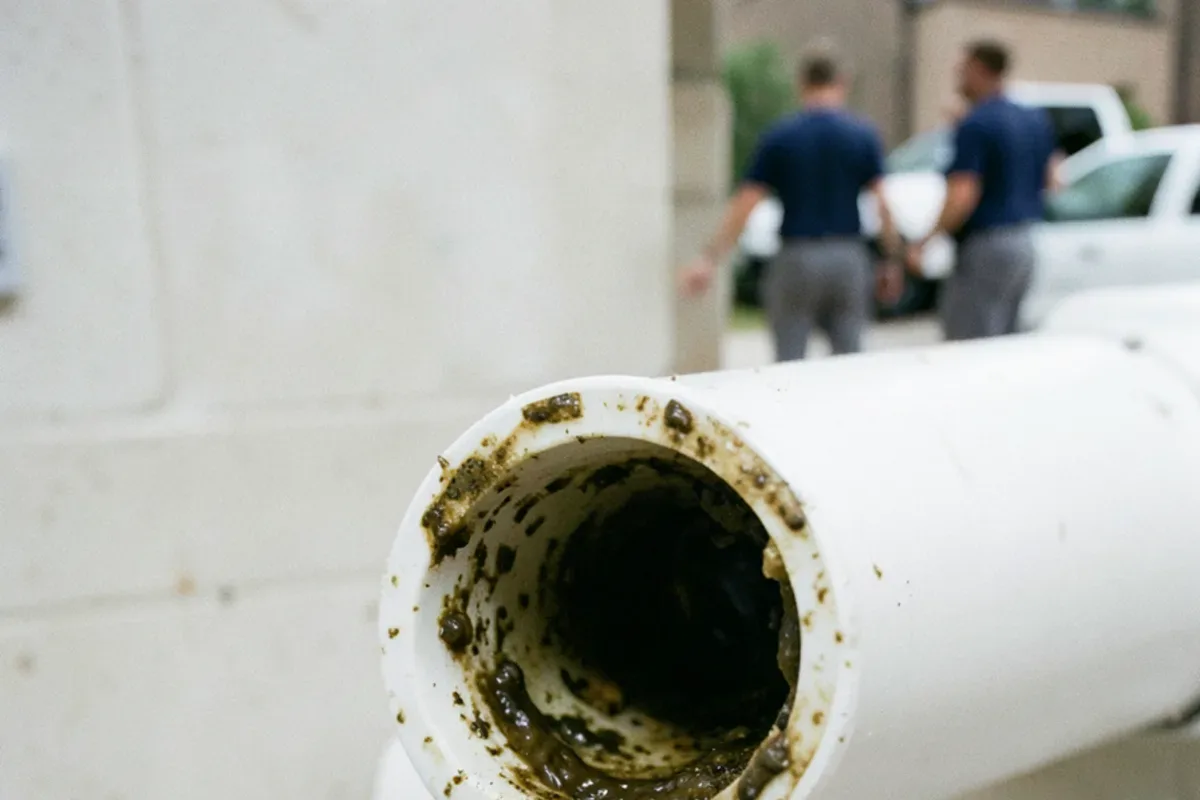
The pattern matters too. One slow drain is a local clog. Several going slow at once points past the branch to the main line, and a floor drain that backs up when you run the washer means the problem is downstream, closer to the sewer lateral.
Clearing to full diameter rather than punching through
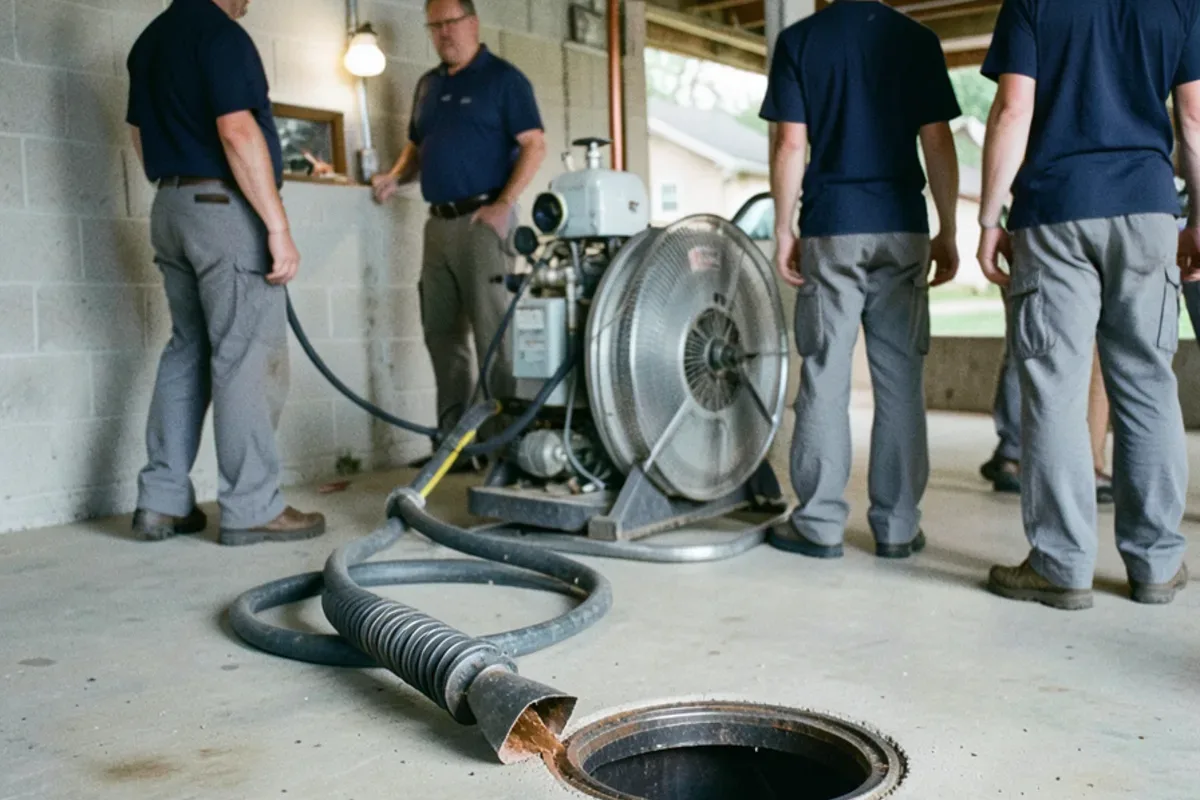
A clog can be cleared two ways, and only one of them lasts. Punching a hole through the center restores flow for a while, then the ring of grease or scale left on the wall closes back in. We cable the line with a head sized to scrape the full inside of the pipe, so the drain runs at its real diameter again. On a kitchen line thick with grease, or a drain that keeps returning, scouring it with hydro jetting clears the wall completely where a cable only opens a path.
Why a drain keeps clogging in the same spot
A line that clogs on a schedule has an underlying reason. The run may sag or sit too flat, so solids settle instead of washing through. A fitting inside may be rough or partly collapsed. In the older Auburn Heights core and nearby Rochester, cast iron drains scale up inside and snag everything that passes. When a drain comes back again and again, a short camera look shows which of these it is, so the fix is aimed instead of guessed.
What we do not send down a drain
Store chemical drain openers are worth skipping. They rarely clear a full clog, they sit in the trap as caustic liquid that makes the next visit hazardous, and over time they attack older pipe and the rubber in fittings. If you have poured one in, tell us so we can protect against it. Mechanical clearing and jetting do the job without leaving anything behind in the line.
Drains in condos and rentals near Oakland University
In the condos and apartments that fill the area near Oakland University, a drain is rarely just yours. Branch lines tie into a shared stack, so a clog low in the building can back up into the lowest unit first, and clearing it may mean access through more than one unit. We are used to that, and to the question of whether a clog is the owner’s or the association’s, which usually turns on whether it is in your branch or the common stack. Our guide on who fixes what in a condo covers the line.
What changes the cost of clearing a drain
The fixture and the access set most of it. A sink with a cleanout under it is quick; a line with no cleanout, or one that has to be reached from the roof vent, takes longer. Whether the clog is soft, like grease or hair, or hard, like scale or roots, decides between a cable and a jetter. And a drain that keeps returning may be worth a camera to find the real cause rather than paying to clear it on a loop. We talk through which applies before starting.
Drain cleaning and clog removal around Auburn Hills and nearby cities
- Plumber in Rochester Hills
Its 1990s homes have PVC branch drains where a flat kitchen run collects grease and clogs on a schedule.
- Plumber in Rochester
Downtown-era homes still have cast iron drains that scale up inside and snag hair and debris at the rough spots.
- Plumber in Pontiac
Older Pontiac housing runs cast iron and clay where recurring clogs usually trace to a rough or settled line.
- Plumber in Troy
Finished basements add bar sinks and laundry tied to long branch runs that back up when they sit too flat.
- Plumber in Bloomfield Township
Large kitchens with disposals send more food down the line, so grease buildup in the branch is a steady call.
- Plumber in Birmingham
Remodeled baths and kitchens often keep original drains, so new fixtures meet old pipe that clogs at the transition.
- Plumber in Madison Heights
Postwar and mid-century homes mix cast iron and plastic, and the junction between them is a frequent catch point.
- Plumber in Royal Oak
Older homes with added basement baths tie new fixtures into aging drains that clog where the slope runs out.
- Plumber in Oakland County
County-wide the pattern is the same: grease and hair in newer plastic branches, scale and roots in older cast iron.
Drain cleaning and clog removal questions from Auburn Hills customers
Why does my drain clog again a few weeks after it is cleared?
Usually because it was only punched open, not cleared to full diameter, or because something about the pipe invites it back. A sagging or flat run, a rough fitting, or scaled cast iron all catch debris again quickly. When a drain keeps returning we recommend a camera look so the cause is found and the repeat clearing stops.
Are chemical drain cleaners safe to use first?
No, we do not recommend them. They seldom clear a full clog, they linger in the trap as caustic liquid that makes the next service hazardous, and over time they damage older pipe and fitting seals. Mechanical cabling or jetting clears the line without leaving anything corrosive behind, so it is the safer first step.
What is the difference between cabling and hydro jetting?
A cable cuts through and pulls out a clog, which is right for a localized blockage or a root ball. Hydro jetting uses high-pressure water to scour grease, scale and fine roots off the entire pipe wall, which is right for a greasy kitchen or commercial line or a drain that keeps clogging. We pick based on what is in the pipe.
Can you tell whether a clog is in my pipe or the shared line in a condo?
Often yes, by where it backs up and how many fixtures are affected. A clog in your branch slows only your fixtures; one in the common stack shows up in the lowest unit and can involve several. Where it sits usually decides whether it is your repair or the association’s, which we help sort out on site.
Still not sure what you're dealing with? Describe it on the phone and we'll tell you what we'd check first.
(207) 419-2600Last updated October 28, 2026