
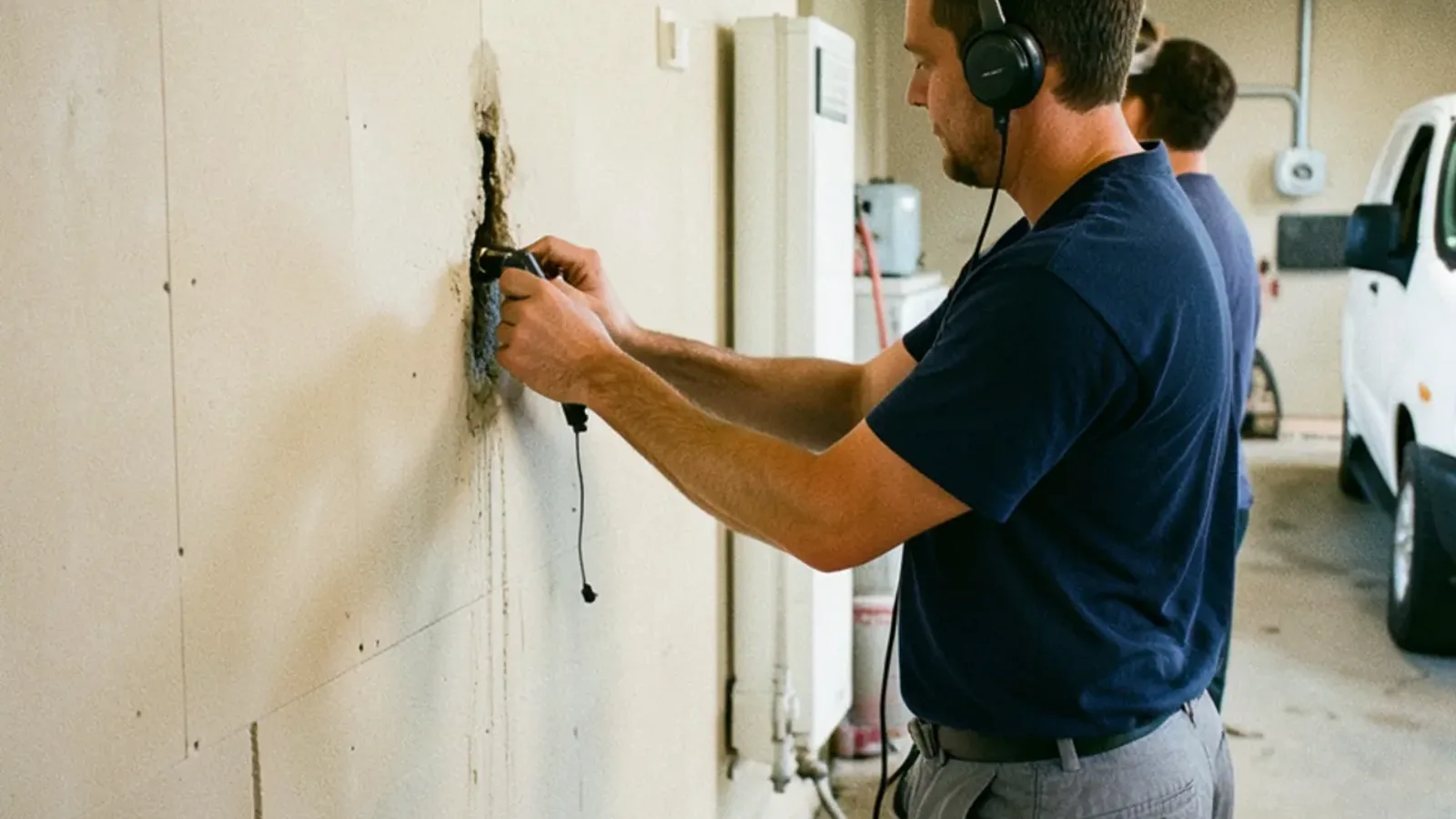
A hidden leak in an Auburn Hills home rarely announces itself. It shows up as a water bill creeping upward, a meter that moves with every tap closed, a warm spot on a floor, or a stain spreading across a ceiling. Finding it precisely, before any drywall comes open, is the whole point of leak detection, so the repair is a small patch and not an exploratory dig.
In a city of 1980s and 1990s homes, the usual hidden leaks are copper pinholes and weeping polybutylene fittings. Here is how we track one down and fix it.
The signs of a leak you cannot see
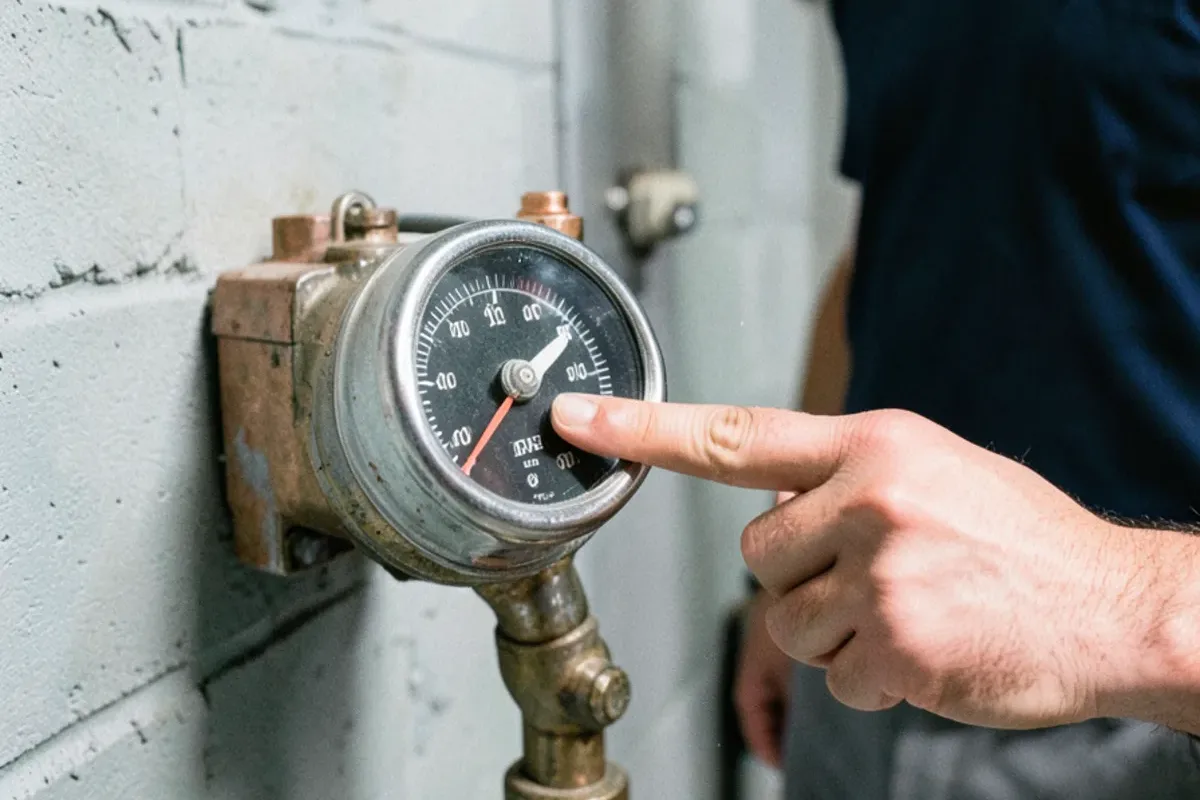
A hidden leak gives itself away indirectly. The clearest test is the meter: with every fixture off, a dial that still creeps means water is escaping somewhere between the meter and the taps. Other signs are a water bill that climbed with no change in use, a musty smell in a closet or basement, a warm patch on a slab floor from a hot line, paint or drywall that bubbles, and the faint sound of running water in a quiet house. Any one of these is worth tracing before it does slow, expensive damage behind a finish.
Finding the leak without opening every wall
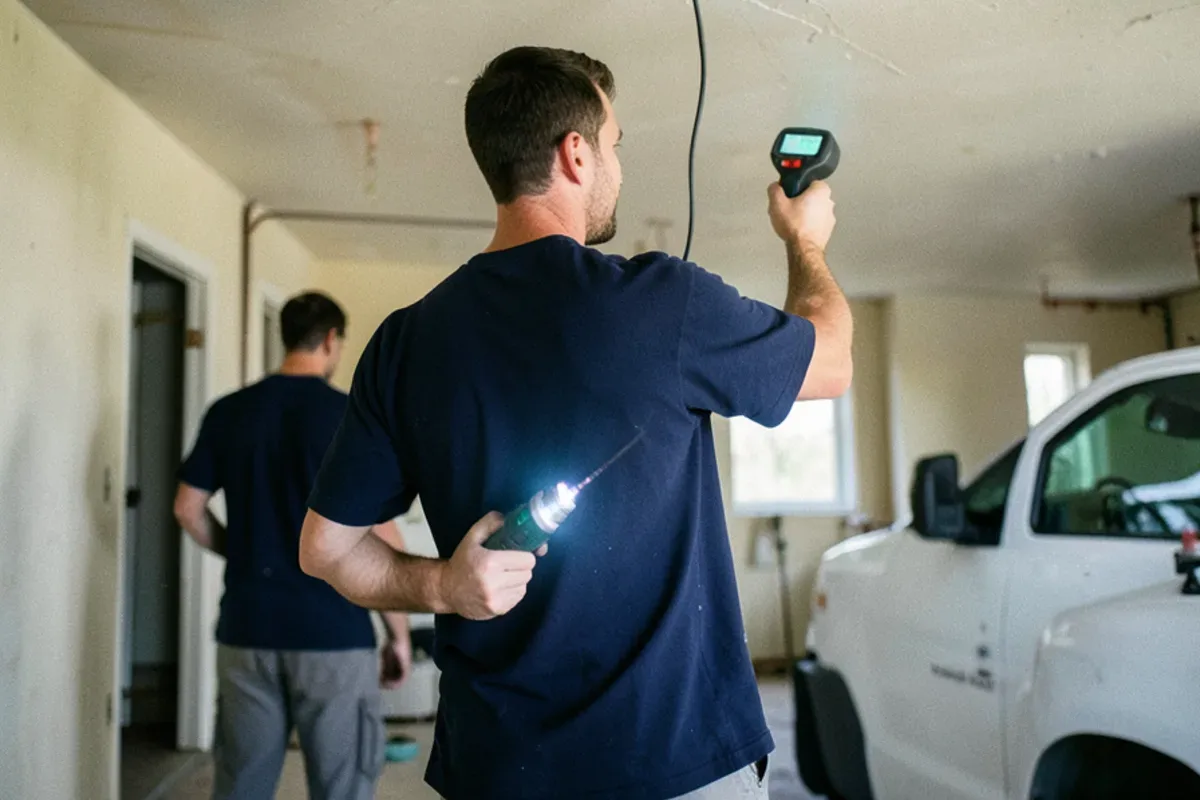
Pinpointing comes before cutting. We isolate sections to narrow where the loss is, then listen with acoustic equipment that hears water escaping a pressurized line through drywall or concrete. A moisture meter maps how far the dampness has spread so we read back to the source rather than the symptom, since water travels along framing before it stains. For a line under a slab, that acoustic and pressure work locates the spot within a small area, so the floor is opened once, in the right place.
Slab and under-floor leaks in newer homes
Some Auburn Hills homes and many condos have supply lines run under a slab or in a floor, where a leak is both hidden and slow to show. A warm floor, an unexplained bill, or the sound of water with everything off points there. Once located, the fix is usually one of two: open and repair the spot, or, when the line is poly or old copper that will keep failing, reroute that run overhead to abandon the bad pipe in place. We lay out both so the repair matches how likely the rest of the line is to leak again.
What the repair looks like once we find it
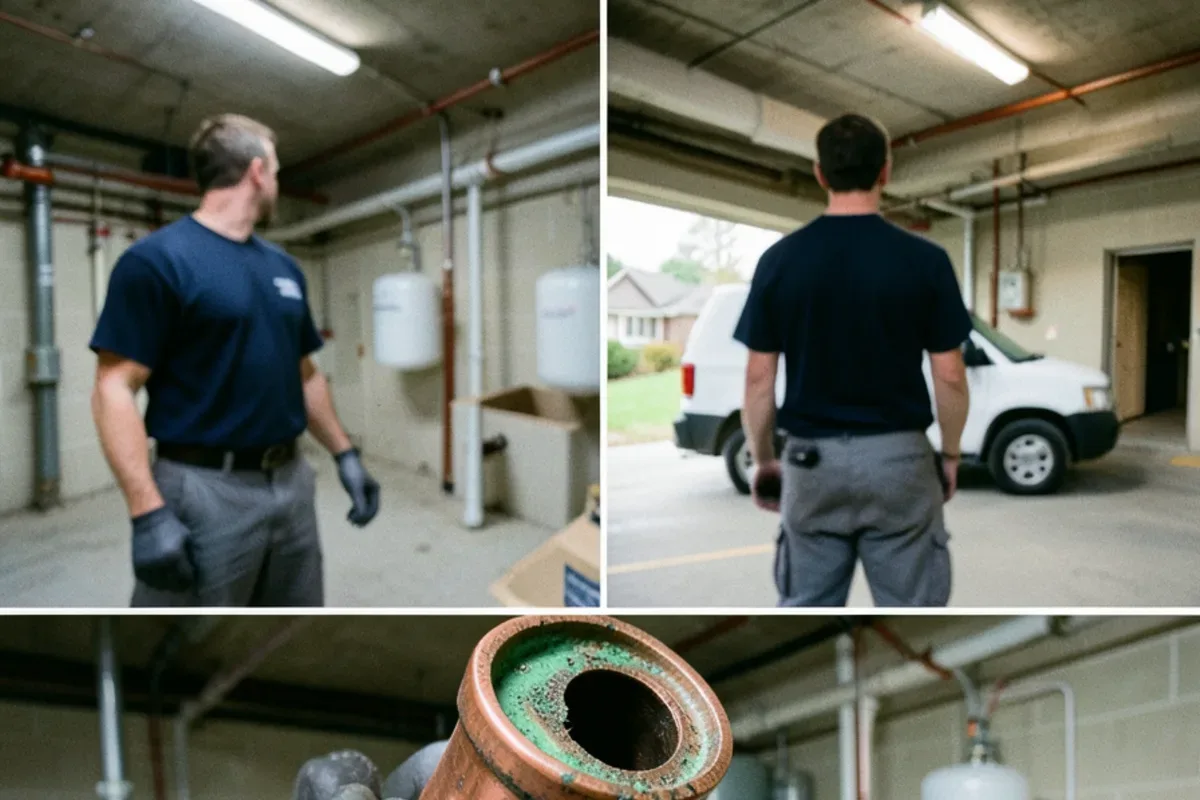
With the leak located, the repair is sized to the cause. A copper pinhole is cut out and a sound section goes in. A weeping polybutylene fitting is removed and the line transitioned to PEX or copper, because a new crimp on old poly beside one that already failed is borrowed time. A loose or corroded joint is remade. The opening in the wall or ceiling is kept to what reaches the repair, and we check the nearby fittings while we are in there, since a pinhole or a poly failure rarely travels alone.
Catching the slow leak before it costs more
The reason to chase a small leak is what it becomes. Water behind a finish feeds mold, rots subfloor and framing, and quietly runs the bill up for months. A pinhole that drips a drop a minute is cheap to fix now and expensive to ignore. When we find that the leak is a symptom of pipe that is failing throughout, like a home full of aging polybutylene, we say so and point to whole-home repiping or polybutylene replacement rather than sending you back to patch the same line next season.
Leak detection and repair around Auburn Hills and nearby cities
- Plumber in Rochester Hills
Copper pinholes and weeping poly fittings in its 1990s homes are the hidden leaks we trace most often here.
- Plumber in Troy
Finished basements hide a slow leak until it stains a ceiling, so acoustic detection locates it before more drywall opens.
- Plumber in Bloomfield Township
Large homes with long supply runs give a hidden leak more wall and ceiling to travel through before it shows.
- Plumber in Birmingham
Remodeled older homes mix new finishes over aging pipe, so a leak behind fresh drywall needs pinpointing, not guessing.
- Plumber in Rochester
Older downtown homes with original copper develop pinholes that drip behind plaster long before a stain appears.
- Plumber in West Bloomfield Township
Slab-on-grade sections and finished lower levels hide under-floor leaks that acoustic and pressure work locate.
- Plumber in Royal Oak
Older homes with added bathrooms run supply through walls where a loose joint can weep unseen for months.
- Plumber in Madison Heights
Mid-century homes with mixed copper and galvanized spring hidden leaks at the transitions between the two.
- Plumber in Oakland County
County-wide, copper pinholes and polybutylene fittings behind finishes are the hidden leaks detection is built to find.
Leak detection and repair questions from Auburn Hills customers
How do I know if I have a hidden water leak?
Shut every fixture and watch the water meter. If the low-flow dial still moves, water is escaping between the meter and the taps. A bill that climbed with no change in use, a musty smell, a warm spot on a floor, bubbling paint, or the sound of running water in a quiet house all point the same way and are worth tracing.
Can you find a leak without tearing out drywall?
Yes, that is the point of detection. We isolate sections to narrow the area, listen with acoustic equipment that hears water escaping a pressurized line through wall or concrete, and map the dampness with a moisture meter. That locates the spot so the wall, ceiling or floor is opened once, in the right place, instead of exploratory cutting.
Why do copper pipes in my home keep springing pinhole leaks?
Pinholes come from the inside out, as years of slightly aggressive water thin the copper at weak points. One pinhole is a repair, but a second or third is a pattern, and chasing them one at a time costs more than it looks. When copper is pitting throughout, repiping the affected lines is usually the better value than another patch.
Is a slow leak really worth fixing right away?
Yes. Water behind a finish rots subfloor and framing, feeds mold, and runs the bill up every month it drips. A pinhole that seems minor now is cheap to fix and expensive to ignore. Finding and repairing it early, before it damages what is around it, is almost always the lower-cost path in the end.
Still not sure what you're dealing with? Describe it on the phone and we'll tell you what we'd check first.
(207) 419-2600Last updated October 28, 2026