
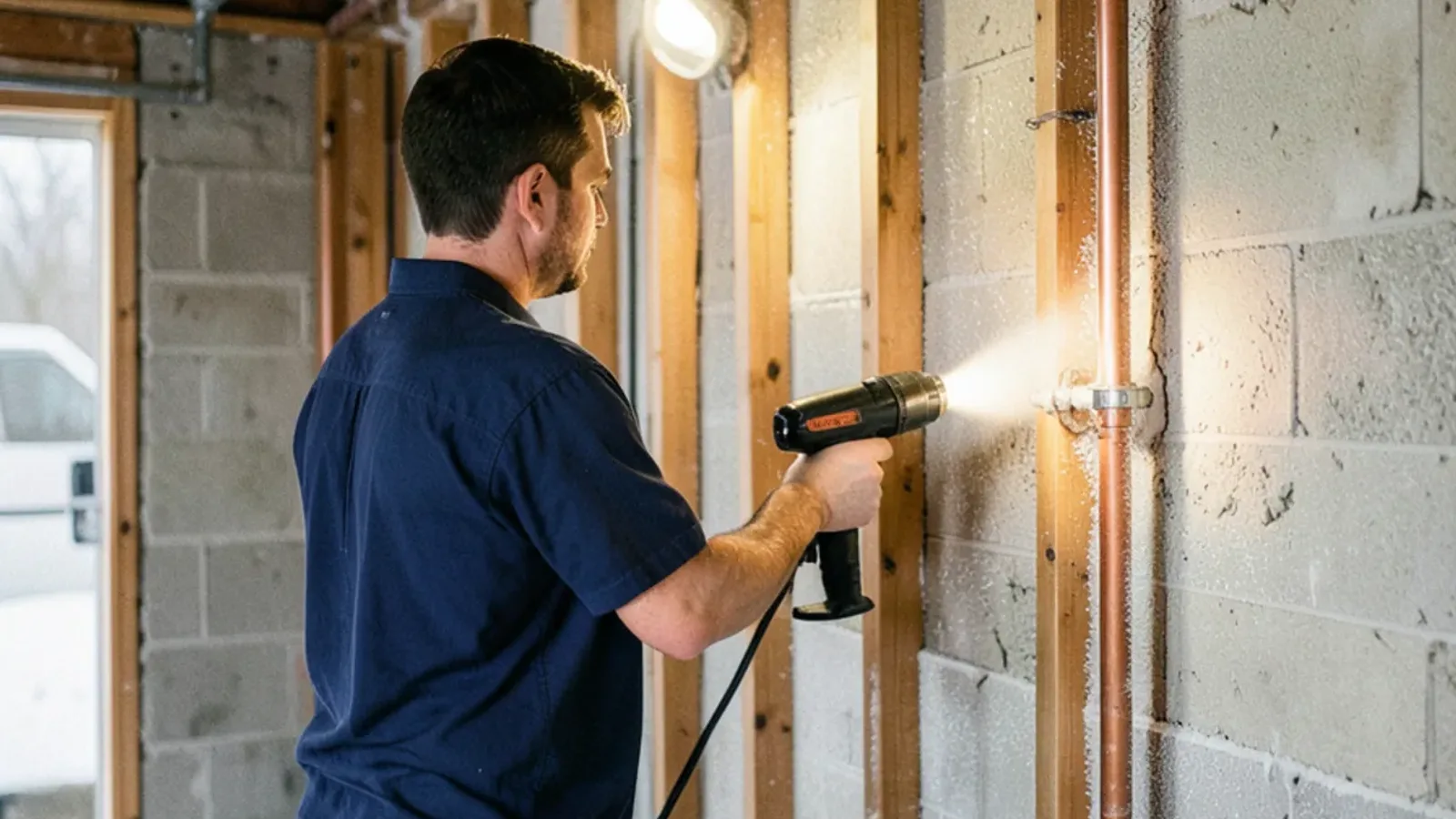
When a tap in Auburn Hills runs dry on a cold morning and the rest of the house still has water, a line has almost certainly frozen. The risk is not the ice itself but the split it can leave when it thaws, so the job is to warm the pipe under control and then check every joint the ice pushed on.
Oakland County gets a real freeze, and the lines that go are predictable: the ones running through cold, unheated space. Knowing where they are is half the fix.
Where pipes freeze in Oakland County homes
Ice forms where a water line meets cold air. In homes around here that means a handful of spots: supply lines in rim joists along the foundation, pipes run through an unheated garage or an attached garage wall, lines in a three-season room or an addition built over a slab, and hose bibs left connected to a garden hose over winter. Crawl spaces under additions and vacant rental units with the heat turned down round out the list. The water in the street rarely freezes; it is the last few feet inside cold framing that do.
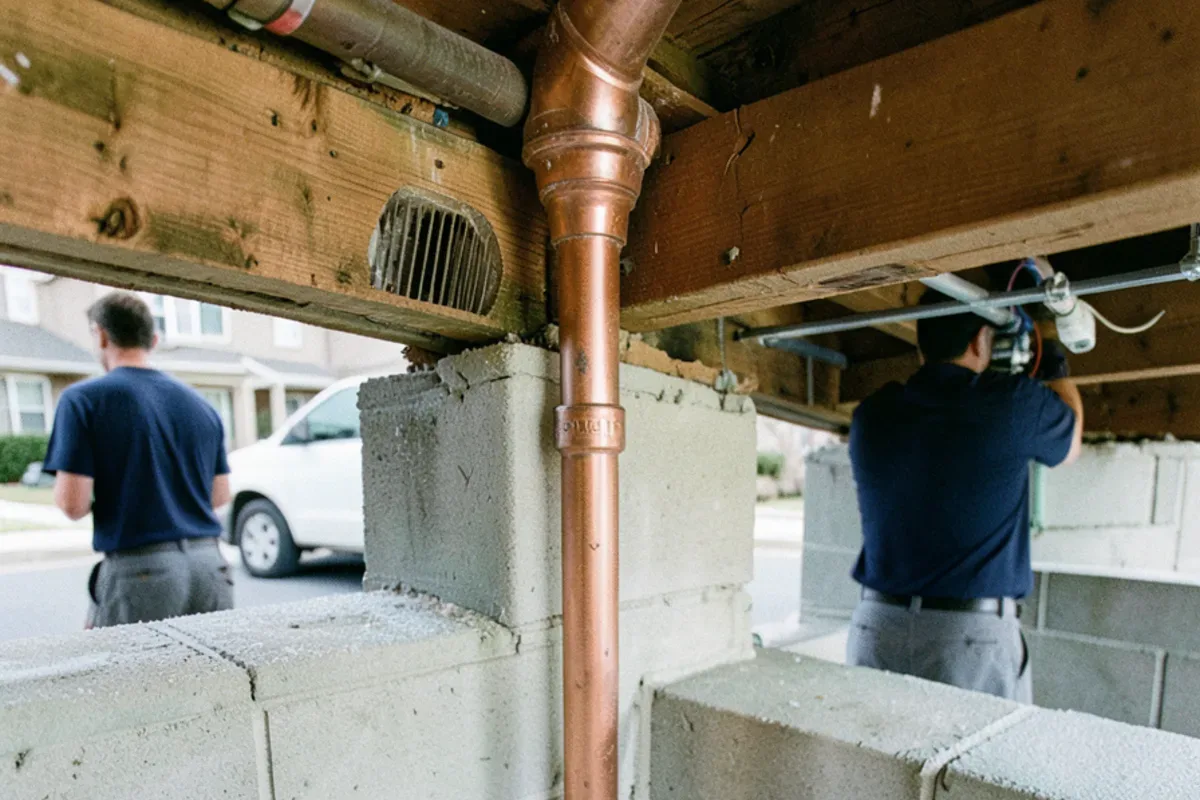
Newer Auburn Hills homes are not immune. A 1990s colonial with a bonus room over the garage often has a bathroom line running through cold space, and that is the one that goes first in a cold snap.
What to do when a tap goes dry in the cold
Open the affected faucet so that melting ice has somewhere to go and you can tell when flow returns. Leave the main on for now unless you can see a split, in which case close it right away. Feel along the likely cold runs for the frozen spot, which is often frosty or sweating at the edge of the ice. Keep the cabinet doors under sinks open so house heat reaches the pipes. What you should not do is put an open flame on the pipe; a torch on a frozen line scorches framing and can crack the pipe outright.
Thawing a line without cracking it
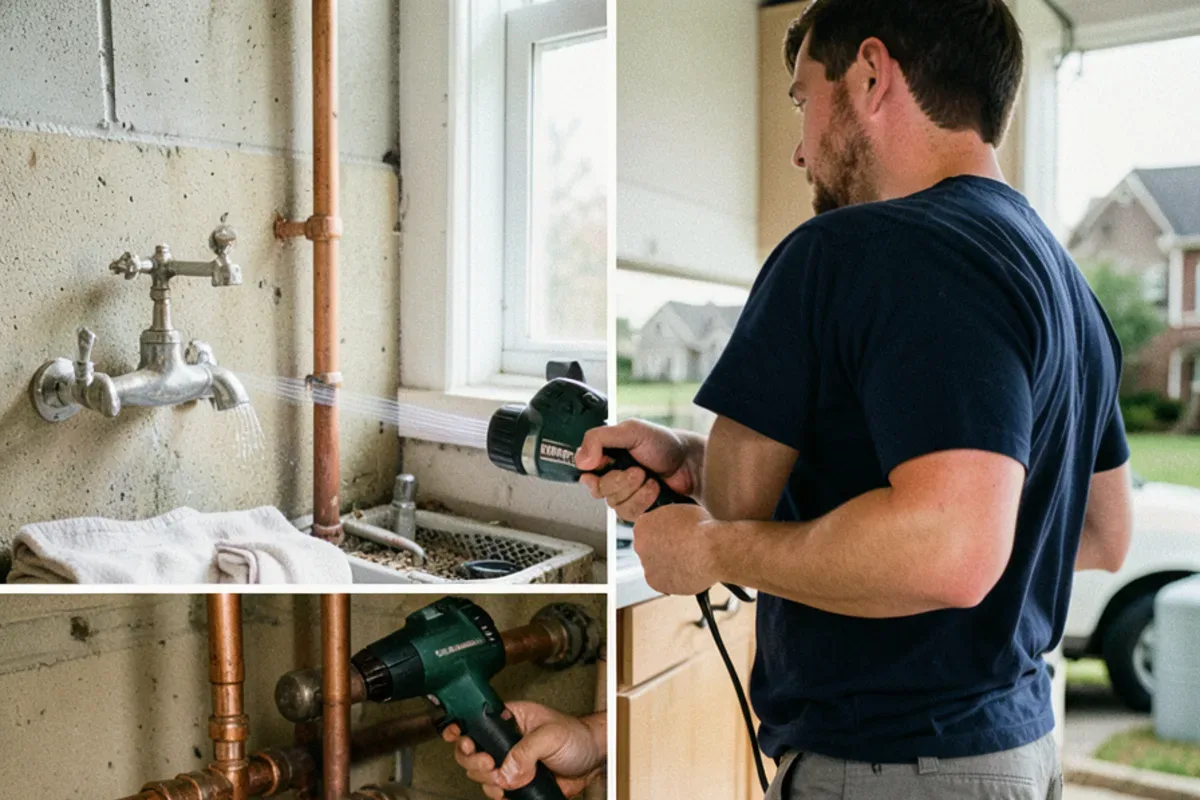
Safe thawing is slow and even. We warm the frozen length from the faucet end back toward the ice with gentle, steady heat, so meltwater drains out instead of being trapped between two plugs of ice and bursting the pipe. A heat gun, a hair dryer, warm towels or a space heater aimed at the area all work; a flame does not. As the ice gives way, water returns to the open tap, and we keep the heat on until full flow comes back and the pipe warms through.
Checking every joint the ice stressed
A frozen pipe that thaws quietly is not the end of it. The expansion of the ice stretches fittings and can leave a split that only weeps once pressure is back and the metal relaxes. So after flow returns we go over the whole run that was frozen, watching each joint and the meter for movement. If there is a split, that section is cut out and replaced the way any burst pipe would be. Catching a hairline crack now beats finding it as a flood next week.
Keeping the same pipe from freezing again
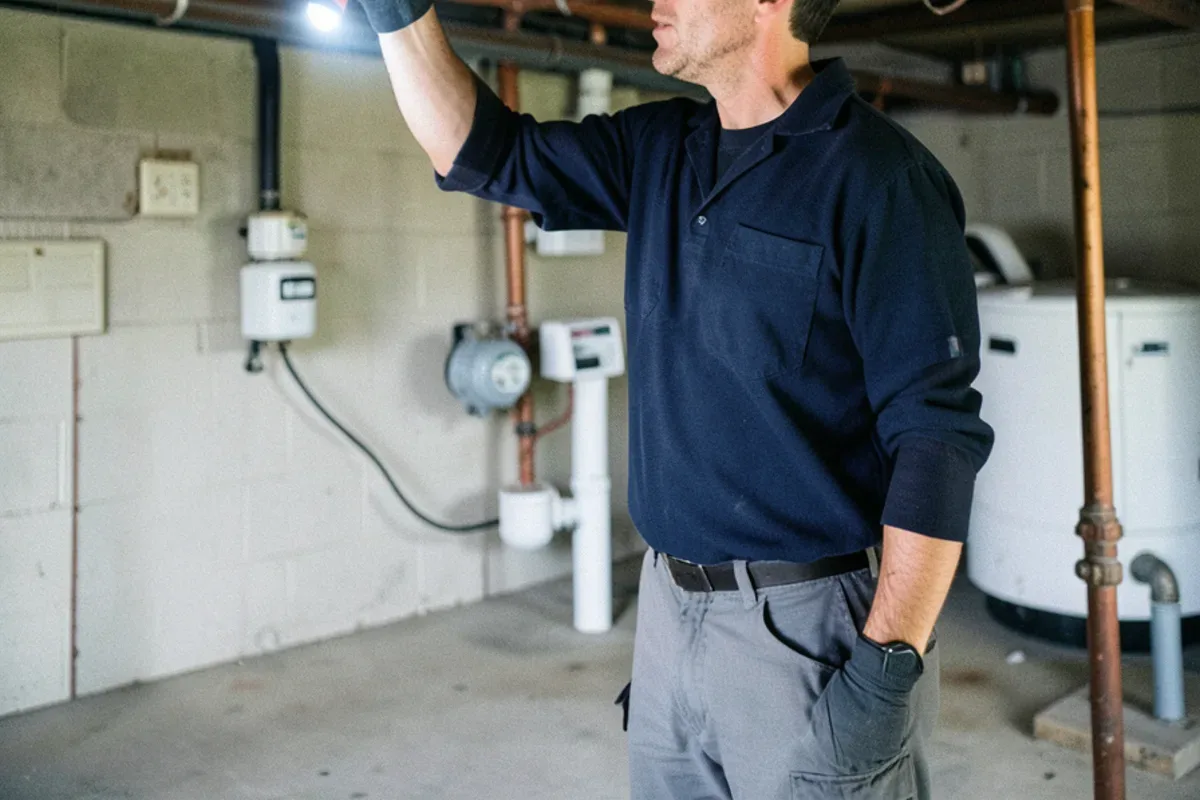
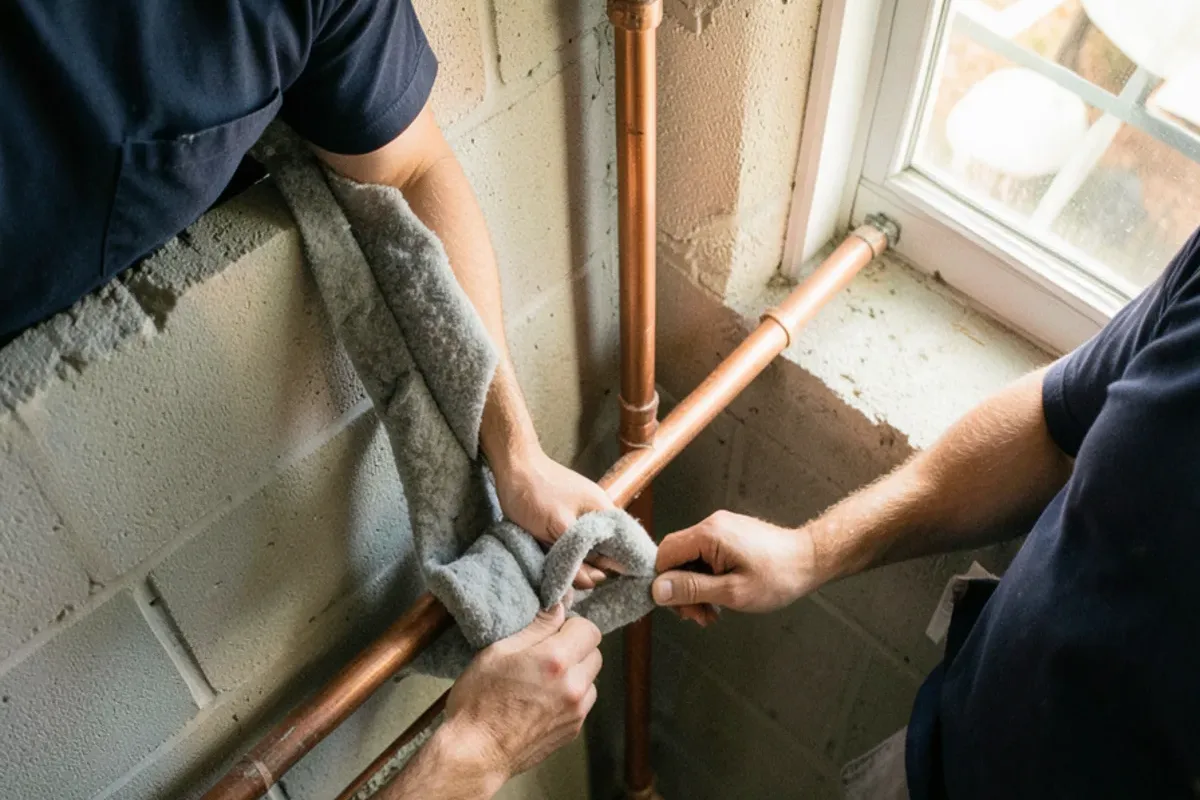
Once we know which spot froze, it is usually easy to keep it from repeating. Insulating the run, sealing the draft that let cold air reach it, and keeping a cabinet door open in a hard freeze often does it. For a line that cannot be moved out of cold space, heat tape with its own thermostat is the standard answer. Disconnecting garden hoses and shutting the outdoor faucet line in fall prevents the most common winter split of all.
Empty homes, rentals and the cold-weather call
A lot of winter calls come from homes that were cold inside. A rental between tenants with the thermostat turned down, a condo whose owner is away, or a house for sale with the heat off can freeze and split without anyone there to open a faucet. If you manage property in Auburn Hills, setting a minimum temperature and knowing where the main shutoff is for each unit prevents a surprise in February. We can walk a building with you before the season turns.
Frozen pipe repair around Auburn Hills and nearby cities
- Plumber in Rochester Hills
Bonus rooms over garages are common in its 1990s subdivisions, and the bath line crossing that cold space is the first to freeze.
- Plumber in Lake Orion
Lake cottages and three-season additions sit over crawl spaces and slabs where supply lines run through unheated air.
- Plumber in Orion Township
Rural well homes have long runs through unheated utility spaces, and a frozen line also strains the pump that keeps pushing against it.
- Plumber in Troy
Attached-garage bathrooms and laundry lines run through cold walls that freeze before the rest of the house does.
- Plumber in Waterford Township
Seasonal lake homes and crawl spaces are classic freeze spots, and vacant ones split without anyone there to notice.
- Plumber in Bloomfield Township
Large homes with bonus rooms and long exterior walls have more cold runs where a line can ice over.
- Plumber in Oakland County
County-wide the freeze happens in the same places: rim joists, garages, additions and disconnected outdoor faucet lines.
Frozen pipe repair questions from Auburn Hills customers
Should I thaw a frozen pipe myself or call a plumber?
You can try gentle heat from the faucet end if you can reach the pipe and see it clearly. Call when you cannot find the frozen spot, the pipe is inside a wall, the thaw brings a leak, or you are tempted to use a flame. A torch on a frozen line is how a freeze becomes a burst and a scorched joist.
Will a frozen pipe always burst?
No, not always. Many lines thaw with no damage, especially if someone opened a faucet to relieve the pressure. The danger is a split that the ice leaves and that only leaks once water and pressure return. That is why we check the whole frozen run afterward instead of assuming a quiet thaw means no harm was done.
Why did a pipe freeze in my newer Auburn Hills home?
Usually because a line runs through cold, unheated space. A 1990s home with a room over the garage often has a bathroom supply crossing that cold cavity, and a rim joist or an addition over a slab can do the same. The age of the house matters less than whether warm air reaches the pipe in a hard freeze.
How do I keep it from happening again next winter?
Insulate the run that froze, seal the draft letting cold air in, and keep the cabinet open under the affected sink in a cold snap. For pipe that must stay in cold space, thermostatic heat tape is the standard fix. And disconnect garden hoses in fall, since a hose left on is the most common cause of a winter split.
Still not sure what you're dealing with? Describe it on the phone and we'll tell you what we'd check first.
(207) 419-2600Last updated October 28, 2026