
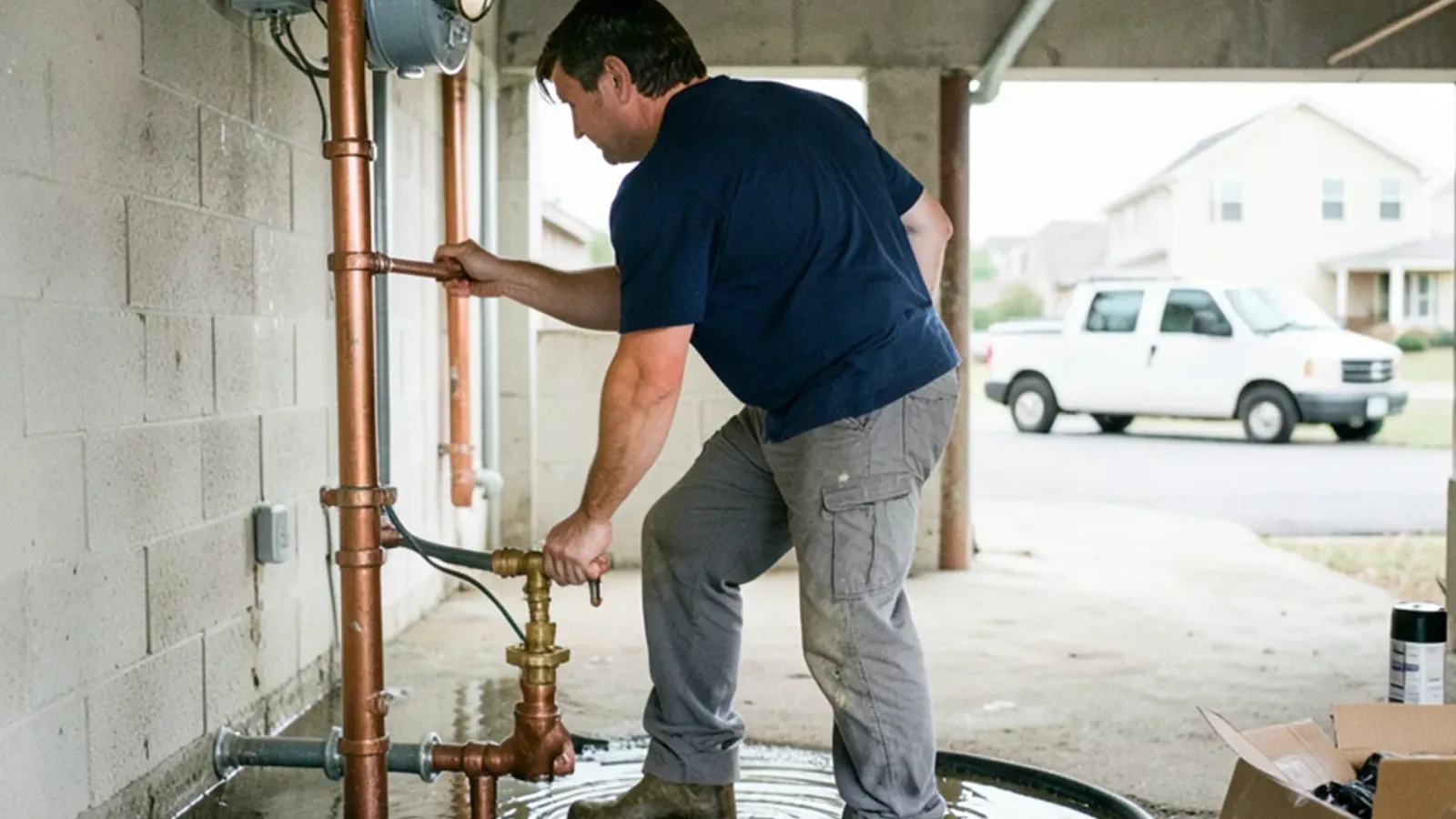
When water or sewage is loose in your home and closing one fixture valve does not stop it, that is the moment to call for emergency plumbing in Auburn Hills. A split line, a backed-up floor drain in a storm, or a water heater letting go all count.
The minutes before anyone arrives matter more than most people expect, so this page walks through the two shutoffs that stop the flood, what we need to hear on the phone, and how the visit goes. Auburn Hills is a city of 1980s and 1990s homes, which shapes what tends to fail and where the valves are.
When a plumbing problem turns into an emergency
There is a clean line between the two. If you can stop the water at a shutoff under the sink or behind the toilet and the problem sits still, you can schedule the repair. If it keeps coming and the only thing that stops it is the main valve, treat it as urgent. The same goes for sewage rising through a drain and for any smell of gas, which is a separate kind of emergency entirely.
The calls that cannot wait are a short list: a supply line that split or a fitting that let go, gray water pushing up from a basement floor drain, a water heater tank that is leaking onto the floor, and no water at all on a freezing morning, which often means a service line is iced and about to crack as it thaws. A trickling faucet or a single sluggish drain is not on that list and keeps until a scheduled visit.
The two shutoffs that stop the flood
Almost every water emergency is contained by closing two things in order. Finding them on a calm day, before you ever need them, is the single most useful thing you can do.
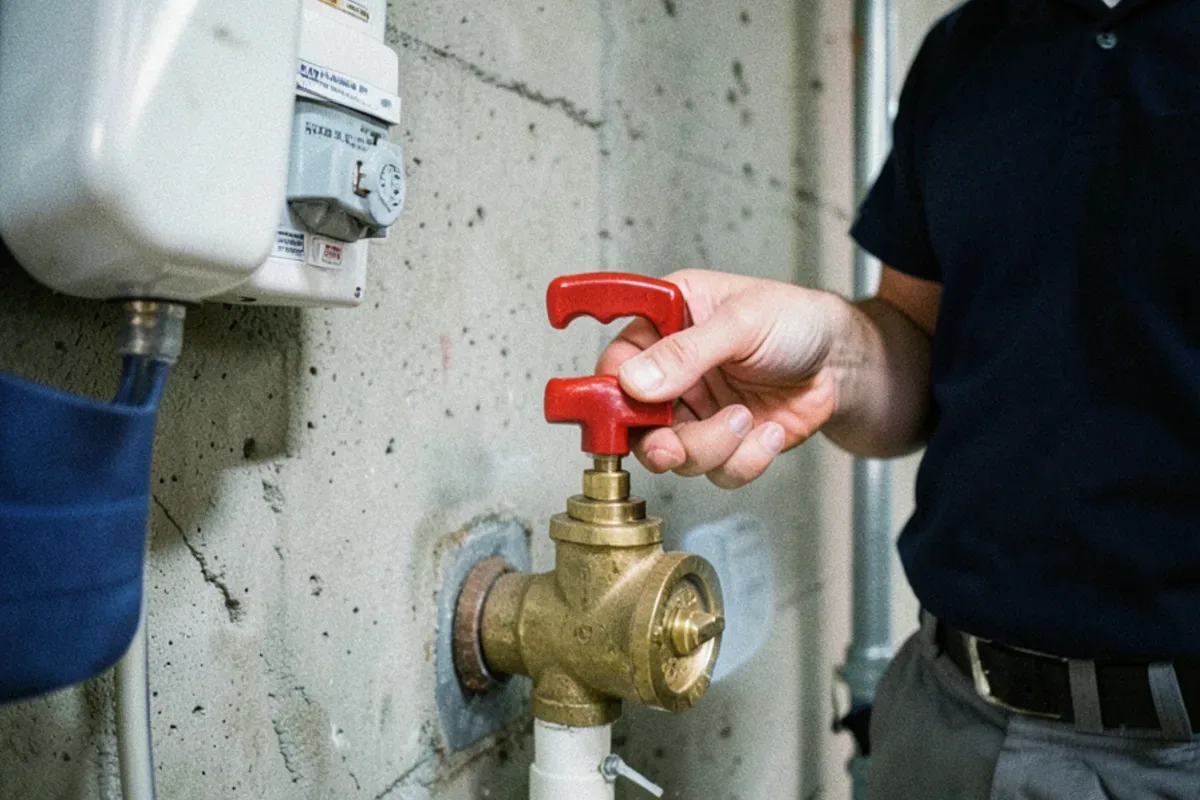
The main valve
Look on the wall closest to the street, usually by the meter or near the sump. In a home built since the 1980s it is typically a lever-handled ball valve that closes with a quarter turn. An older round-wheel gate valve that has seized should not be forced, because a snapped stem makes the problem worse than the leak.
The water heater
Once the main is shut, the tank cannot refill. Turn a gas unit down to pilot, or flip the breaker on an electric one so the heating elements do not run dry and fail. Then close the cold inlet valve on top of the tank if it is leaking.
Keep clear of any water that has reached outlets, the furnace or an extension cord. Cut power at the panel only if you can stand on a dry floor to do it; otherwise stay out of the room until help arrives. If a backup is the problem, stopping all showers, flushes and laundry keeps from adding to it.
Why newer Auburn Hills homes fail the way they do
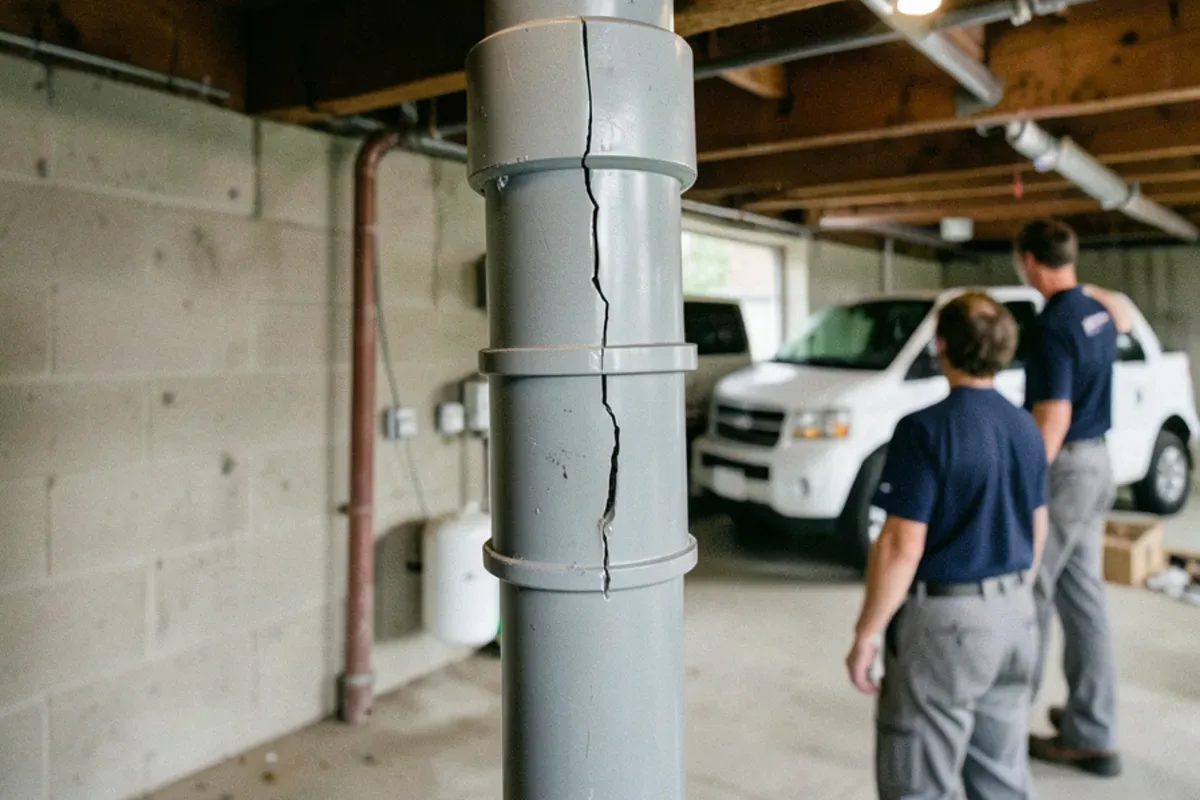
The emergencies we see here are the emergencies of a young city. Gray polybutylene mains, run in homes built from the late 1970s into the mid 1990s, crack at their fittings with little warning. Water heaters and sump pumps installed when the subdivisions went up are now twenty to forty years old and failing on their own schedule. In the pre-1960 Auburn Heights core and in older Pontiac and Rochester streets, it is more often a corroded galvanized line or a tired copper joint. Knowing which kind of home you have tells us what to put on the truck.
What we need to hear on the phone
A few answers decide what we bring and how fast the damage can be slowed. Is the water shut off yet. Is it clean water or sewage, and where is it coming from. Can you see the pipe, and does it look like copper, gray plastic or white plastic. Is anything wet near the electrical panel. How old is the home, and is it a condo or a rental.
On a stacked condo or an apartment near Oakland University, we also ask whether the water is reaching a unit below, because that changes who needs to know first and whether a shared shutoff is involved. We will tell you when a plumber can be there and what to do until then.
Stopping the damage, then fixing the cause
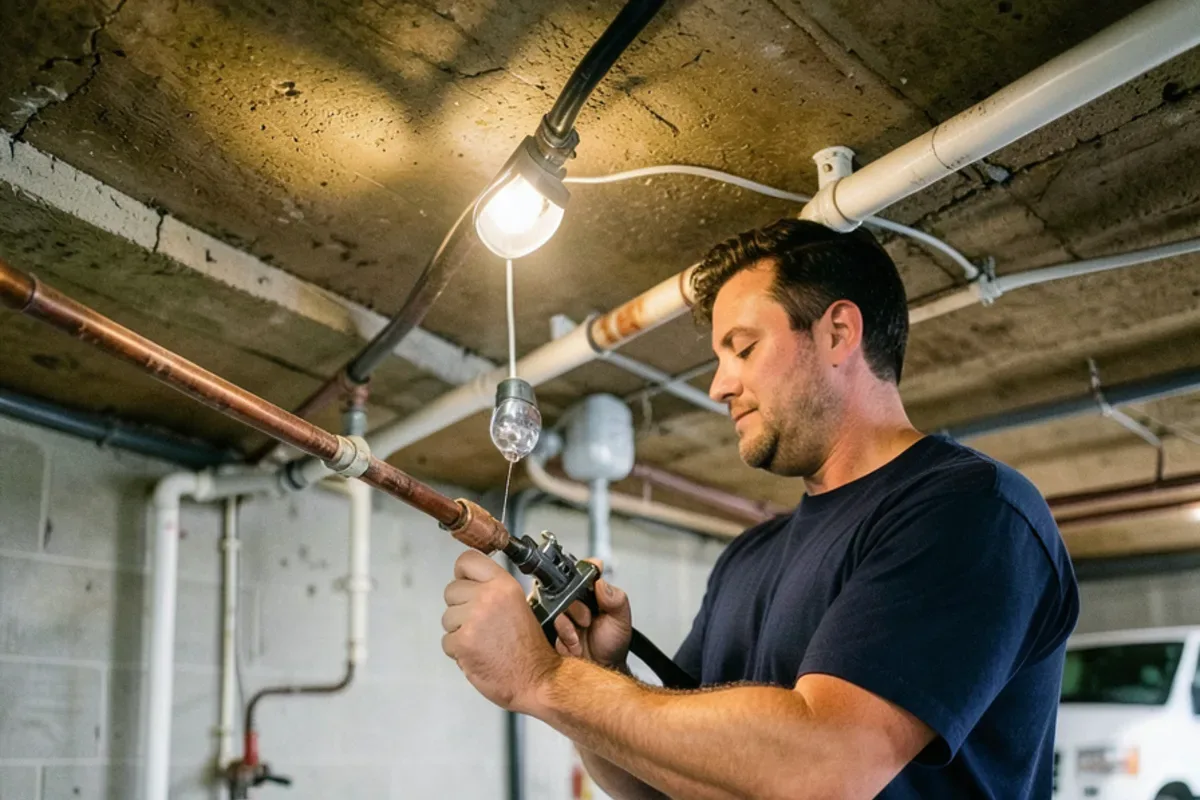
The visit has two parts. First we stop the loss: close or confirm the main, isolate the failed section, and get the rest of the home back to usable. Then we decide whether the permanent repair happens now or gets planned, since a water heater swap or a repiped run may need a permit and the right parts. What that looks like in practice is usually one of a handful of jobs.
- Cutting out a cracked poly or copper section and joining new pipe to sound material
- Opening a main-line backup at the cleanout, then running a camera if it has flooded before
- Draining and isolating a leaking water heater while a replacement is lined up
- Capping one damaged branch so the rest of the home keeps water
- Shutting down an overflowing toilet and renewing the fill valve or the wax seal
Storm backups and the Clinton River
Weather drives a season of emergencies here. The Clinton River runs flashy through Auburn Hills and the ground is clay, so a hard summer rain can send water up a basement floor drain from a surcharged sewer or in through the footing tile. Winter flips it, cracking lines in rim joists and unheated garages. When a backup is what you are facing, we usually put a sewer camera inspection down the lateral before suggesting a backwater valve or added sump pump capacity, because the cure depends on where the water got in.
Emergency plumbing around Auburn Hills and nearby cities
- Plumber in Rochester Hills
Homes here match the 1980s and 1990s builds of Auburn Hills, so a cracked poly fitting is the emergency that comes up most often.
- Plumber in Pontiac
Older Pontiac housing runs to galvanized and cast iron, where a corroded line or a seized main valve can turn a slow leak into a flood.
- Plumber in Troy
Finished basements are the norm in Troy, so a line that lets go overhead means opening and protecting a ceiling before any repair.
- Plumber in Lake Orion
Lake-area cottages and newer homes mix here, and a leaking heater or a storm backup is a frequent after-hours reason to call.
- Plumber in Orion Township
Many Orion Township homes draw from private wells, so a burst line keeps feeding from the pump until the main is closed.
- Plumber in Rochester
Downtown Rochester has pre-1960 pipe prone to sudden fitting failures, and the Clinton River raises the odds of a storm backup.
- Plumber in Bloomfield Township
Larger multi-bath homes mean more fixtures and shutoffs to isolate when a line fails on an upper floor.
- Plumber in Waterford Township
Lake-country basements near Waterford take on groundwater, so a sump that quits during a storm becomes its own emergency.
- Plumber in Oakland County
County-wide the pattern holds: newer plastic and copper pipe with aging water heaters and sumps behind most urgent calls.
Emergency plumbing questions from Auburn Hills customers
What kinds of problems do you treat as emergencies?
The ones where water or sewage keeps coming and a fixture valve will not stop it: split supply lines, cracked polybutylene fittings, sewage rising in a floor drain, leaking water heater tanks, and toilets that overflow without end. A gas smell is its own emergency that goes to the utility or 911 first; the pipe repair follows once the home is safe.
Will an after-hours call cost more than a scheduled visit?
It can, depending on what failed, how hard it is to reach, whether one visit or two is needed, and the timing. We are upfront about the rate when you call. The biggest savings are in your hands anyway: shutting the main quickly and lifting belongings out of the water usually matters more to the bill than anything else.
Can I stay in the house with the water shut off?
Yes, at least for a while. Fill a couple of pitchers before you close the valve, switch off the water heater, and remember a toilet still flushes if you pour a bucket into the bowl. A common goal of the first visit is to cap the one damaged branch so the rest of the home has running water again.
The whole house has no water at once. Is that mine or the system?
Either is possible, so check with a neighbor. A regional transmission break, like the GLWA 42-inch main that failed at River Woods Park in 2026, can leave whole streets dry. If the neighbors have water on a cold day, suspect a frozen service line at the basement wall. If your meter spins with every fixture closed, the break is on your side.
Still not sure what you're dealing with? Describe it on the phone and we'll tell you what we'd check first.
(207) 419-2600Last updated October 28, 2026