
 By Plumber in Auburn Hills, MI, plumbers on Pond Run in Auburn HillsPublished October 28, 2026Last updated October 28, 2026
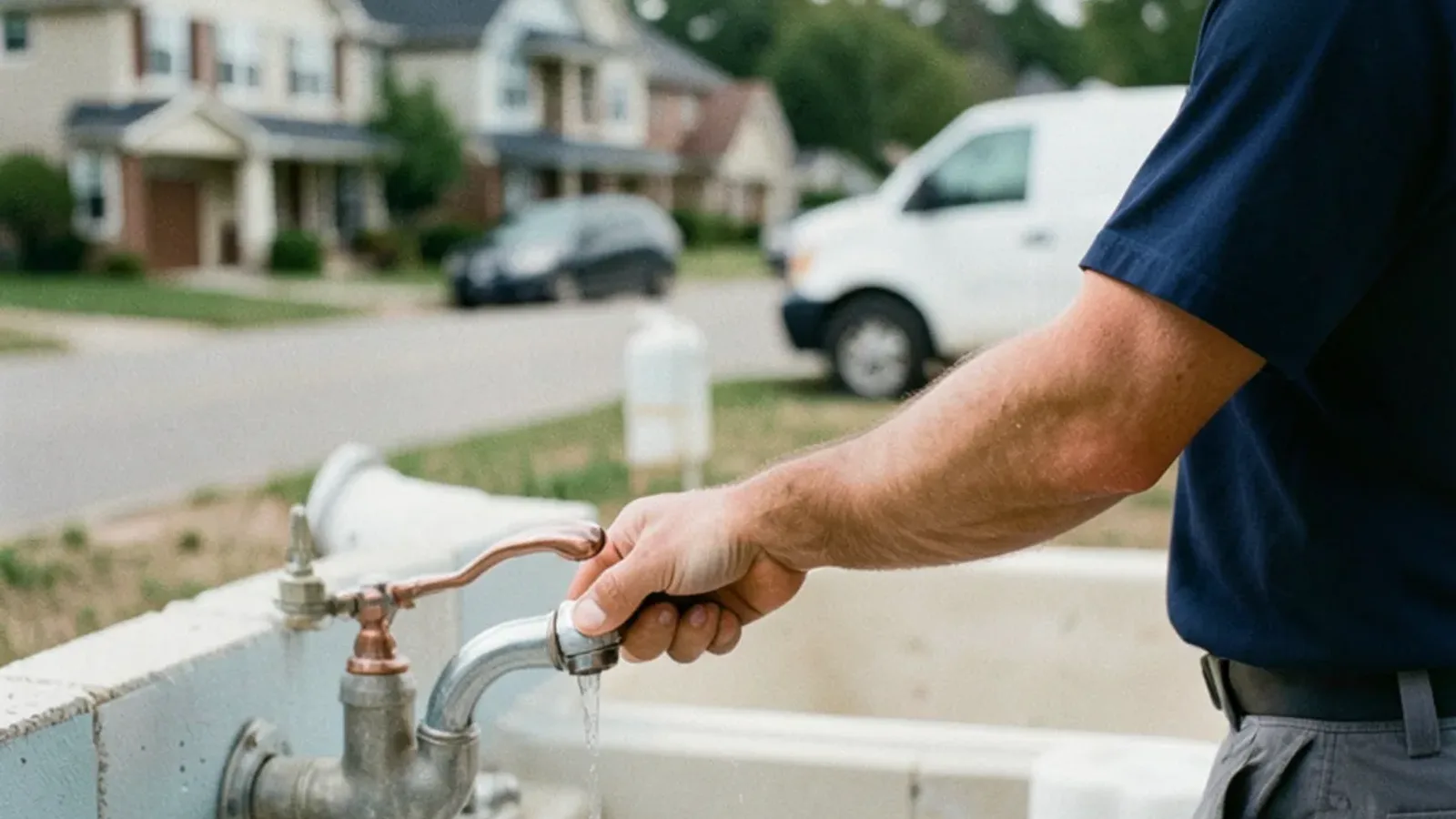
When no fixture in the house has water, the cause is almost always upstream of the whole plumbing system rather than in any one faucet. The quickest way to narrow it is to work from the outside in: is it the city or well supply, a main shutoff someone closed, a well pump that quit, or a frozen service line. A few checks sort most of it in minutes.
Here is that checklist in order, and how a city home and a well home differ when the water stops.
Check whether it is just your house
Start by placing the problem. If you are on municipal water, a neighbor on the same street having water too means the issue is on your side of the meter, not the city’s; everyone dry at once points to a main break or city work. On a well there is no neighbor to compare with, so the question shifts to the pump and tank. Either way, note whether the loss was sudden or faded over hours, because a sudden total loss suggests a valve or a pump, while a slow fade can mean a failing pump or a line freezing shut.
Compare with a neighbor
On city water, ask whether nearby homes have water. Dry too means a city-side issue; only you means your side.
Check the main shutoff
Make sure the home’s main valve, usually near the meter or where the line enters, is fully open.
On a well, check the pump breaker
A tripped breaker or a failed pressure switch stops the pump and the water with it.
Rule out a freeze in winter
In a hard freeze, a service line or an exposed pipe can ice shut and cut flow to the whole house.
City-side problems and the main shutoff
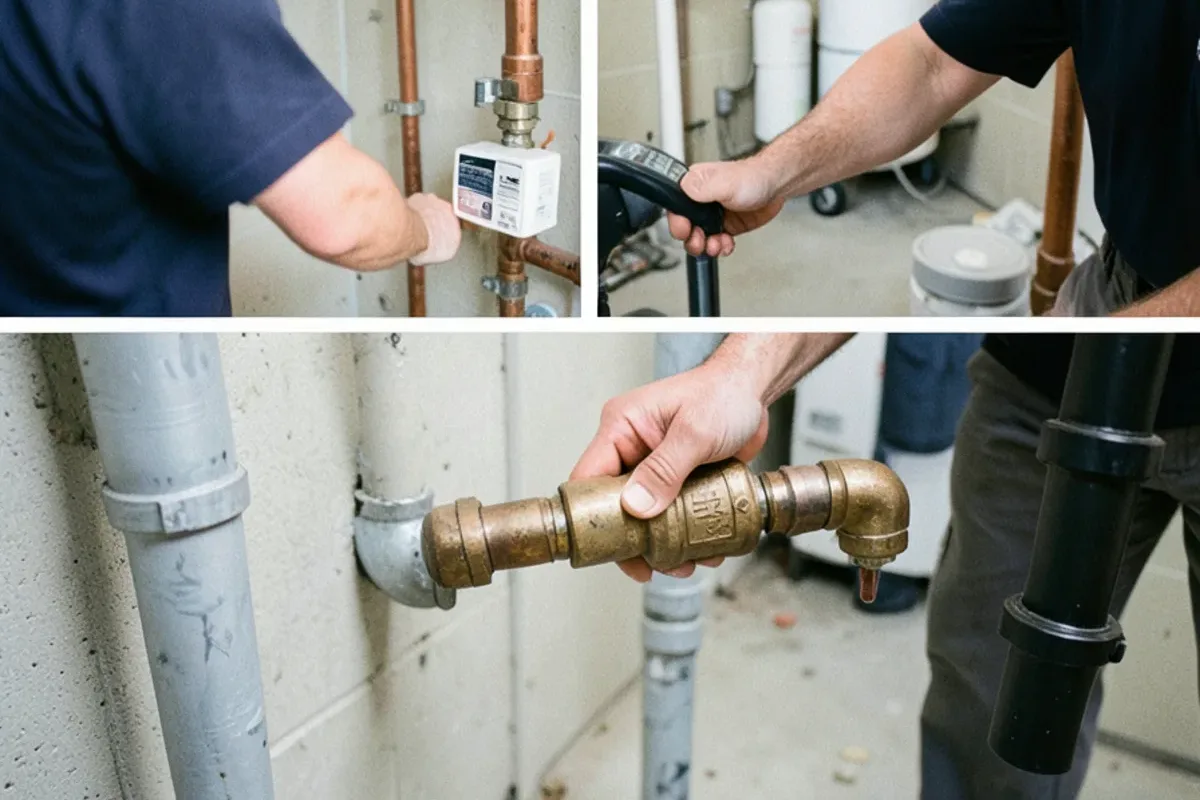
On municipal water, the two common whole-house causes are a closed main shutoff and a problem on the city side. A main valve can get bumped or left partly closed after a repair, so confirm it is fully open first. If it is open and the street is dry everywhere, the city or a main break is the cause and there is nothing to fix inside. If only your home is dry with the valve open, the trouble is in your service line between the street and the house, which is where a main water line problem, including a winter freeze or a break, comes in.
Well homes and the pump
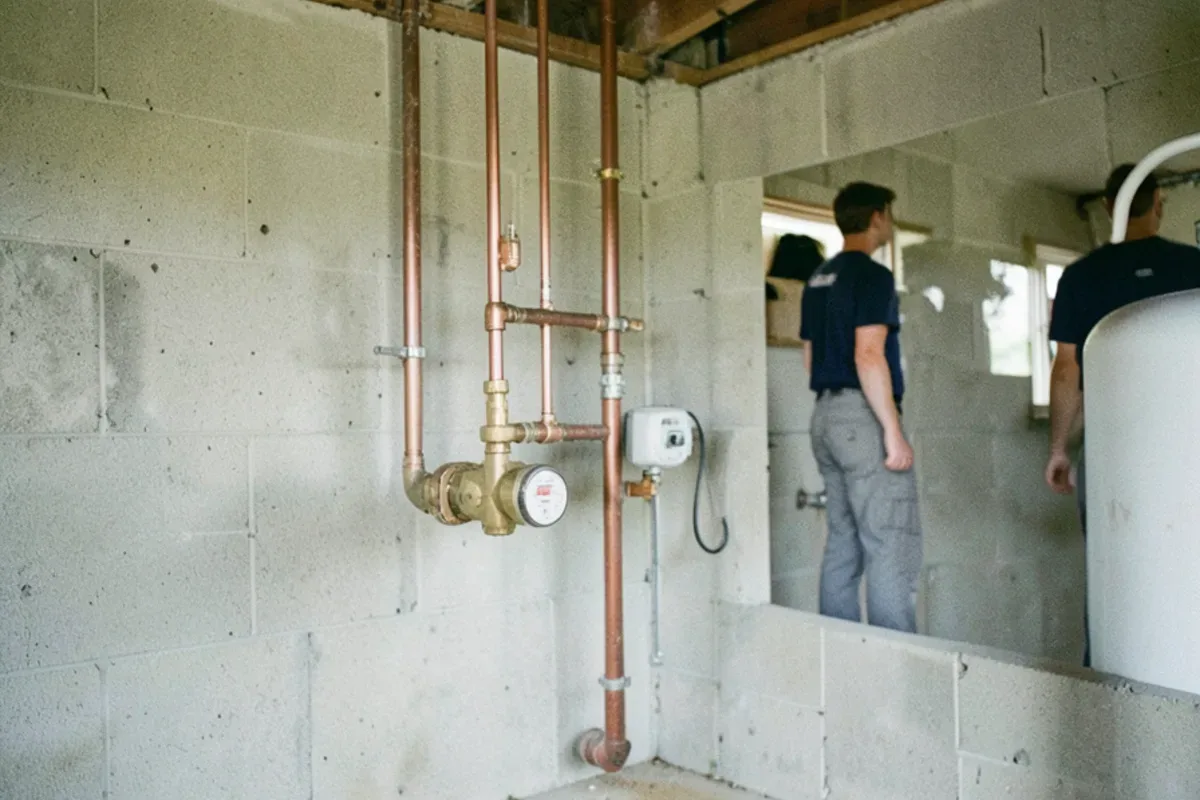
In the northern Oakland townships many homes are on private wells, and there no water almost always means the pump, the pressure tank or the controls. A tripped breaker, a burned-out pump, a waterlogged pressure tank or a failed pressure switch can each stop the supply, and with no city main behind it the house simply goes dry. Check the pump’s breaker first, then listen for whether the pump runs at all. If it is silent or short-cycling, that is the system to diagnose, which our well pump page covers in detail.
When low becomes none
Sometimes the water does not vanish all at once but fades, and that pattern points elsewhere. A slow decline across weeks on an older home is often galvanized supply pipe rusting closed from the inside, which strangles the flow until barely anything comes out. A seasonal loss in a cold snap is usually a freeze. A well that pumps strong then weakens over a day can be a dropping water table or a tiring pump. Telling a sudden loss from a slow one helps point the diagnosis before anyone opens a wall or pulls a pump.
What to have ready when you call
A few details gathered before you call make the visit faster and often the diagnosis quicker. Know whether you are on city water or a private well, because that alone changes where we look first. Note when the water stopped and whether it went all at once or faded, and whether any one fixture still has even a trickle, since partial flow somewhere narrows the problem considerably. Say whether it is freezing out, whether anyone did plumbing or shutoff work recently, and, on a well, whether you can hear the pump running or the breaker has tripped. If a neighbor on city water is dry too, mention that, because it points the whole thing at the city side. None of this is hard to collect, and it is the difference between arriving to guess and arriving to fix, which matters most when a house full of people has no water and wants it back.
Questions people ask about this
The whole house lost water at once. Where do I start?
Place the problem first. On city water, check whether neighbors have water and confirm your main shutoff is fully open. On a well, check the pump breaker and listen for the pump. A sudden total loss usually points to a closed valve, a city-side break, or a pump, rather than anything in a single fixture.
How do I know if it is the city’s problem or mine?
If homes around you are also dry, it is likely a city main break or utility work, and there is nothing to fix inside. If only your home has no water and your main shutoff is open, the trouble is on your side, in the service line between the street and the house, and that is worth tracing.
My well home has no water. What is the likely cause?
On a well, no water almost always means the pump, the pressure tank or the controls rather than the pipes. A tripped breaker, a burned-out pump, a waterlogged tank or a failed pressure switch can each cut the supply, and with no city main behind it the house goes dry until the well system is diagnosed and repaired.
Want a plumber to look at your situation? We're on Pond Run in Auburn Hills.
(207) 419-2600