
 By Plumber in Auburn Hills, MI, plumbers on Pond Run in Auburn HillsPublished October 28, 2026Last updated October 28, 2026
When a tank water heater reaches the end of its life, the replacement is no longer a simple like-for-like choice. Tankless and heat pump units both cut energy use well below a standard tank, but they work in opposite ways and suit different homes. The decision in an Oakland County house comes down to fuel and venting, the space you have, and how a cold Michigan basement affects each one.
Here is how the two compare on the things that actually decide it, rather than on the efficiency sticker alone.
How each one makes hot water
A tankless heater, usually gas here, has no storage; it fires a powerful burner to heat water on demand as it flows through, so it never runs out and loses nothing to a standing tank. A heat pump water heater is electric and keeps a tank, but instead of using a resistance element it moves heat out of the surrounding air into the water, the way a refrigerator works in reverse, using a fraction of the energy of a standard electric tank. One gives endless hot water; the other gives very low running cost. They are not really competitors so much as answers to different priorities.
Venting, gas and electrical realities
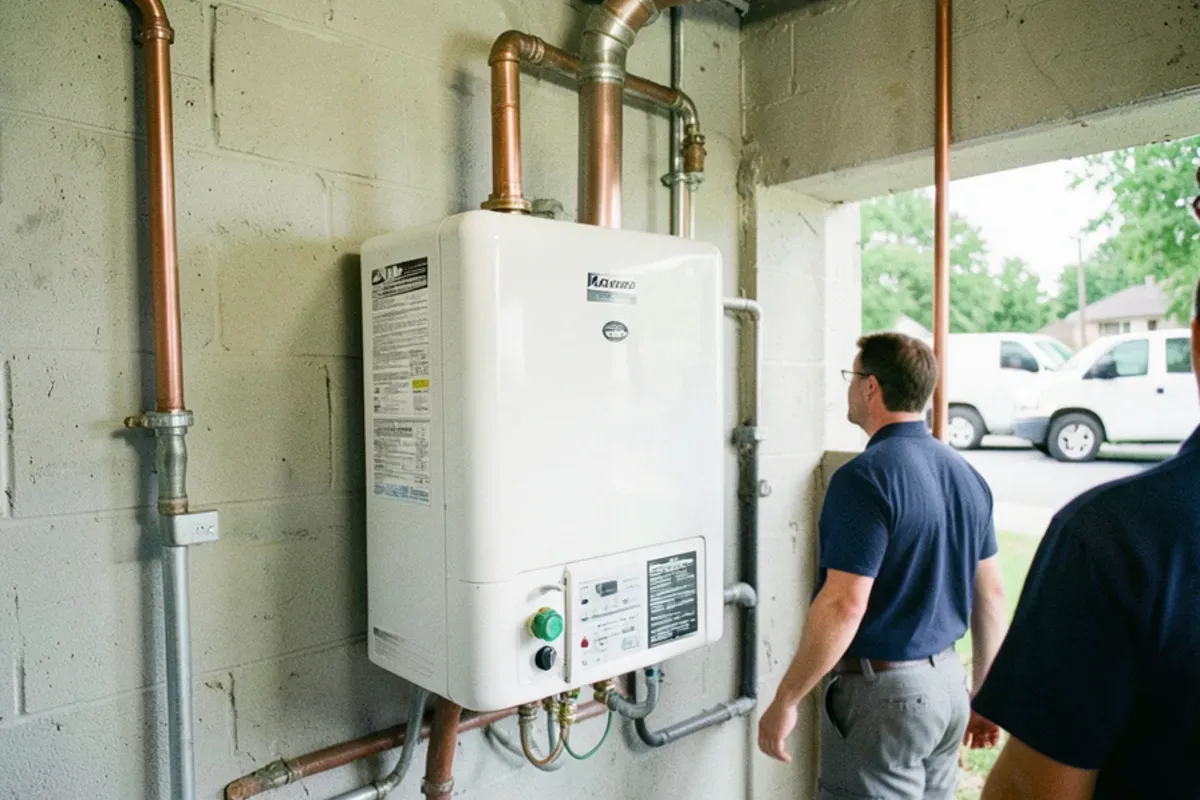
The install is where homes rule one out. A gas tankless draws far more gas while it fires than a tank does, so the gas line often has to be upsized, and it needs its own sealed venting to the outside. A heat pump water heater needs no gas and vents nothing, but it draws heat from the room, so it wants a reasonably sized, unfinished space and a 240-volt circuit, and it blows cooler air while it runs. Before either is a real option we check what the home already has, because the cost of upsizing gas or adding a circuit is part of the true price. Our tankless and water heater pages cover the install side.
What a Michigan winter does to each
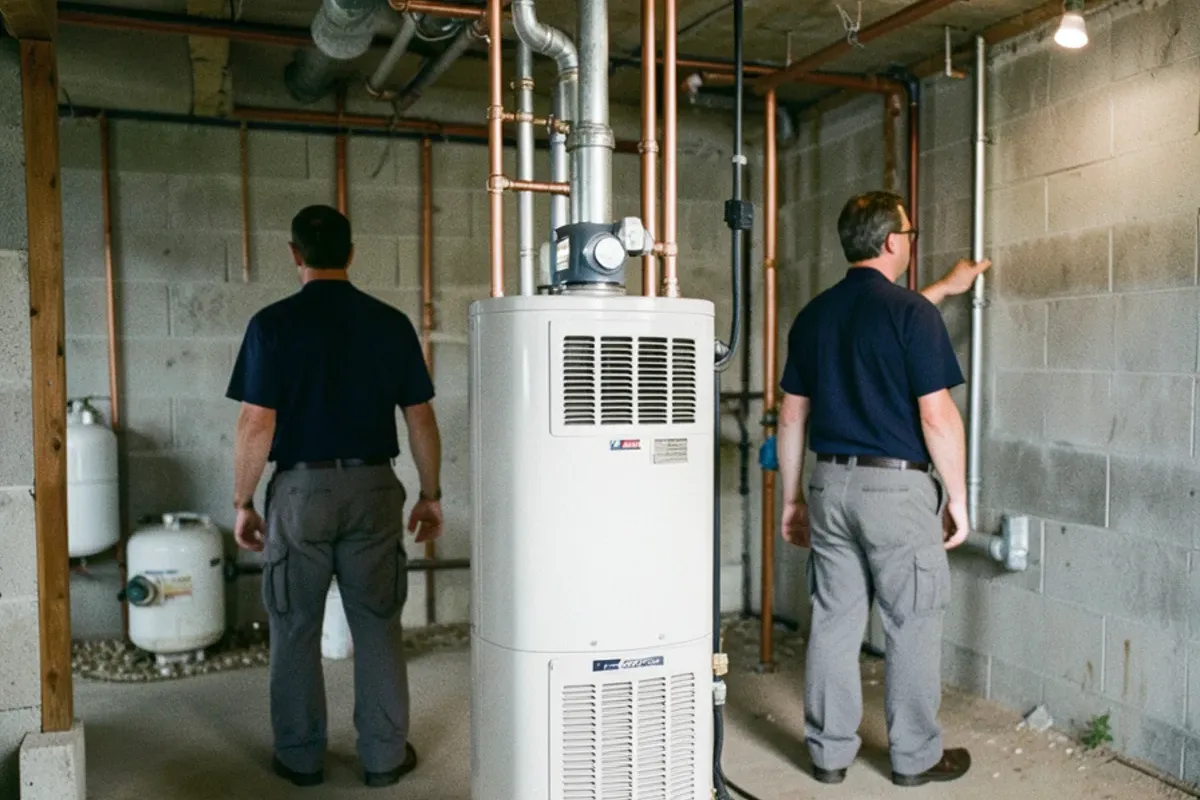
Climate matters more here than the brochures let on. A heat pump water heater pulls its warmth from the air around it, so in an unheated or barely heated basement in a Michigan winter it has less heat to work with and slows down, often falling back on a backup resistance element that erases much of the savings. It also cools and dries the space it sits in, which is welcome in July and less so in January. A gas tankless does not care about room temperature, but very cold incoming water in winter cuts how much hot water it can deliver at once, so it has to be sized for the coldest months rather than the average. A tankless sized on a mild-weather flow rate can disappoint in January, when the incoming water is near freezing and the unit has to raise it much further to reach temperature, which is exactly why the sizing conversation matters more here than in a warmer climate.
Space, cost and how long you will stay
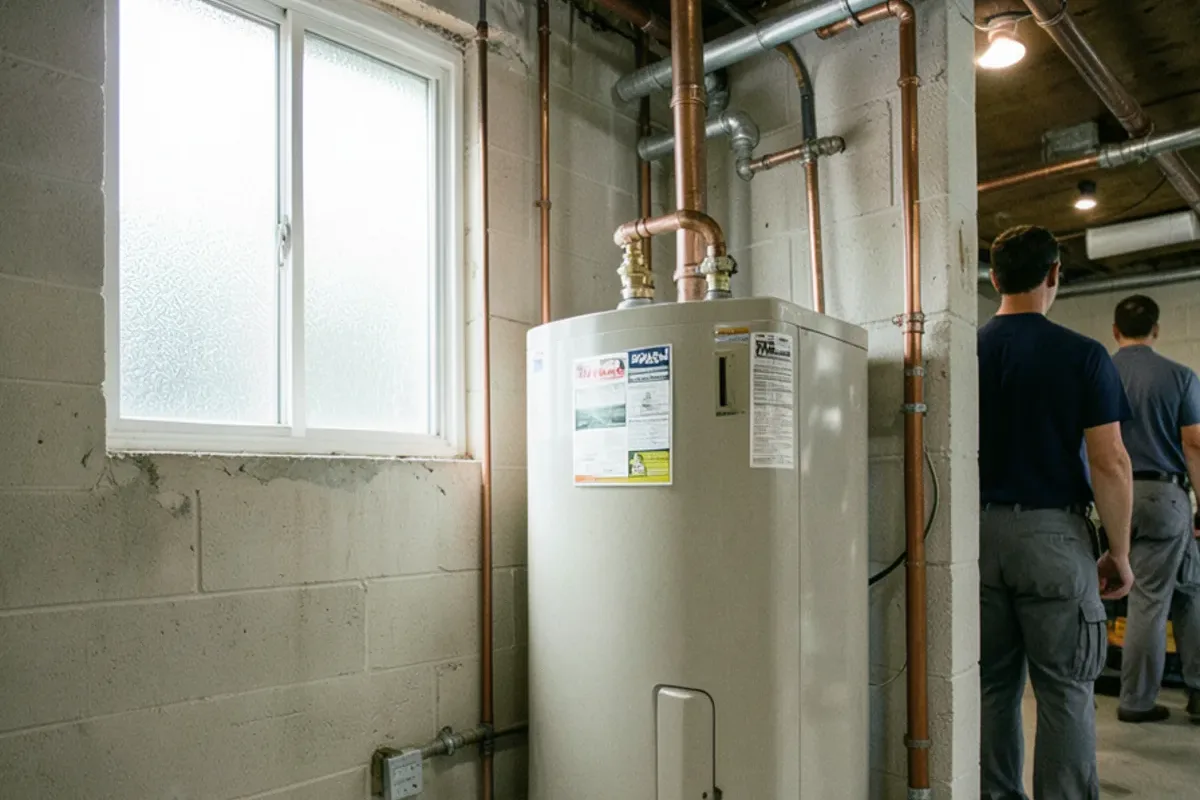
A tankless frees up floor space and never floods from a failed tank, but costs more up front, especially if the gas and venting need work. A heat pump unit is cheaper to run than almost anything, but it is physically large, needs clearance and a drain for condensate, and is noticeably taller than the tank it replaces. How long you plan to stay weighs in too, because the efficiency savings of either take years to repay the higher install, and that math only works if you are around to collect it. For a short horizon a quality standard tank can still be the sensible choice.
A quick way to narrow it
If the home is on gas, values endless hot water for a busy household, and you want to free the floor space, a tankless is usually the better fit, budgeting for any gas and venting work. If the basement is open and unfinished, you want the lowest running cost, and you do not mind a larger unit and cooler basement air, a heat pump water heater is hard to beat on operating cost. If neither clearly fits, or you are not staying long, a well-sized standard tank remains a perfectly good answer. We size whichever you lean toward to your actual hot-water demand and the home’s realities before recommending it.
Questions people ask about this
Is a heat pump water heater a good idea in a cold Michigan basement?
It can be, with a caveat. A heat pump unit draws heat from the surrounding air, so in an unheated basement in winter it works harder and may lean on a backup element that reduces the savings. It also cools the space. In a basement that stays moderately warm it performs well; in a very cold one, the efficiency edge shrinks in the months you use the most hot water.
Does a tankless water heater need gas and venting work?
Often yes. A gas tankless fires a much larger burner than a tank, so the gas line frequently has to be upsized to feed it, and it needs its own sealed vent to the outside. Those are part of the real install cost, so we check what the home already has before quoting, rather than assuming the existing gas and flue will carry a tankless.
Which saves more money, tankless or heat pump?
A heat pump water heater usually has the lowest running cost of the two, since moving heat uses far less energy than making it. A tankless saves by not reheating a standing tank and by lasting longer. Both take years of savings to repay their higher install, so how long you will stay in the home matters as much as the efficiency numbers.
Want a plumber to look at your situation? We're on Pond Run in Auburn Hills.
(207) 419-2600