
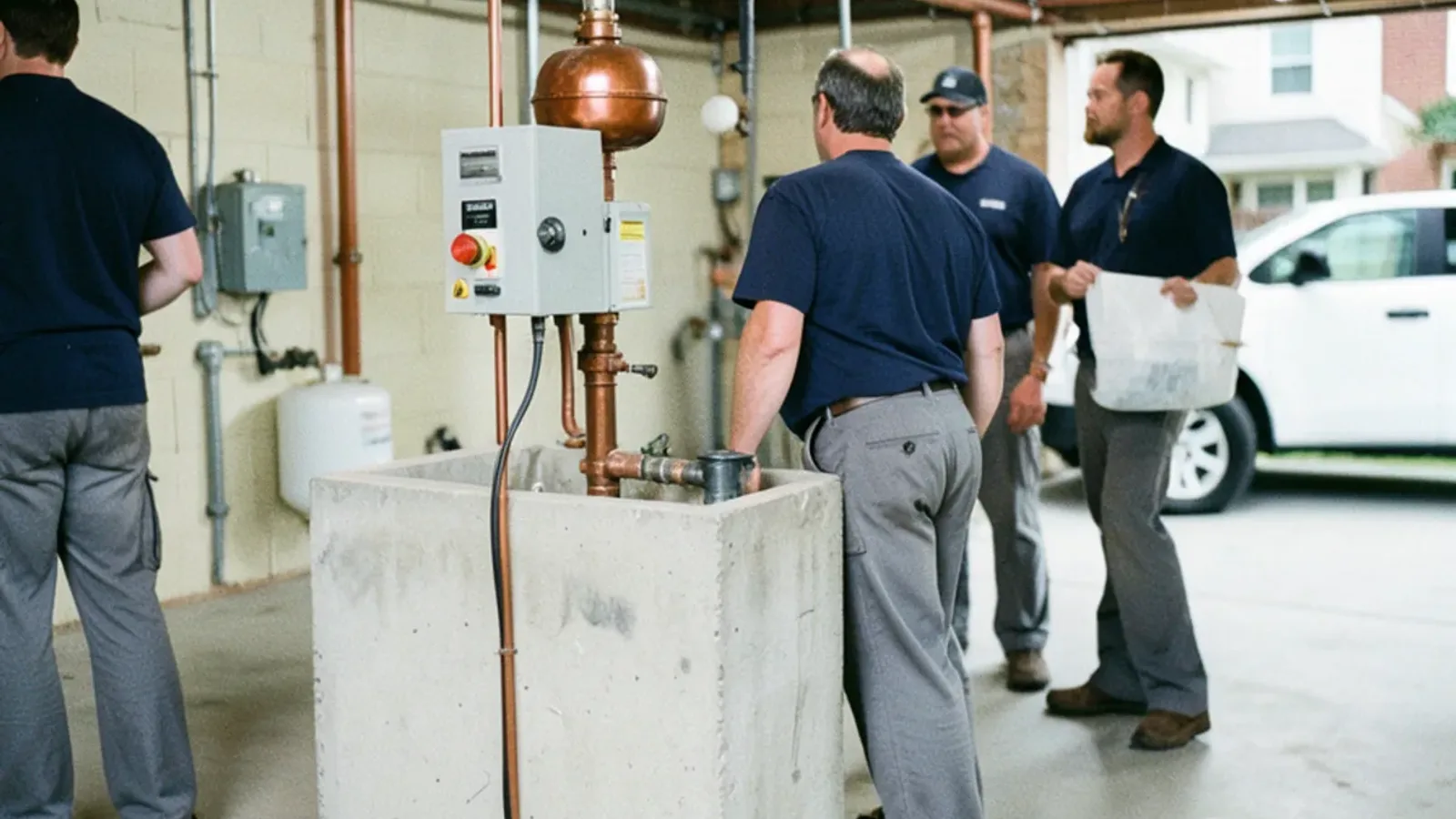
 By Plumber in Auburn Hills, MI, plumbers on Pond Run in Auburn HillsPublished October 28, 2026Last updated October 28, 2026
If a basement bathroom or laundry drains into a sealed pit with a pump, that pump has an alarm, and when it sounds it means the basin is filling faster than the pump is clearing it. The alarm is a warning, not the failure itself; it gives you time before the basin overflows. Stop sending water down the lower-level fixtures, then work out whether the pump has quit, the float is stuck, or the discharge is blocked.
Here is what the alarm is telling you, what to check, and when the basin is about to back up.
What the alarm is measuring
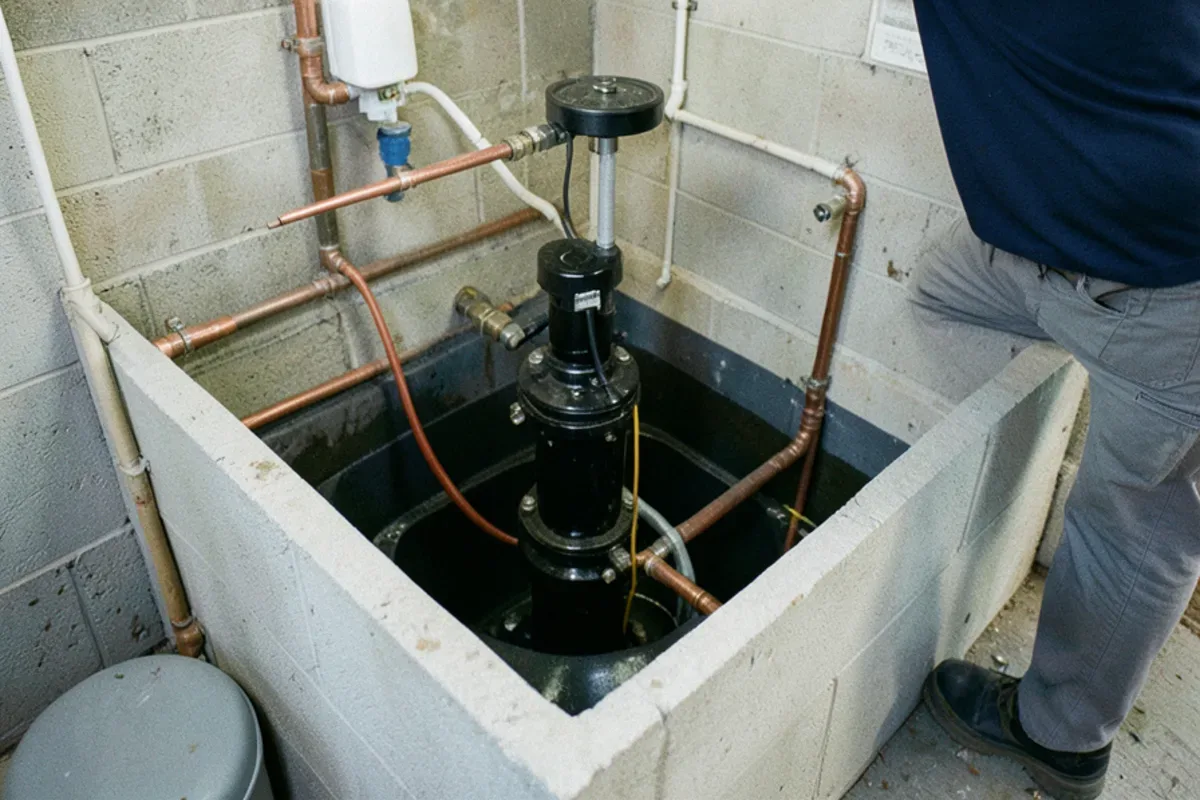
A sewage ejector pump sits in a sealed basin that collects waste from fixtures below the main sewer line, a basement bath, a laundry tub, a floor drain, and pumps it up to the house drain. A separate high-water float triggers the alarm when the level in the basin rises past where the pump should have emptied it. So the alarm is really a level warning: water is coming in faster than it is going out. That can be a surge the pump will catch up on, or a sign the pump is not keeping up at all, which is the difference between a nuisance beep and an imminent overflow.
Stop the water and check the simple things
First, stop using the fixtures that drain into the pit, the basement toilet, shower, sink or laundry, so nothing more fills the basin while you look. Then check the obvious: has the pump lost power, with a tripped breaker or an unplugged cord, sometimes from the alarm sharing the circuit. Listen for whether the pump runs at all when the level is high. If it hums but moves nothing, or runs constantly without lowering the level, that points to the pump or the discharge rather than the power. Do not open a sealed sewage basin casually; the gases are part of why it is sealed.
Stop the lower-level fixtures
No toilet, shower, sink or laundry on the basement level until the basin is clearing again.
Check power to the pump
Look for a tripped breaker or an unplugged pump, and whether the alarm shares the circuit.
Listen for the pump
A pump that hums but moves nothing, or runs without lowering the level, points past the power.
Call before it overflows
The alarm is your lead time. Use it to get help in before the basin tops out.
The usual causes behind the alarm
A handful of problems set off most ejector alarms. The pump can fail outright from age or a burned-out motor. The float that tells the pump to run can stick or tangle, so the pump never starts even as the basin fills. The check valve on the discharge can fail, letting pumped waste fall back into the basin so it never truly empties. The discharge line can clog, often from items that should never reach a sewage pump. And the pump can simply be undersized or worn for the load. Sorting which it is means looking at the basin and the discharge, which our ejector pump work covers.

Why these fail and how to avoid the alarm
Ejector pumps live a hard life, running sealed in waste, and they are out of sight until the alarm makes them heard, so they are easy to neglect. The most avoidable failures come from what goes into them: wipes, hygiene products and grease that a sewage pump is not built to pass clog the impeller or the discharge. Keeping those out matters more than any maintenance. Beyond that, a pump that is a decade or more old is living on borrowed time, and replacing it before it quits beats discovering it has during a party in a finished basement. A battery backup or a second pump is worth considering where an overflow would ruin finished space.
What a finished basement changes
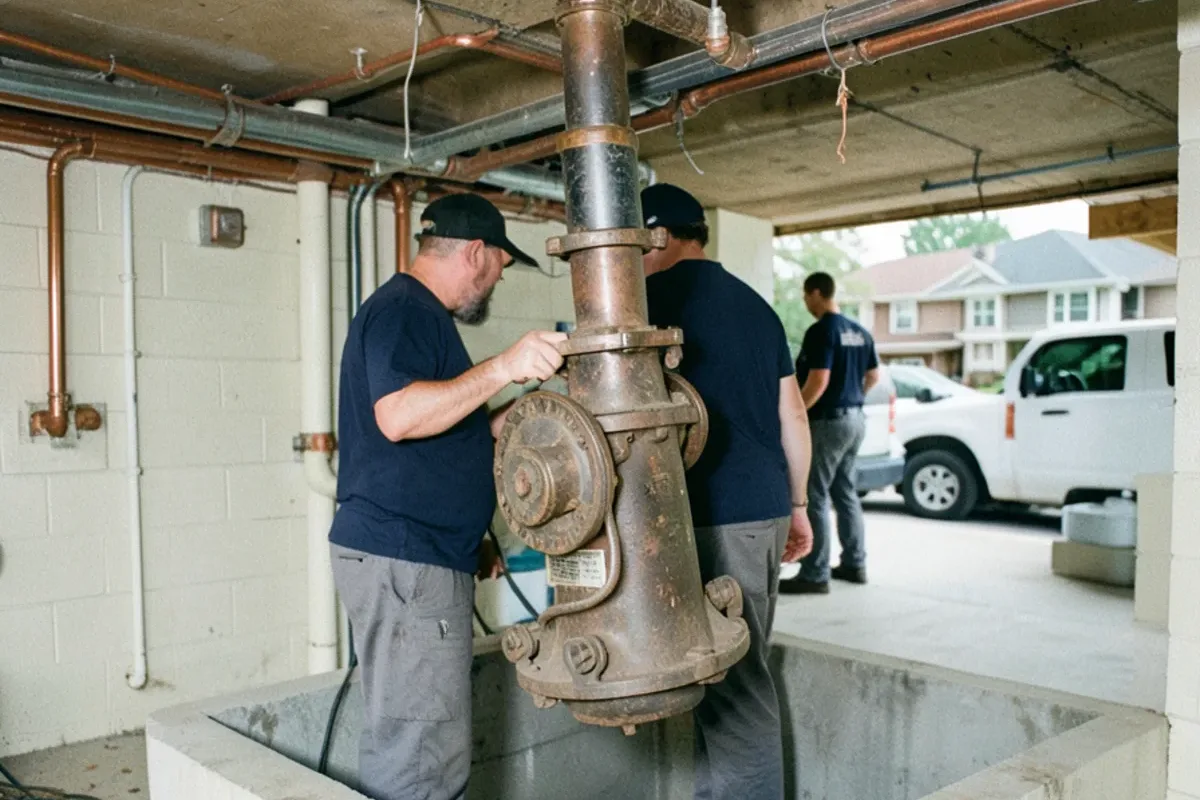
An ejector pump matters most in exactly the place people most want to protect, a finished lower level with a bathroom, a bar sink or a laundry. When the basement is unfinished, an overflow is a mess on concrete; when it is finished, the same overflow reaches carpet, drywall and whatever is stored down there, and the sewage makes it a health cleanup rather than a mopping. That raises the case for a few safeguards: an alarm you will actually hear from upstairs, a battery backup so a power cut does not stop the pump, and a replacement schedule that swaps an aging pump out on your terms. For a basement that took real money to finish, those are cheap next to what a single overflow undoes.
Questions people ask about this
What does it mean when my ejector pump alarm goes off?
It means the sealed basin that collects waste from your lower-level fixtures is filling faster than the pump is emptying it. A separate high-water float triggers the alarm as a warning before the basin overflows. Stop using the basement bathroom and laundry, then check whether the pump has power and is actually running.
Can I keep using my basement bathroom when the alarm is sounding?
No. Every flush or drain on the lower level adds to a basin that is already too full, so stop using those fixtures until the pump is clearing the basin again. The alarm is lead time before an overflow, and keeping water out of the pit is what preserves that time while you check the pump or get help in.
Why do ejector pumps fail?
Most often from what gets flushed into them: wipes, hygiene products and grease clog the impeller or the discharge, since a sewage pump is not built to pass them. Floats stick, check valves fail and let waste fall back, and old pumps simply wear out. Keeping the wrong items out and replacing an aging pump before it quits avoids most alarms.
Want a plumber to look at your situation? We're on Pond Run in Auburn Hills.
(207) 419-2600